Showing posts with label life. Show all posts

Sunday, June 15, 2025

Who We Are and How We Know


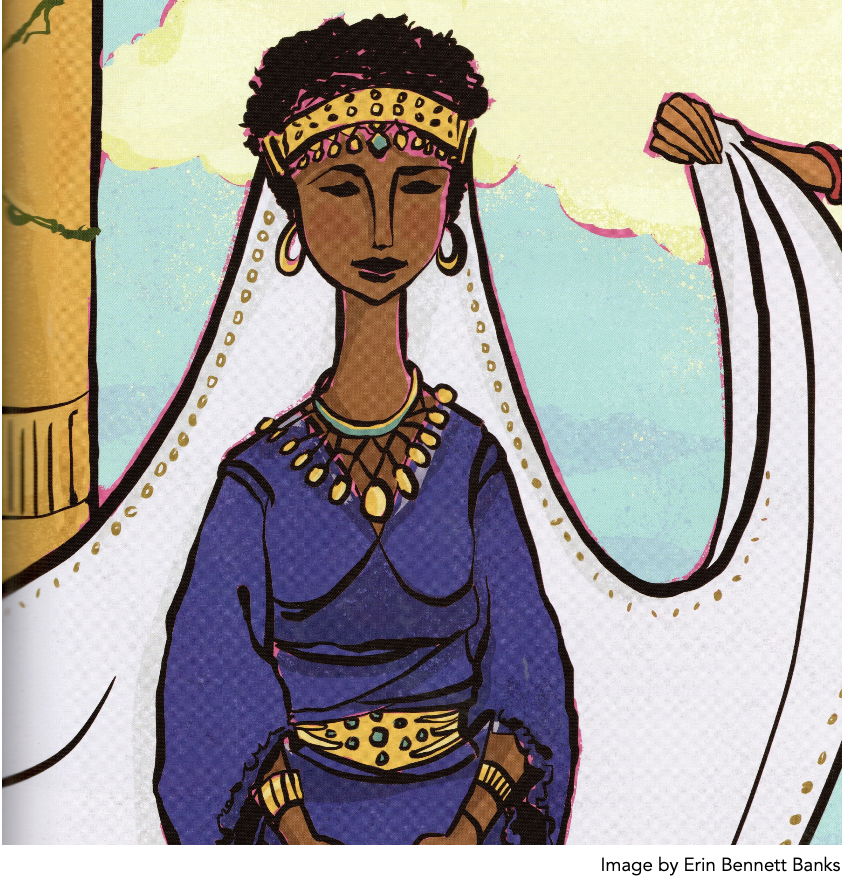
 Esther (Bible Story Summary in bulletin here)

Who are we? What makes us who we are? How do we know who we are and not forget?  These are big questions, and the answers matter.

Right now our country is in the midst of these question on a large scale, which we saw played out this weekend in striking contrast of parade and protest, violence and voices, and at the moment, all eyes are on Minnesota at the moment as we reckon with political assassination – something that seemed like an ‘them, over there’ thing until it because an ‘us, here’ thing yesterday.  Is that who we are now?

I attended two funerals this weekend, and funerals also try to answer these questions.  Most funerals wrestle pretty directly with our two big questions, Who is this God and what is God up to? And what is a good life and how do we live it?  This weekend I heard that God is love, and Jesus came to share this life with us and overcome death, so that the separation of death we suffer now will not have the final word. And I heard stories of two very different lives, both lived well, lives woven into other lives with love, and lived for something bigger than themselves.  

How do we know who we are? How do we figure out what is God up to? What makes a life good, and how do we live well? These are not solo questions. We do not ask them alone. Faith is not an independent, self-directed thing. Neither is identity. We do not decide on our own who we will be. We get to explore and become, alongside people who see us and reflect back to us who they see us becoming, and encourage us in our exploring. We are always in context. 

To understand our context we use stories. The stories told at funerals and around the tables afterwards, describing scenes and moments, show us who people are, wonders what makes them that way, and so probe against the question of what a lifetime is for, and how to live it well. Stories tell us where we came from, and reveal how people before us navigated their lives. Stories help us to know who we are.

Reading the story of Esther on Purim grounds the Jewish people in their identity and context. Here was a time when they could’ve all been exterminated, and instead they were delivered. Here is another story of a Jewish person living in the royal court of their oppressors, like Daniel in Babylon, and Moses raised up by the Egyptian princess, and Joseph in Egypt before him.  Here is the story of a young woman whose courage to speak up saved her entire people throughout the whole empire. But she did not have that courage all on her own.  She said to Mordecai, “Have all the Jews pray and fast for me for three days, then I will go speak to the king, even though by doing so I may die.”

But instead of dying for approaching the king without permission, Esther’s request was heard, and the people were saved, and Haman was destroyed instead.  Mordecai himself announced the day of Purim should be celebrated, and so it still is.  

In telling it again and again, year after year, Haman becomes the representative of all anti-semites, and Esther is the paragon of courage. The story tells of this scattered and weak people, who by the hand of God, outlasted the Persian empire that almost wiped them out, and the Babylonian and Assyrian and Egyptian empires before that, and the Roman and Greek empires after it.  You come from somewhere! It says. You belong to something! Telling it again and again together, with food and ritual and songs and symbols and sounds and sharing with others and giving to the poor, helps to ground them in the truth of who they are and keep practicing who they are called to be. And it helps them watch for where God might be calling them to act now. Because in the book of Esther, God is not front and center. The people have to wrestle, and discern, and choose, and act, without some of the flashier directness God uses in other parts of scripture. So, it feels like the kind of discernment we modern people have to do too, when we hear Mordecai wonder if God might have allowed Esther to be in her position “for such a time as this.” And this ancient scroll drops that phrase into words the first time in human history. “For such a time as this” is the kind of line that blows open our imaginations, yanks us from our self-defined ruts and the constraints of what is – and propels us into the possibility that we’re actually living in a broader story, not dictated solely by what we can see, a cosmic timelessness that lands in time at certain points and calls us to respond.

In a little while we will gather at the communion table and we will hear the words of Jesus – the very words Jesus spoke over 2000 years ago, when he invited his disciples and so invites us all these centuries later – to come to this table, and share this bread and this cup – that this is his body and blood shared for us, his very life given for our life, drawing us into life that will not end.

How do we know who we are? How do we figure out what is God up to? What makes a life good, and how do we live well? 

Do this in remembrance of me, Jesus says. Come back to who we are together. You are not alone and apart. You are part of me and joined together as a people claimed for God’s way and defined by God’s love.  

Our identity is not our own. We are in Christ. That means that we have died his death and been raised into his life, and this life that cannot die is what defines us.  Sin says we are apart and against, we must earn our belonging and we can refuse others’ theirs, we have to hide in shame when we mess up and strive to make our life valuable on our own, but we are dead to sin. All need for fear and self-protection has died with Christ.  All our losses and pain are not ours alone to hold, we are held together by God in the hands and hearts of other people. Christ’s complete belonging to God and all others is given to us. That is who we are. Beloved Children of God, each one of us uniquely made and directly called to participate in and share God’s love. And we come from a community of those who’ve died and been risen to freedom and hope.  This identity is unshakable and secure, because God decides it is so. 

But sin is loud and fear’s voice is persuasive. We forget who we are. So when we come to this table, it is like sitting down to eat with all those gone before, and all those right now around the whole world who are also in this community of the died and risen One, whose lives are part of Jesus’ life, and who live as a people claimed for God’s way and defined by God’s love.  

Then we do what Jesus told us to do at this table, but we also retell the story. We remember how it began, and this remembering together and practicing together, helps us remember and practice being who we are right now, with courage and hope, and helps us look forward to the day when what we are practicing for becomes the full reality forever.  

Today we prayed a blessing on our high school graduates. As they keep asking the questions that human lives are shaped around, How do I know who I am? How do I figure out what is God up to? What makes a life good, and how do I live well? Their immediate context will change but their larger context remains the same. The somewhere and someone they come from is not just their families and friends, it’s us, but not only the little LNPC us here and now, the big us. They come from a story that reaches back to the beginning of time and forward beyond time, a story shared in ritual and rhythms, in relationships and in remembering. They come from Esther, and Joseph, and Ruth, and Samuel, and Jacob, and Hagar, and Moses, and Mary and Joseph, and all the followers of Jesus who had no clue what they were doing but followed anyway and God took care of them and invited them to join in what God was up to anyway. They come from these stories practiced in candlelit Christmas eves, and finding Easter Hallelujahs and being served communion by the person next to you, and most importantly, praying and being prayed for. Watching other people struggle with suffering and sadness, and holding them up to God.  Knowing other people are holding you up to God because they’ve literally sung “God in your loving mercy hear our prayer” about something you just named aloud. 

When Esther was faced with something impossible, something terrifying, with huge consequences – it could maybe save her whole people? Or she could maybe die? – she said, ask everyone to pray for me, and I will do it.  

When you belong to the people of God, you are not alone. The people of God are people of prayer, people who help each other remember it is God who saves, and it is God who acts, and it is we who join in, we who get to be part of the action and the saving that God is doing. These people are here in this room, and these people are everywhere. Your community is vast.

We live short lives inside a long story. Empires rise and empires fall, but God is constant. This is our context.  The people we love live their good lives and then die, and we miss them, and then we tell stories to help us know who they were, and know who we are because of them, and help us figure out what makes a good life and how we might live, and watch for what God is up to in all of this. And their life goes on beyond what we remember and so we remember that ours will too.  

As we bump along our own lives, mostly doing our best and making it up as we go, we are held in a web of story, and prayer, and remembering, and retelling. That is how we keep bravely asking the human questions, and this is how our identity is shaped and held. 

Who we are is the people who’ve died to death and been raised to life, who practice being available to God and letting God’s love and healing come through us. And in the cosmic timelessness of Jesus Christ, our lives are always for such a time as this. 

Amen.

Sunday, November 17, 2024

Agents of Life


 Exodus 1-2:10 


Episode 6: Brave Women of Egypt 


I thought Lincoln was the one who said, “The only thing to fear is fear itself.” But it turns out that was Rosevelt. Apparently, Abraham Lincoln’s famous quote on fear was, “A woman is the only thing I am afraid of that I know will not hurt me.” (aww).


Our story today is a story of two kinds of fear. 

First up, the fear of Pharoah. The most powerful person in the land, but he is the new guy – he doesn’t remember Joseph and the way Joseph helped save the whole empire.  There is no basis for his fear of the Israelites, but fear doesn’t need to be rational. Pharoah’s insecurity, his lens of scarcity– what we around here call The Way of Fear—means  he sees them as threat, competition, and danger.  In order to feel safe, powerful, and in control, he must squash them.  

So Pharoah oppresses and enslaves the Israelites. But still, they multiply, and his fear multiplies too, and because fear is contagious and insidious, it spreads, and it makes us see one another as other – not even human – until we can justify doing or saying terrible things and even, ultimately even ending each other. Fear takes over like a cancer, invading minds, bending wills, tarnishing souls, and conscripting human beings as agents of fear and destruction. Soon all of Egypt fears the Israelites, and Pharoah is desperate and obsessed with destroying them. 


But a completely different kind of fear is centered in this story. It’s shown first by the midwives, Shiprah and Puah, who happen to be pretty much lowest on the Egyptian pecking order—barren, slave, and female—and who have real reason to be afraid, (what with the command from the Pharoah to murder and all).  And even though they may be afraid for their lives, this other kind of fear is stronger. Twice we are told they fear the Lord.


This phrase is used in our bible a lot, but there is no good direct translation or easy idiom to express in English “the fear of the Lord.”   It’s not the same as the Pharoah’s unjustified and self-centered fear, or even justified fear of a powerful, hellbent Pharoah – though the overwhelmed sensation may be part of it. The meaning of “fear of the Lord” is layered, and centers around truly appreciating who God is, so it includes awe and wonder, even trepidation, but also deep trust, respect, gratitude and obedience. 

It might be said that when we fear the Lord, God and humanity are put back in proper position, and we truly, deeply remember whose we are, and so we also bravely and freely live who we are: beloved children of the Sovereign God of Shalom, who brings wholenss and healing, and calls us to love God and one another. There is no higher identity or calling. There is nothing more real or trustworthy.


The Fear of the Lord is the beginning of wisdom, Proverbs (9:10) tells us. Because these midwives fear the Lord, no matter what is happening to them or around them – and it’s really bad – nevertheless they are living bravely in The Way of God.  And it’s worth noting that while the Pharoah remains unnamed, because it doesn’t really matter who he is, a nameless agent of death –these two seemingly insignificant women are agents of life – and so we know them by name. 


The Pharoah’s fear begins in forgetting.  Insecurity and self-preservation drown out the story of belonging, mutuality or salvation, and when that happens, long relationships, like the one between the Egyptians and the Israelites, are lost in the way of fear. 


But Shiprah, Puah, and Jochebed and Miriam – they remember: God is God. And so, they trust God above all the authority in front of their eyes, the evil perpetrated by a selfish and fearful ruler, the suffering, damage and death wrought by those in power. 

Right in the middle of all that, they act for life.  They know God will provide. They respond in each moment to our belonging to God and each other by upholding humanity where they can, and speaking up where they can, and being ready to act when and where they can. And God makes a way – for them and through them.  


The women in this story are all partners in the salvation of God. They join with the God of life in bringing life.  And the defeat of the evil empire, the freeing of slaves, and the defining story of the children of God that will unfold in the decades to come, which will shape the trajectory of the salvation story for you and me too, is set in motion through the hands and actions of these women: The midwives who saved countless infants and delivered baby Moses into the world, the mother who loved and guarded him and then let him go into the water, the sister who watched over him, and spoke to power and returned him to his mother’s care, and also, surprisingly, the Egyptian princess who drew him from the water and claimed him as her own. 


Because while we might expect to see the Israelites as heroes of the story, who we do not expect to see as an agent of salvation is the enemy’s daughter.  At the moment a pampered princess lifts a doomed baby from the river, her life turns toward the other in love, and his role is cast. She will raise him right under the Pharoah’s nose and God will use him to set the people free. 


God is greater than our stereotypes, and even our firmly held convictions, and God uses who God chooses. Not only can God NOT be thwarted, but God’s preferred methods thwart our divisions. No power or principality, no selfish, insecure despot, no extraordinary evil or everyday unfriendliness can derail God’s salvation of the world, and God brings that salvation mostly through ordinary people in acts of simple humanity.  


The world is filled with pain and suffering, and none is exempt. But life happens anyway, and death cannot stop it. When in our forgetting we succumb to fear, and our longing to feel safe, powerful, and in control is the biggest and loudest thing, the temptation is to turn inward in self protection, and to make exceptions to belonging. We decide that some people – because of their selfish actions, or cruel words, or stupid beliefs, or contrary votes – don’t belong to us and we don’t belong to them. That they are not our problem or our responsibility, or they have no wisdom or kindness to contribute to our lives, or we have no calling in common or work to share.  But that is not how this works. 


That we are in this together, given to each other, is not ours to decide. It’s the proper ordering of things- God is God and we are God’s children, made in God’s image to care for one another and the earth. Period. I don’t get to mistreat or disown siblings in the human family because I fear them or they threaten me, or because they fear me or I threaten them. It doesn’t work like that. 


But if we do – fear and threaten each other – will that stop God’s salvation from coming? If we act as agents of fear and death, absorbing and spreading disgust and distrust, undermining connection and reinforcing isolation, does that thwart God? 

No. God will keep using the sisters, mothers, midwifes and enemy’s daughters and do the world-saving anyway.  


There is so much more story to come! Moses’ life is just getting started! (Your homework between now and December is to watch The Prince of Egypt!) And while the big, epic tale of the Israelites’ deliverance is a lifetime away, make no mistake, it is coming. 

At the same time, there is no new story. As Ecclesiastes says, there is nothing new under the sun. Evil gonna evil. Humans gonna human. Pharoah Fear is no different now than it was 3500 years ago. But the fear of the Lord is the same as it was then too.  


You and I will inevitably fall into trap of fear and sin because we are human, and life is scary. But we’ve been redeemed by the God whose salvation works in and through common people, and who came right into all of this to share in it with us, to die our death, so nothing can dictate the future of the world – or of our own belovedness or belonging - except for God and God alone. 

So we can trust this, that is, we can fear the Lord. In awe and wonder we can appreciate God being God, and in gratitude and obedience we can recognize our calling to love and serve God and our neighbors. The rest is details.  


Later on, when the Israelites are free and settled in the land God has given them, and Moses’ earthly journey is almost over, God will give Moses a message for the Israelites, which is this: 

“I have set before you life and death. Choose life so that you and your descendants may live, loving the Lord your God, obeying him, and holding fast to him.” (Deut. 30:15-19)


Whether the stakes are high and alarming, or life is just ticking along as usual, the choice is set before us again and again.  Each time that happens, may the Holy Spirit help us to deeply remember whose we are, and so we also bravely and freely live who we are. You and I are agents of life. 

Amen.gs- God is God and we are God’s children, made in God’s image to care for one another and the earth. Period. I don’t get to mistreat or disown siblings in the human family because I fear them or they threaten me, or because they fear me or I threaten them. It doesn’t work like that. 


But if we do – fear and threaten each other – will that stop God’s salvation from coming? If we act as agents of fear and death, absorbing and spreading disgust and distrust, undermining connection and reinforcing isolation, does that thwart God? 

No. God will keep using the sisters, mothers, midwifes and enemy’s daughters and do the world-saving anyway.  


There is so much more story to come! Moses’ life is just getting started! (Your homework between now and December is to watch The Prince of Egypt!) And while the big, epic tale of the Israelites’ deliverance is a lifetime away, make no mistake, it is coming. 

At the same time, there is no new story. As Ecclesiastes says, there is nothing new under the sun. Evil gonna evil. Humans gonna human. Pharoah Fear is no different now than it was 3500 years ago. But the fear of the Lord is the same as it was then too.  


You and I will inevitably fall into trap of fear and sin because we are human, and life is scary. But we’ve been redeemed by the God whose salvation works in and through common people, and who came right into all of this to share in it with us, to die our death, so nothing can dictate the future of the world – or of our own belovedness or belonging - except for God and God alone. 

So we can trust this, that is, we can fear the Lord. In awe and wonder we can appreciate God being God, and in gratitude and obedience we can recognize our calling to love and serve God and our neighbors. The rest is details.  


Later on, when the Israelites are free and settled in the land God has given them, and Moses’ earthly journey is almost over, God will give Moses a message for the Israelites, which is this: 

“I have set before you life and death. Choose life so that you and your descendants may live, loving the Lord your God, obeying him, and holding fast to him.”


Whether the stakes are high and alarming, or life is just ticking along as usual, the choice is set before us again and again.  Each time that happens, may the Holy Spirit help us to deeply remember whose we are, and so we also bravely and freely live who we are. 

You and I are agents of life. 


Amen.


Where we've been - 


Episode 1: The Beginning

Episode 2: Noah (conversation - so this sermon is from 2014)

Episode 3: Hagar, Abraham & Sarah 

Episode 4: Jacob

Episode 5: Joseph


Sunday, March 31, 2024

Resurrection Unresolved

Mark 16:1-8

Happy Easter!

Once a year we like to make a super big deal out of resurrection, even though none of our gospel accounts show us anything about it. What they do show is an empty tomb, mostly, and a bunch of disciples who do a pretty terrible job of getting even close to as excited as we are on Easter Sunday. 

The words Matthew, Mark, Luke and John use for the initial reactions of those first told of the resurrection are: “alarmed,” “trembling and bewildered,” “afraid,” “disbelieving”, “terrified,” “doubting,” “startled and frightened,” “wondering,” and “it sounded to them like nonsense.”  Not a single “Hallelujah!” among them!


So, I submit that maybe we’re a little removed from the whole story and invite us back to the whole resurrection thing today with fresh eyes.


First off, I’d like to point out that, knowing he’s going to rise from the dead, we don’t even pause to wonder why it took so long.  We just fill the Saturday of a Dead Savior with last minute Target runs for Easter tights, vacuuming the house, and preparing the ham for tomorrow, and don’t really give a single thought to the unsettlingly long delay between the death of Jesus and his resurrection. At the precipice of despair, when the worst thing ever has happened, it all just stops and stays for a while. 


In any world-altering project we competent humans undertake, this is the moment we would be all hands-on deck, nobody stopping, nobody sleeping, a beating heart of adrenaline-hyped project managers and bleary-eyed, caffeinated engineers making sure it all comes off as it’s meant to.  

But instead, God – and every single human in this story, made in the image of God - leaves the building and turns out the lights. They go home and crawl into bed and spend an entire day on purpose not doing it. Luther says Jesus sabbathed in the grave. Dead guy not in any hurry to get this show on the road.


We race to resurrection. We’d actually prefer to skip the death part completely, if possible. And if it must happen, let’s just dip our toe in and move on quickly. 


How strange it is, that in the wake of Jesus’s violent death, when all is utterly lost and darkness has triumphed unequivocally, the greatest drama of the cosmos grinds to a quiet halt. And another story takes center stage and demands precedence. Candles are lit, stories are told, prayers and naps and holding one another and reading alone and recalling the faithfulness of God and practicing the gratitude of belovedness are what happens.


Centuries later we know where this story is going, so we skip the pause and just boogie ourselves on to the celebrating. But while it’s easy for us non-stop, state of the art, capable modern creatures to miss that that the whole salvation story stopped at the most disastrous moment to remember God is God and we are not, uncooperative Mark makes jumping to victorious, joyful resurrection celebration super awkward.  


Because, after Jesus’ most faithful followers are told to spread the news of his resurrection, and then go meet the risen Jesus back where they began--in the ordinary places of life--Mark actually ends his whole gospel account with them backing slowly away from the weird stranger in the corpseless tomb, stumbling into the daylight, hiking up their skirts, and high tailing it out of there as fast as their legs can carry them, keeping mum about the whole crazy situation. 


This is such an uncomfortable ending that by the 3rd century a short new ending was tacked on, and by the 5thcentury an even longer one, where everyone did what they were supposed to and believed in the risen Lord, because people couldn’t bear the story stopping with the dissonant note left hanging in the air, just begging for someone to walk across the room and play the chord that resolves it.

So not only does the salvation story stop and stay a while at the worst part, like it’s not at all concerned about getting things sorted for us, but then Mark leaves the whole narrative of Jesus unresolved and unsettling. 


Let’s just say a fair-minded teacher would hesitate to give a passing grade to this project. The comments might say, “lacks clarity of purpose and audience, central idea not well presented, participants could show more effort, completely missing a conclusion, C-”. 


The truth is, in no universe, does what God is doing here make sense to our cause and effect, good guys/bad guys, earning and proving, comparing and competing, winning and losing sensibilities. In fact, we might say that God’s project upends all of that entirely.  


Here’s how we do Easter: a few typical options

Option 1: Easter is for later. It means we’re given an individual get-out-of-hell-free card, an eternal win on the uncompromising board game of life. So, if we play our cards correctly, we reap some well-earned rewards! (And we can help others get their cards too).  


Option 2: Easter makes us feel better. Jesus died and rose to calm the existential dread that meets us in the night, the voice that whispers we are not enough, that somehow, we’re failing at life. We’re honest enough to know we actually can’t do it on our own. And we hear Easter saying, You are enough.


Option 3: We’ve had it with all the gobbly-gook of religion and have washed our hands of it, except when we’re dragged to church by our smiling in-laws who are crossing their fingers that this time, we’ll change our mind and come back to faith.


Here’s how God does Easter: 

Instead of rescuing some people out of it, God plunges right into it all, right alongside us all. Instead of backing our self-improvement projects, Jesus goes right for our sin – which is just a shorthand way of saying, whatever blocks us off from God and each other, whatever tells us we are not worthy of God’s love, or that we are but someone else is not, whatever breeds fear, isolation, self-centeredness and destruction – this is what Jesus takes on for us and brings to the cross.  There is nothing - no suffering, sorrow, or loss, no horror done to us, or by us, that Jesus does not carry us directly into the heart of God, even the final terrible divider, death itself. Jesus was defeated and broken by all that defeats and breaks us. He was dead and buried. It was all over. For a while. Except it wasn’t. Jesus rose from the dead, and the end of the story has been written: there is no death so great that life is not greater, no evil so powerful that love will not prevail. 


And perhaps this is a message not yet felt on Easter morning, but maybe tasted earlier, in the moment the sabbath began and they all turned back to the truth that God is God and we are not, and practiced trusting God even if they weren’t feeling it, because it’s what we do. And they waited. With God, and with one another, they waited to see what God would do next. Maybe in their waiting, they remembered whose story this all is. And then the next morning, a few of them reached empty tomb to put spices on Jesus’ body. And they forgot again. Because


here’s how the first followers of Jesus did Easter: 

alarm, terror, confusion, skepticism, trembling and bewilderment. The idea of Resurrection did nothing for them whatsoever. Being told about it just freaked them out.


Because resurrection is not an idea or belief. It’s what comes after death. It’s the new life that comes after what was, has died. It’s the hope that is born from a place of loss and despair. It’s when tragedy is shot through with overwhelming love and inexplicable peace, when patient grieving abates and washes away and something new and unexpected wakes up and yearns to be born in us. It’s when you find that fear’s hold on you has been broken and you are free.  It’s when you find yourself able to love, able to reach out and be with and for another despite all the risks of heartbreak or failure.  It’s life, life, life. 


He was dead. The tomb was empty.  Resurrection didn’t mean anything until Jesus met them later, alive. Then they too were resurrected. Back in the ordinary places of life he told them to follow him into, they found God bringing resurrection all over the place, and began their new life of trusting in what they could not make happen, waiting and watching for what God would do next, in them and through them.


Except Mark doesn’t show us that part. 


What God is doing is beyond our capacity to grasp. So maybe it’s helpful to us that Mark stops while it’s unresolved and people are freaking out and confused and keeping it real, because the story keeps going, and pretending to resolve what isn’t resolved doesn’t make the truth any less true: that God is relentlessly bringing life, life that death itself cannot stop. 


The story of the Living Christ is still going. God’s still writing it with the ink of our lives. Our job is not to jump to resolution and hide from the discomfort and dissonance, but to wait and watch. God is always here, always at work, always turning death, impossibility and nothingness toward life and love, always bringing resurrection, always inviting us to join in.

But there can be no resurrection without death. So we go to the places of death, and we wait.  Jesus came in to this life to be with and for us. When we are with and for each other, that is where we find the risen Lord.


If this Easter finds you in the darkness of despair, I invite you into the great surrendering pause of practicing trust even if you don’t feel it, that is, to wait and watch for what God will do next. Please allow some of us wait there with you.


If you come to this Easter ready to heed the call of the messenger in the tomb and join in resurrection, I invite you to back into your ordinary life. Jesus said to follow him there. That’s where he will be. Go into your week and wait and watch for what God will do next and be ready to respond.  


If you’re here today to make someone else happy and you think none of this applies to you, I’m sorry, it actually does. You are already loved and claimed by God, and your life is just as much a conduit of God’s love and justice, hope and healing, as the person sitting next to you. I invite you too, to wait and watch for what God will do next.


Resurrection happens!  

We’re invited to surrender into the story. To trust that Jesus is out there ahead of us in the completely ordinary places of our lives, and the utterly ordinary lives of everyone on this planet. And when we’re over our shock at the whole thing not going at all how we think it should, and ready to find him, that’s where we should look. That’s where we’ll find God bringing resurrection all over the place. So we will practice trusting in what we cannot make happen, remembering together whose story this really is, and waiting and watching for what God will do next, in us and through us. 


Christ has risen, Hallelujah!  

Amen.

Saturday, April 2, 2022

Pretending and Returning


We all engage in magical thinking from time to time.  Sometimes it’s relatively harmless – if I wear my team’s jersey on Sunday they will win the game.  Other times it’s a bit more toothy – If 
I pray the right way, with the right words, I will be protected from danger.  Sometimes it’s based in measurable data – seatbelts wearers survive more accidents, vegetable-eaters have lower risk of heart attack.  So it throws us somehow when our magical thinking doesn’t pan out. How could he have a heart attack? He was such a healthy eater! How could she have died in a car accident? She was such a faithful seatbelt wearer!  
 
We want simple. Clear cut. But life doesn’t give us that. We want guarantees and we don’t get those either.  Nobody wants to talk about this, but the truth is, mostly we want our simple, clear-cut guarantees because we are terrified of dying.  As we pray at funerals, “We forget that all life comes from you and to you all life returns.”  Boy do we.  So much so that we try whatever we can think of to not die – whether it’s the big D that is coming for all of us, or the little d’s we have nearly every day in the form of humiliations, losses and devastations. We want to transcend our mortality in whatever ways we can - look younger, go faster, do more - because we can’t accept that we get this one teeny life and that’s it.  
And then we can’t even let ourselves enjoy this one teeny life we do have because either we suspect that by appreciating it we might jinx it (more magical thinking).  Or because in this one moment we are stuck in we are worried we are missing out on something else, something better.  We are so caught up in trying to earn, or prolong, or maximize, or protect our lives, that we often are not actually in our lives. 
This week I was talking with someone about all the millions of great books in the world, and he mentioned that if for 50 years you read a book a week, you would read 2,500 books in your lifetime. That’s it. No more. Even a long, full life is terribly, insultingly limited.
 
So we pretend. We try to control what we cannot control. And if we can’t control it, maybe we can pray the right way to get God to control it in our favor. We employ our magical thinking, put on our blinders and soldier on.  
 
So then, it is terrible news, terrible, that sometimes bad things just happen. Disasters strike, sickness comes, and appallingly unfair things happen to people all the time. Life is full of suffering. Loss and grief are just a part of the package of being human. This news shouldn’t come as a shock to us, but somehow, every time, it still does. 
 
When people bring up to Jesus a current event, a much-discussed atrocity, this horrible, unthinkable act of murder and desecration that has happened, Jesus skips all the speculation and punches a hole right through their magical thinking. Did those who suffered like this deserve it in some way? Did they, by something they did, or neglected to do, bring this tragedy upon themselves? No! Jesus answers. And then he brings up another recent scenario with mass casualties, and asks, What about those people, did they deserve to die this way? No! 
 
But Jesus doesn’t stop there. He goes on to say, but unless you repent you will die like they did.  
 
Then he tells this story about a fig tree that isn’t producing any fruit. It isn’t showing any signs of life.  Maybe it should just be cut down. “Give it another year,” the gardener says. “Let me put manure around it.” The Greek word Jesus puts in the mouth of the gardener, which is so politely translated as “manure” in our bibles is actually the vulgar word for excrement. In other words, in Jesus’ story the gardener says, “Let it sit in shit for a year and see if it doesn’t start living.”
 
There is no magic formula for preventing tragedy from happening to us.  Death can come any moment, just like it did for those unfortunate and unsuspecting people, and unless you repent, you will die like they did.   
 
Repentance isn’t about feeling guilty or being judged.  Repentance is being reoriented. Exchanging your way of seeing the world for God’s way. In the Greek it means turning around, changing your mind, going in a different direction.  And the Hebrew core of it actually means to go home. Repentance is returning to our home in God’s love. To repent is to be found.  
 
Lent is a time for repenting. It’s a season for actively, consciously, exchanging our messed up ways of seeing this world, trading in our magical thinking, our existential armor, our pursuit of security and stability, our fear of death and weakness, our endless striving and pushing and fleeing and fighting. Instead we let God draw our hearts and minds and lives back toward our source, to steep us in the love that made us, receive the love that claims us, and respond to the love that pulls us to share deeply in this life with each other.  Our Lent theme is “Cease striving and trust that I am God.’  In other words, Stop doing it your way and surrender to God’s way, aka., Repent.
 
Just like life’s moments of triumph, contentment and happiness, life’s tragedies are no less filled with the presence of God, no less available to God’s activity, no less moments in which our belonging to God and each other is real and tangible. In fact, they are often more so.  God is not apart from death or suffering. Jesus came into our death and bears our suffering. Nothing can separate us from the love of God. Nothing, nothing, nothing. So we may see, and bear, and not turn away from the terrible injustice or suffering of others, surely not turn them into moral lessons to try to protect ourselves. 
 
Trading our way of seeing for God’s way means that my neighbor’s joy is my joy, and my enemy’s suffering is my suffering. That we are all inseparably bound, responsible for each other, and for the land, sky, air, and water that hold us, and the creatures that inhabit this world alongside us.
 And it means trusting that love, eternal and unending, permeates every moment, even the terrible ones. 
So we rage at the falling bombs, and grieve at the dying children, and rejoice at the defiant people rescuing, and feeding, and sheltering one another in the midst of it all, and we recognize there the Holy One at work. Always at work. The unwavering force of love, God’s unshakeable purposes for all, cannot be derailed by evil or hindered by death.

This world is held in God’s love, infused with God’s justice, moved by God’s heartbeat, drawn into God’s purposes, heading towards God’s peace. And dying is transitioning from the space constrained by time and limitation where we just glimpse this and seek to trust it, to the space beyond time and limitation, where the love and peace of God is all in all. It’s completely returning home.
 
I don’t want to diss us dear humans for all the magical thinking we engage in.  I think it’s because part of us, deep underneath our conscious knowing, knows that there is more than this. We know we are eternal. We know we are made for fullness of life. More life than this life we are given can contain. But that is the dilemma of being human, isn’t it? We sense this deeper thing, this possibility, and yet we cannot attain it. No matter what we do, we can’t get there on our own. Because it’s not about us and what we do or don’t do, believe or don’t believe.  All of life, every breath, is a gift. Life is an ongoing, never-stopping gift that God is continuously giving, right now, even. 

This breath is a gift.. And this one… And this one... 
All of life is holy, infused with the very presence of  God.  God is just giving Godself away, every moment, in us, through us, calling us back to Godself, drawing us back into love that outlasts death. Return to me. Repent. Let go of your striving and trust me. 
 
And maybe the way we get there is just by being willing to sit in the shit.  Maybe it’s only when we accept this mess of a life and choose to inhabit it deeply - embracing our own mortality, admitting our own nothingness without God - that the fullness we were made for, life so abundant as to grow fruit in us, and feed others through us, can flourish.  Maybe we just have to be where we already are - deathbound and knee deep in dung – and accept that no magical thinking can protect us, no right beliefs can buffer us, we’re just exposed and wide open, where the sun, and the rain, the elements and experiences can permeate us.  And within the limits of our teeny fragile life, the infinite love of God, the origin and destination of our eternal being, will bring forth in us that which we can’t produce ourselves. And we will be fully alive.
 
Amen. 

Sunday, February 20, 2022

Sometimes we're listening

(art by Coraline Meyers)


Jeremiah 17:5-10

There are realities that run deeper than words.  Something like love, or hope, or trust is often better expressed or understood with pictures or poetry.  What is it like to trust God? And what is it like to not trust God? 

Here is a picture of that: 

Those who trust God are like a tree planted by a river.  Their roots are deep, reaching toward the water, firmly planted in the soil, intertwined with the whole ecosystem of the wetland. The buzzing insects and squirming underground creatures, the billions of bacteria and micoorganisms, interrelated and intermingling.  Life pulsing through it all - swimming fish and paddling ducks, and singing birds, and burrowing mice; the eating and excreting, birthing and dying, sun and moon, and wind and rain, and whole vibrating energy of the thing. And here grows this tree, fed not by what it does but by where it is planted and what is nourishing it, and what it contributes there.  Blessed are those who trust in God. Alive with life’s fullness are they.

But those who trust in human strength, who turn their hearts away from their source, they’re like an isolated shrub, alone in the desert, a withered scrub in a salt bed. And they don’t even recognize relief when it comes. Cursed are they – disconnected, and starved of life, and wholeness, and interrelatedness, destined to seek and find only scarcity, contributing nothing to anything else around them.  
Surely, trusting God is better. But what is it and how to do it?
 
I find it interesting that trust has two meanings. And in this text, it is said in two different ways. 
 
Trust means assured reliance on the ability, truth, character, or strength of someone or something.  
It also means, an arrangement whereby a person holds property as its owner in name, on behalf of one or more beneficiaries for their preservation and betterment.
 
Blessed are those who trust in the Lord, whose trust IS the Lord.
 
So trusting is relying on God’s character and strength. When we trust our good friend or spouse, we let down our guard and let them in. We let them show us who they are and believe them when they do. We risk being with them in ways that put us at risk; we could get hurt when we trust. And truly, we do, because the nobody is perfect, and the most trustworthy humans we know, at one point or another, let us down. And we let them down. But we choose, anyway, to trust again, and that is how trust grows with other humans, and even with our own selves.  We risk trusting, we trust, we fail, we learn, we trust again, and so it goes.
 
But not only are we told to trust in God, we are told our trust IS God.  Trust in God is different than trust in humans, because it is trust in trustworthiness itself. It is relying on the only reliable force – our origin and our destiny, love manifest throughout creation and in the person of Jesus Christ.  
 
And that’s where that other, law-related understanding of trust is helpful to me. Because the idea that God holds something on our behalf, for the goodness and benefit of all, is a lovely sense of trust. 
 
God holds our life, holds this earth, holds the past and the future, holds our potential and our sorrow, holds our regret and our longing, holds the vast, interconnected harmony of all creation, with us, for us, for the good of us all. That means that it’s not up to us to be fantastically trustworthy - or excellent trusters - or it all falls apart. Our hope, or salvation, or value, or contribution does not depend on the good intentions and reliability of others, nor does it require the good intentions and reliability of our own often confused, sometimes sneaky, and occasionally wildly deceptive hearts.  1 John 3:20 says it this way, “Even if our hearts condemn us, God is greater than our hearts and knows all things.”
 
To trust God, then, we need only accept that life and love and wholeness is all held for us.  We are recipients whether we choose to acknowledge it – in which case we are the tree by the stream – or choose to resist it – in which case we are the shrub in the salt flats.  
But in any case, just the same, God holds the world in abundance and life, and invites us to share in that, through justice, and hope, and joy, and peace.  And we can rely on this. We can act as though this is true, because all truth comes from God. We can live as though this is real because God is the ground of all reality. 
 
So despite our weird religious predilections, trusting God does not mean mustering confidence and suppressing sadness. It’s not about forcing ourselves into some kind of mold or changing who we are. That might as well be a shrub in a salt flat.
 
If we were to behave this way with a beloved, we would called out for NOT trusting. Withholding ourselves, guarding our hearts, and putting up a façade, so that we might not be completely known, in all our ugliness and beauty, would be called a lack of trust, and rightly so.
In a love relationship, trust is a willingness to be impacted and seen; it is openness with what’s really going on in us. Like our passage invited last week, “Trust in the Lord, O people, pour out your hearts before God...” 
 
If we trust in the Lord, if our trust IS the Lord, that means allowing the energy and the life force that comes from God return to God through us. What does this even mean? How does one even do this?
 
I listened to a description of a beautiful concert.  When the audience arrives they are distracted and chatting, bringing in with them all the thoughts and baggage of the day. The lights go down and a hush falls and they settle in to hear the music.  And once it begins, all that internal clutter and external restlessness starts slipping away. 
And soon, the cellists and violinists on the stage are reaching out toward the audience with their playing, and the audience is reaching out in silent, focused receptivity back toward the musicians, and something begins and builds, until, finally, the giving and receiving, the playing and the listening, are all participating in a transcendent moment that is encompasses each of them, but the individual egos have left the room, and they are melded, connecting in the creation and reception of this timeless experience of sharing this music together.  There is no more differentiation; all are involved in the song itself.
 
This is what God does with us. God’s life reaches out and plants us in the middle of a song, with a whole ecosystem of harmonious noise and life surrounding us, involving us, reaching for us. 
 
And sometimes, we listen. Sometimes we listen in a way that sets us free of the distractions and baggage we came into the moment with, and in our hearing and receiving of the cosmic music, we ourselves are caught up in the give and take, and we ourselves become conduits for the life of God flowing to and through us. 
We find ourselves intertwined, grounded, roots reaching deep for nourishment that feeds us even when the drought is here, part of the interconnected fabric of life to the point that when the fearsome things come, we do not fear. At least, we don’t let fear isolate us and and cut us off, like a shrub in a salt bed, curled in on ourselves, unable to contribute, receive, or recognize relief when it arrives. Fear comes and it goes; it cannot unroot us.  And when drought descends we are not anxious, because we are held and we are not alone.  And we even still bear fruit, thought we may not see it or know it at the time, because the fruit is not, after all, ours to produce, it is brought to life through us.
 
We exist inside the cycle of birth, growth, life, death, decay, and new birth, all around us, within us, through us, in which we participate, from which benefit, and to which we give. Trusting God will have us both embracing our limitations and opening our imaginations. We’ll be confessing our fears and exploring our callings. We will be both drawn into action, and beckoned into stillness.
 
We are invited to surrender ourselves to the song – let down our guard and listen deeply, let is permeate us, until our listening pulls us into the creation of the music itself, so that the moment and the life we are living moves far beyond the individuals participating, into something bigger and more real that we are caught up in, without ego getting in the way, without self-doubt, or comparison holding us back, without shame or fear stopping us from participating in the joy of living fully connected, fully with, and fully for the human beings around us, and fully part of the beauty and wonder of this glorious world and all its mysteries.  
 
May we so trust.
Amen.

Sunday, January 16, 2022

Remembering What's True


saiah 43:1-2,10-13 and Luke 3:15-17, 21-22

I have had many conversations with folks this week.  And while some of us may be feeling fine and dandy, many of us are discouraged and disheartened, and frankly, exhausted.  Here we are again, with mask mandates and distance learning, fighting the urge to horde things, and our pandemic vocabulary keeps growing: now we know phrases like “supply chain issues” and “rapid lateral flow tests” and the fine point differences between “isolation” and “quarantine.” 

So let me first say again, that “it’s normal to feel sad in sad times.”  And if you’re feeling more tired than usual, that’s no surprise. We have been buffering for nearly two years and our operating systems are slow.  It’s ok to be slow. It’s ok to do less.  This all is a lot to process, and the constant recalibrating is exhausting.
 
For us in the northern hemisphere, Epiphany comes in the darkest time of the year. In the cold and barren landscape of winter, we spend a couple of months turning our faces toward the light of the world that the darkness cannot overcome.  And right we could use some reminders of things we know and trust but sometimes forget.  So this is a good time for some perspective.  A good time to orient ourselves again toward the light.
 
There are two reminders our scriptures give us today that I want us to hear, that I think will help us in this time that feels a bit dark.  I want us to remember who we are. And I want us to remember who God is.
 
Who we are is not up for grabs, it’s already decided. You are mine. God says. I have chosen you and redeemed you and called you by name.  And this fact is sealed on us by our baptism.
We are baptized into Jesus’ death and resurrection – we die his death and are raised into his newness of life.  So that belonging that Jesus has with God, that belonging he has with the world, that is our belonging. And that life that was there at creation and prevails through eternity is our life. 
 
Some of us were baptized as kids, teenagers or adults and some of us were baptized as infants. When we see a little squirming baby baptized, who didn’t choose to be there and sometimes isn’t very happy about it, we are reminded of some things about God’s promises and our own identity.  First, that it is not about what we choose or decide.  Who we are begins with who God says we are.  And God chooses us, and claims us and calls us God’s beloved child who God is delighted in.  God says YES to us –and we will spend a lifetime learning to receive God’s YES. 
 
And when we see an adult come to the font to be baptized, what we are remined of is in this relationship with God who chooses us, we get to say YES back to God’s YES. We get to embrace our own “one wild precious life” and submit to the journey whatever may come. And Jesus’ life of total belonging to God and other people will be what defines our life. 
 
Like Mary before him, and Joseph, and the Shepherds heeding the angels' call, and the Magi setting out on their journey, and every scared and wondering king and nomad and giant-slayer and sea-parter and child-bearer and prophet and journeyer before them, Jesus says Yes to God, and by the divebombing Holy Spirit like a dove and the voice from heaven, God says Yes to Jesus. 
God says YES to us and we say YES to God.

What does it mean to say YES to God? 
It means we say yes to not being in it alone. We say yes to life and light and hope. We say yes to suffering and struggling and living fully. We say Yes to forgiveness and grace and mercy.  We say Yes to being defined by our belonging to God and each other, and not by what we accomplish or contribute or earn or prove. We say yes to what God is doing to love and save the world, and Yes the astonishing truth that God wants to involve us in it.  
No matter what life brings, or where it brings us, the first and final word over you and me is this: You are my beloved child and I am utterly delighted in you!
That is who we are. And I want us to remember that today.
 
The second thing I want us to remember today is who God is.
Listen to who is saying YES to us:
Before me there was no God and there will be no God after me.
I spoke and saved and promised,
There is no one who can undo what I do.
I act and who can reverse it? 

This is the God who made us, and claims us, and redeems us, and calls us. This is who says YES to us. Our NO can never be bigger than God’s YES. No matter how much we flee or forget or fight God, God’s love will never depart from us. 
We will never stop belonging to God.  
 
And this world will never stop belonging to God. 
God’s love is not hindered by supply chains and shortages, God’s redemption is not slowed down by global pandemics or festering conflicts. Natural disasters, human brokenness and societal failures do not stop God’s salvation in any way. No matter how much pain or loss or suffering, no matter how much fighting or forgetting we do as individuals, or whole people’s and nations, the world’s NO can never be bigger than God’s YES. 
All that God does remains. Every act of healing and love, every moment of connection and hope, every transformation and redemption, every righting of wrongs and building up of humanity, each act of justice, each time peace reigns, every moment of joy and triumph of life can’t be broken or lost, destroyed or ended. 
It is into death that Jesus comes to bring life. It is in the darkness that the light shines.
So, we often find that in the midst of suffering and weakness we may even become more aware of our belonging to each other, more attentive of our identity as beloved, more attuned to God’s relentless YES.  
 
“You are my witnesses” God says, “I chose you to know me, and trust me, and watch for me and join me. I chose you to share my YES with the world. 
 
So whatever these next weeks bring us, bring the world, we will keep remembering together who we are and who God is, and reminding each other.  In our tiredness or sadness, we will still keep being witnesses of our own and each other’s belovedness.  And in the unrelenting unknown and the persistent upheaval, we will still keep practicing saying YES to our belonging to God and each other. Like a song always being playing, we will let the Holy Spirit attune us to God’s unwavering YES in the world, in whatever ways it is beckoning us to join in. 
 
REMEMBRANCE OF BAPTISM
(With water trace the invisible sign of the cross permanently on your forehead)

Hear and speak these words of truth over yourself:
I am a Beloved child of God, in whom God delights. 
I am loved and claimed just as I am, for who I am, not for what I do. 
This cannot be earned and it cannot be lost. 
God has spoken this over me and it cannot be undone.
May I begin here, and let whatever work and rest, whatever sadness and joy, whatever flows out from me and back into me, be a response to this love. And may it give me hope. Amen.

Back to School Blessing: Giraffe

 Every year my congregation blesses the students and teachers returning to school.  They receive a blessing buddy to carry with them (or dis...