Showing posts with label trust. Show all posts

Sunday, June 14, 2026

The Same Church, until the world is made whole


 Acts 8:1b-3; 9:1-31

 
I shared with my community a few weeks ago how Andy and I worshiped with the Church in Switzerland and found ourselves at home with these siblings in Body of Christ that transcends all languages, and nations.  A few hours ago, my son worshiped with the Church in Berlin, pastored by a Russian married to an American, where the first encounter he witnessed was the baptism of an Iranian. Right now, my daughter is sharing a meal with the homeless and formerly homeless counselors to suburban, middle-class campers coming this afternoon for a weeklong service learning pilgrimage of poverty, to learn from and serve alongside these leaders whose lives have had suffering and joy right on the surface. On Wednesday, right here our little congregation gathered on the patio and shared a meal, conversation and laughter, and split up into groups who listened to each other’s lives, watching for the movement of the Spirit. And I got to tell a third grader how my “thorn” last month that I was sad and worried about is, this month, my “rose” the very thing I am glad and grateful about, and he bore witness to the work of the Holy Spirit in my life with an eyes-wide, big-grinned, Hooray! This is the view I have in this moment of the Church. 

The story we just read is a further back moment in this ongoing story that is told looking backward, knowing the end before it begins. It is always moving through the upheaval toward the inevitable conclusion formed by God, and directed not by human trajectory or tragedy, but by the ongoing love of Jesus Christ living in and through those who trust in him.  So recognize this incident as a pivotal moment, when Paul—who will go on, unbeknownst to him, to write between a quarter to half of our bible, and whose journeys by sea and horse will spread the gospel throughout the middle East to Europe—gets brought into this Church where we are his siblings.  So, I was excited to get to this text! 

Only, all week long I couldn’t shake thinking about this story in this way: 

Imagine if, during Operation Metro Surge, a community of immigrants was hiding, worrying about what would happen if ICE found them. And then God called one of them by name, and said, Hey, right now, in this house on Hennipen Ave, a man named Greg Bovino has just had a vision of you coming to pray for him and him receiving his sight. I want you to go to him. 

A little bit it makes me sick to my stomach. 

We tell this story as Saul’s ‘conversion,’ and it is. And it is also the story of the community of Christ-followers who were minding their own business and still being persecuted, who were absolutely justified to be fearful of Saul and continually wary and guarded.

And suddenly I can see the harsh and impossible, the divisions, the horror, the brokenness of it all, of us toward one another, and it deflates me. Because from where this story opens, I can’t see a way forward that lets me hold onto my righteous anger or reiterate my boundaries and beliefs. 

On one side this tale begins with Saul as the hero. He is a devout, highly educated Jew with an impressive pedigree who also holds coveted Roman citizenship. He was born in Tarsus (in modern-day Turkey), and moved as a child to Jerusalem, where he studied under a famous and highly respected Rabbi, and became an expert at Hebrew scripture and Jewish law.  He is esteemed, zealous, and deeply committed to upholding the true faith. Saul has gained a name for himself for his relentless efforts to stamp out this heresy called The Way, where instead of worshiping the one true God, misled people are worshipping a criminal who was executed six years ago, Jesus, whom they call the Christ. Saul is on a holy mission to glorify God and defend the faith, and he has all the confidence and conviction to go along with it.

On the other side are the people of God sheltering in place, who had heard of the destruction Saul rained down in Jerusalem and been warned that he had his sights set on them next. These past few years after Pentecost, the Church has grown significantly, but Paul’s rampage in Jerusalem caused Christians to flee the city and scatter. The exact description reads, “Saul was ravaging the church by entering house after house. Dragging off both men and women, he committed them to prison…” Then it goes on to describe the  stoning death of the first Christian martyr, Stephen, which Saul attended, holding the coats of the other heretic-hunters and cheering them on. 

Now this mission he is currently on, to capture all the Christians in Damascus and bring them in chains to Jerusalem, begins with the words, “Meanwhile, Saul, still breathing threats and murder against the disciples of the Lord…”

So here hide these Christians, afraid for their lives. 

And there we are. Stuck between two incompatible stories. Both claiming to worship the God of Israel.  

And then God speaks to one of these cowering Christians. Hey, Ananias.
Yes, God, I’m here and ready.
There is a man called Saul of Tarsus praying in a house a few streets over, and he has seen a vision of you coming to him and praying for him to regain his sight.
God, maybe you haven’t actually heard of this guy, but he is a bad guy, he’s hunting us down, just so you know. He’s already done so much evil in Jerusalem and here he has been given carte blanch to use whatever force he wants against us.  So… want to give a different instruction? I’m all ears.
 And God says Go. I have specifically chosen Saul to be my messenger. I have a plan for him and I will handle him. 
 
This story is astonishing. 

It’s also par for the course for this God. 
For two years we’ve been moving through the bible from start to finish and in no stories are the people the heroes, and nobody remains unchanged. Stereotypes get torn down, the lowly get lifted up, and the ideas people hold of right, or good, or even God, get destroyed and rebuilt. Futures are never what people think they will be because people dream too small and selfish. God goes right to the barriers and the impossibility, breaking chains, and parting seas, and opening wombs, and knocking down giants, and closing the mouths of lions and opening the mouths that could not speak, and out of death and finality bringing life and newness. 

And always, always, God is drawing people deeper, wider, into love, into time, into this world, into relationship with one another, and pushing them outward to the stranger, to the outcast, to the enemy, to the other. God chooses a few admirable people here and there, and many ordinary ones, but also a lot of jerks, cheaters, fools, slow-learners and betrayers. And nowhere are people allowed to hold onto their righteous anger or reiterate their boundaries and beliefs. 
 So here God goes again.
 
I can’t imagine, and the scripture does not tell us, what happens inside Ananias, or between him and this little church in Damascus, what Holy Spirit miracle allows him to go to Saul.  I can imagine the fear when he approaches that house. The pleading for trust in God as his hand reaches for the doorknob.

And I can also imagine, because I have seen this sort of thing for myself, the forgiveness and faith of Jesus Christ moving through him despite him, as he steps inside to minister to this man who came to destroy him, the very embodiment of the threat he most fears. And likewise, Saul, utterly humbled and in need on the other side of the door, must now receive ministry from the people he came to destroy, the very embodiment of the threat he most feared. 
 
When Saul was thrown from his high horse by the blinding light and booming voice from heaven, I wonder if at first he recognized the experience – just like the prophets of old from the deep story of his ancestors, Moses, Elijah, the coherent, thrilling, terrifying moment when transcendence calls by name, only, how horribly discombobulating, then, for it to come not as an affirmation or invitation, but an accusation!  

Saul, Saul, why are you persecuting me?

Who are you Lord?

And the answer shatters everything inside him, I am Jesus, the one you are persecuting!
 
Then suddenly Saul the magnificent is tossed into the wilderness of waiting, the liminal space of loss, confusion, guilt, and unknown, that permeates the story of God’s people again and again, sparing not even Jesus himself. Then, Saul spends three days in darkness without eating or drinking, until, into his tomb, God’s resurrecting love arrives in the form of his enemy standing right here, where he cannot see him and must reach out his hand.
 
 Saul now meets Jesus, in the touch and voice of Ananias, who calls him, against all human odds, ‘Brother Saul” and says, “the Lord Jesus, who appeared to you on your way here, has sent me so that you may regain your sight and be filled with the Holy Spirit.’ And immediately something like scales fell from his eyes, and his sight was restored.” Then, we’re told, “he got up and was baptized” from the death of fear and righteous hatred, into entirely new life in Christ’s own death and resurrection, “and after taking some food, he regained his strength.” 
 
And then Saul is welcomed into the living Body of Christ, who, instead of revenge or retaliation, fear or loathing, shares with Saul healing, nurture, blessing and identity. They give him friendship and begin to reshape his story by telling him the resurrection stories and their own stories. Here among them, the voice who called out to him from the blinding light is given hands and faces, sorrows and names, foibles and families, and Saul gets to know the risen Messiah.  And they too are set free from fear and righteous hatred, by receiving Christ in the person of their enemy. Then, Saul who came to capture the followers of Jesus, instead begins proclaiming in the synagogue that Jesus is the Son of God, and everyone who hears him is confounded and amazed.

A few chapters later, we’re told that the once esteemed and arrogant Saul eventually sheds his strong, famous Hebrew name completely, and goes exclusively by his Roman name, Paul, which means “small.”  

And this part of the story of God ends with the words “The churches in Judea, Galilee, and Samaria were at peace and grew through the power of the Holy Spirit.”
 
And here we are now, this little gathering of that same Church, about to bless some of our own and send them to another little gathering of the same Church, inside just one city of this whole, vast world, filled everywhere with little gatherings of the same Church, that is, people called to surrender our lives into the life of the living Christ, who, through us, by the power of the Holy Spirit, will love without reservation or resentment, heal what is impossibly broken, and forgive and set free without ceasing, until the whole world is made whole.  

And to that I say, Amen!

Sunday, March 1, 2026

What lasts and what doesn't


Mark 12:38-44

On Friday, after completing a successful battle with cancer, a family friend went in for an all-clear scan and instead it revealed a couple of new spots on his liver. The future he was ready to step into vanished and what lays ahead is more upheaval and unknown. 

Two days ago, Afghanistan and Pakistan declared war on each other, and yesterday Israel and America began bombing Iran. All air traffic across the entire Middle East is suspended because the risk of commercial planes being hit by missiles and air defense systems is “extremely high.” 

I may not have paid much attention to all of this on my Saturday except that my son is in India. Next door to Pakistan, with Iran in between him and me. Will it be safer for him to fly home in 6 days when his trip ends? Or will it be more dangerous? I have no idea. And I have no way to protect him or myself from this world’s risks and dangers, or from reckless actions of those charged with caring for the welfare of others, whose decisions have consequences.  

It’s an outrageously precarious thing to be human. We are fragile and mortal, tossed about by things we can’t control and scrambling always for stable ground and a sense of security and well-being.  

And when we get some, we try to get more, we invest our money and tend our good health and build on our reputation and carefully curate our identity and try to store it all up and stretch it all out, because who knows when our security could be lost or who might try to take it from us. And those with more power and control keep gaining and those with less power and control keep losing, and pretty soon the haves and the have nots are so far apart we aren’t seeing each other anymore, and we may not be in dire straits like the generous widow but at least we’re not arrogant and oppressive like the villainous scribes, and we’ve forgotten that every one of us dies, and none of us can take any of it with us when we go. 

For generations, the widow in this story was used as a morality tale of selfless generosity – give all you have even when that’s nothing, because your everything is what God deserves. We compared ourselves to her and felt convicted to give more, give our all (subtext: in order to be a good person and secure our stability with God and in heaven).

Then, for the last couple of decades, the scholarship flipped. Now the story became about the self-important scribes, and the broken system that is supposed to take care of widows and orphans instead bankrupting their households, and an impoverished woman who puts everything she has into the coffer, while the leaders parade around making themselves look good and their own temple giving costs them nothing.  

But when we center human beings and behavior, not only do we, ironically, end up dehumanizing the people—both the woman and the scribes—but overlook the main character by forgetting that the bible is the story of God. So, I want to look at Jesus today instead. 

Jesus is in the temple in Jerusalem, the temple he rode to on Palm Sunday and raged through the following day, driving out moneychangers and flipping over tables and yelling that what is supposed to be a house of prayer for all nations has become a den of robbers. 

He has now been teaching in the temple for several days. The leaders keep trying to corner him, and he keeps wriggling out of their rhetorical traps by turning attention back to God. Over and over, they spar.
Then one scribe asks Jesus what the most important commandment is, and Jesus answers, “to love the Lord your God with all your heart, soul, mind and strength and the second is to love your neighbor as yourself. There is no greater commandment than these.”
The scribe replies, “You’re right – this is much more important than all the burnt offerings and sacrifices.”
And Jesus,  recognizing his wisdom, says, ‘You are not far from the Kingdom of heaven.” And, we’re told “no one dared ask him anything after that.”

So by the time this scene unfolds, there’s been some history between Jesus and the temple leaders – he has praised one for seeing to the heart of things and now calls out others for missing the whole point. And now here comes this widow – whose security and identity in society is just about the lowest and most precarious it could be.

Her offering is 1/32 of one day’s wage; it wouldn’t buy her even a bite of one meal. If her two coins had been laying visible in the dusty, dung-filled street, you yourself wouldn’t bother to pick them up.  But Jesus lifts up her offering as worth more than all the rest of the money combined. Even, perhaps, more than the temple itself.

Immediately after this incident the disciples are leaving the temple with Jesus, and they pause to comment admiringly on its stunning architecture and massive grandeur. Jesus sighs, “‘Do you see these great buildings? Not one stone will be left here upon another; all will be thrown down.’”

There are things that last and things that don’t, and we mix up the two terribly.

This whole story has taken place in that temple, the house of prayer, where the God of the whole world, of creation and all nations, of future and past, who cannot be contained within walls, will nevertheless be with God’s people. God resides with the people themselves; it is in them whom God’s Spirit dwells. But instead of the holy people meeting God in this holy place, this has become a space of grandstanding and showdowns, ostentatious wealth and crass comparisons, with access to God doled out to some, and withheld from others.

And yet, here in the middle of all that mess and sin, sits God with us. In the noise and bustle of the temple world, amongst all the busy, impressive people, he locks in on this disregarded woman. He sees her. He invites the disciples to see her. And then, to their surprise, Jesus praises her trust and her faithfulness above all others combined. 

When she gives her all she is living in the real reality the others are forgetting or overlooking. In gratitude, she gives what she has, because she belongs entirely to God. Her life is not her own to protect or preserve. She will be upheld by God by the hands of her neighbors, through the love and care of those around her – this is so foundational to the identity of the people of God and the commands of God that it is written into the law that these same scribes taught to others: “true religion is this: to care for orphans and widows.” This is the way of God. To love God and neighbor, which the wise scribe has just laid out helpfully so that we have it in mind when we witness this moment. Whether the rest of the embodied people of God in the temple that day are living in obedience to that or not, she is. She brings all she has to God and entrusts herself completely to God’s care. 

We can turn our gaze from the widow back to the pompous scribes and make the story about them, feed off the outrage about what should be happening, relish the criticism of the evil, stoke our disgust that those in power would abuse it, that the systems and structures are so broken, and that corruption is so rampant and that we can’t trust the people in power. 
And, certainly, we will always have plenty of material in front of us for that kind of project.

But Jesus points out – justice comes for us all. Cruelty, idiocy, empire, and even stability and temple, will crumble. But that’s not where the truth of life and living is to be found.
Because this is God’s story, not ours.  In God’s Kingdom there are only human beings, interconnected, all, taking turns in need, taking turns having something to give, and most often, all of it at the same time. And our short time here alive in this way is for something more than avoiding pain and dodging death. It’s for a deeper kind of relationship to the planet and everyone around us and can’t be taken or made, can only be received and shared.

The widow just has fewer delusions than the rest of the bunch. There is less standing in the way of her dependence on God and connection to others. She doesn’t have the resources or capacity for self-reliance to pretend this is about what she can do. She is more available to the truth that is true of all of us: Our wellbeing and identity were never ours to construct or protect to begin with. There is someone greater looking out for us all and leading everything, always, toward redemption. 
She is living how we are all called to live, a life of sacrifice and worship –our whole lives, which were not even ours to begin with, lived back toward God, in response to the love of God that claims and sustains us all, trusting God to take care of us and to be the community through whom God works. 

Governments topple and temples crumble. Bodies get sick and stock markets crash and world orders falter and systems are broken. All people do selfish things and some people do evil things, and everything that we lean into for security and safety will eventually disappoint and undoubtedly disappear. 

Only love continues – love eternal that broke into time and invaded our lives. Love is the breath of the Spirit that moved over the waters, and voice of the Almighty who speaks it all into being, and the vulnerability of the human one who crept in beside us, and who, on that particular day, sat there watching all the beloved ones in the temple, and pulled back the veneer to show those who were paying attention that things are upside down and inside out from how we think they are, and there is far more going on than we can see. 

When Martin Luther was asked what he would do if he knew the world was ending, he answered, “I would plant an apple tree.” And when the widow reached the coffer, she dropped in her last two coins.  The world is held in God, and our future is God’s in love alone. 

And right in the midst of the chaos and the fear, Jesus is here, holding both the terrible injustice and the deeply faithful sacrifice and inviting us to pay attention. He sees us plainly, in our own self-absorption and reaching, and in our gratitude and dependence. May we see him too, and may we trust.  
Amen.
 

Sunday, March 16, 2025

To Hold and Uphold


1 Kings 17:1-16

One unfortunate thing about being human over, say, a bird, or a dog, is that humans tend to forget whose we are and who we are. The prophet’s job is to remind us. They create a kind of the hammock of trust suspended between recalling God’s faithfulness in the past, and premembering the future God is bringing. The is essential, because there is nothing more destructive in all the earth than human beings who’ve forgotten their belonging to God and each other.

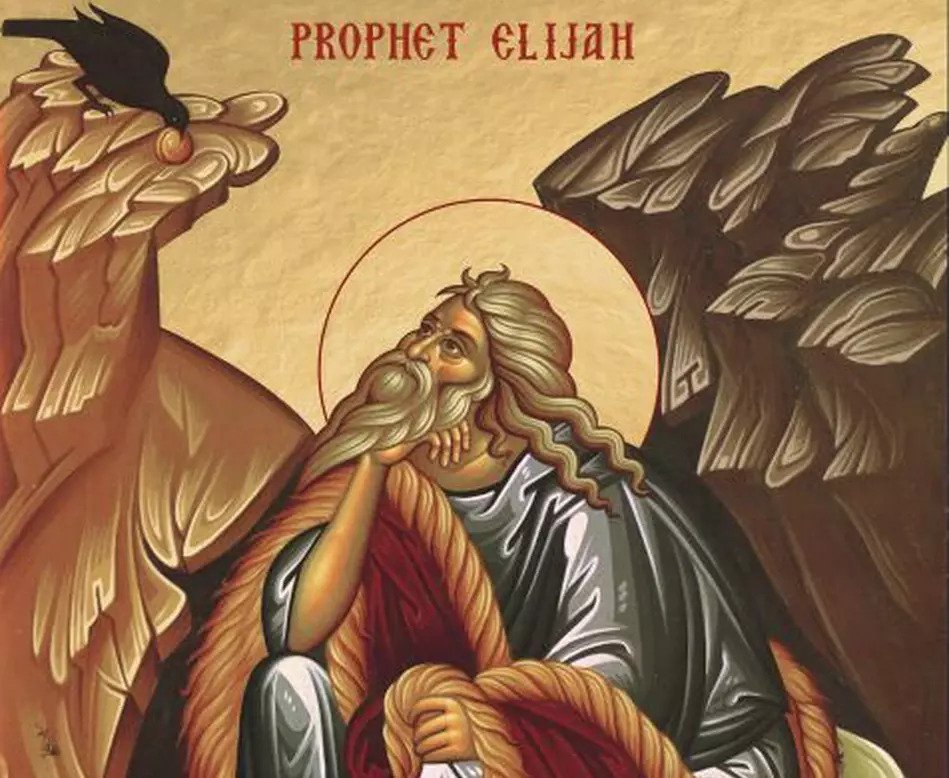
The prophet Elijah appears out of nowhere, bursting on the scene fully formed, ready to show the people of Israel who is the real God. In those days, in the other lands, prophets were a dime a dozen. People who delivered messages between the divine realm and the world of humans camped out in temples near idols like buskers with their hat on the ground.  

So when God calls prophets in Israel, one scholar says, we can think of God ‘using the technology of the day’ – people understood the idea of prophets. But the prophets of Israel weren’t street performers; they were honored guides, whose words were collected and recorded (the Israelites basically invented scripture). Messengers of Yahweh who spoke truth to power, the prophets reminded the kings that God’s covenant calling and the law of Moses applied equally to all people, kings included. 

Also, just to be clear, the prophets were weird. Pretty much all of them. The stories are wild, all performance art and poetry, confusing and disruptive. Not really the buttoned-up lawyer-type, they were more the off-the-grid, loud and raving type, the blunt objects God uses to break through the status quo and tear it all down when the people of God lose their way, imaginations dulled and senses numbed into accepting the unacceptable. This story of unbuilding and rebuilding repeats again and again.  So, the Hebrew prophets were both revered and a little bit feared, because they were unpredictable and a little bit dangerous, not quite housebroken, demonstrating Yahweh couldn’t be domesticated either. 

There are 133 named prophets in the bible, 16 of them women. Many spoke God’s words, but some of also performed miracles, these were known as ‘men of God’. Elijah, and his apprentice Elisha, were the most well-known ‘man of God’ types, conduits of the Divine who demonstrated God’s power with works of wonder.  

Elijah is most famous for two incidents that follow today’s story– one is a face-off with the prophets of Baal Hedad, a Mountaintop Battle of the Gods that lasts a whole day, during which Elijah taunts them relentlessly, and the Baal fails to deliver even a spark. Yahweh and Elijah come out on top when Yahweh’s fire from heaven vaporizes Elijah’s waterlogged sacrifice, altar included. Then Elijah takes things too far and slaughters the prophets of Baal. He immediately goes from speaking for God to cowering from the empire when Queen Jezebel threatens him and he flees for his life, bringing us to the second story Elijah is most known for. Wandering desperate and terrified through the wilderness he ends up in a cave, crying out to God. God sends a great wind, and a storm, and an earthquake, but God is not in the wind, or the storm or the earthquake, and then there is the sound of sheer silence. And this is where God meets Elijah. Speaking to him in the still, small voice. 

Those seem like significant stories, and the public showdown between Yahweh and Baal is a real boon to Elijah’s prophetic reputation. But the story we have today seems minor and unimportant. A miracle, for certain, but why is it recorded in the annuls of Kings? Why is it placed alongside stories that shaped the direction of history?

It helps to know something about the Ancient Near East. That there were many gods was simply accepted as fact, there was no alternative to polytheism, that’s just how it was for all peoples everywhere. When people groups mingled, they welcomed in each other’s gods and added them to their own collections. Different gods for different things, hierarchies of gods or their exact names—you might quibble about those details, but you would never question the array and assortment of deities. Scholars tell us that shifting from worshiping many gods to worshiping only one God was gradual – going from worshiping many gods to acknowledging them but worshiping only Yahweh, to not mentioning other gods at all, to finally saying only Yahweh is God and always has been, and there are no other gods—that process takes time, like, hundreds of years of gradual shifting.

So, Elijah is part of this shifting, moving people from worshiping many gods to worshiping Yahweh alone. King Ahab loves worshiping Yahweh, but he just mixes Yahweh up into his collection of other gods and can’t see what’s wrong with that. Only the Israelite kings did this, by the way. Outside of Israel, Yahweh was wildly unpopular, because a god who claims to be the only one does not play well with others.

So when God tells Elijah to tell King Ahab it won’t rain for three years until Yahweh says so, Yahweh is stepping into the realm of the Canaanite god of rain, fertility, growth, and increase- Baal Hedad.  In the way of the empire, the peasants work the land, the king reaps the benefits, and everyone behaves, accepting the way things are, and staying in their proper place. The temples to the rain god are in the cities where it matters, so the rain will fall specifically on the farms of the king, to feed his crops and increase the wealth of the wealthy.

But Yahweh is the God of all, with no distinction or preferences – except perhaps for the overlooked and undervalued. So, Yahweh turns off the faucet.

The law of Moses says God has called each person to know and follow God. All shall be given land, and if they don’t have it, then land and resources should be redistributed so everyone has what they need. People are commanded to look out for each other, and especially to take care of the oppressed and those on the margins, lifting up the poor, the widow and the orphan. Every person is part of God’s story and God has claimed them to be a blessing to the whole world.

But this empire structure King Ahab slides into props up the few by oppressing the many, consolidates power, tramples the weak, plunders the land, dehumanizes human siblings in the insatiable pursuit of more and more in a structure of fear and dominance, competition and scarcity, what we’ve called the way of fear

Not only is the one true God too big to be just one of many self-serving deities of the empire that we capitulate to, but the way of God is is in direct opposition to the whole empire thing altogether. Humans are made in the image of God to care for one another, to steward and tend the earth and its creatures, to enjoy life together in the presence of God, in an intricate and astounding world of interdependence, held in a relationship of trust and promise. Yahweh alone is God.

So, against that backdrop, here comes this little story.  After delivering his message of drought to the King, Elijah is sent by God to hang out by a drying up wadi (or creek), and told God will provide. And indeed, God does – never without a sense of humor, using ravens, an unclean bird, to bring food to him, because, remember? God is Lord of all, not even captive to our ideas of God, and is free to do what God wishes. So why not shake it up? Ravens it is! When the creek dries up God sends Elijah some 50 miles away to find this one, particular widow, whom God says will provide food and water for him. 

But when he finally gets there, famished, the lady seems not to have gotten the message. She’s willing to give him a bit of water, but when Elijah asks for food she says, (more bluntly than the Peace Table puts it), “I have enough oil and flour to make my son and me one last scrap of food and then we will lay down and die.” And Elijah has the nerve to ask her to feed him first. He promises the ingredients won’t run out. So, she does, and they don’t. 

And when I hear this, I don’t think, how wonderful! I think, how dare he ask her for that? She’s poor! She needs it way more than he does because she has a kid to feed too! There is only so much to go around! And to give it to some you must deny it to others. If he were really a good person, really from God, he would never demand something from someone who has so little!

And there is the voice of the empire within me! The empire imagination that keeps the peasants in their place and views the world through scarcity and competition. Exactly what the prophetic imagination comes to confront and expunge.

Why does this story matter? Here’s why: Because we too have been coopted by the empire to accept the unacceptable. We’re terrified when the status quo gets rocked and shaken, and the built gets unbuilt, because while it might not be perfect, at least it feels stable. It may be rotten with injustice and inequality, but at least we know how much eggs will cost. And the many gods we worship – gods of security and protection, gods of image and achievement, gods of wellness and longevity that we sacrifice to to keep the world from shaking so we can eek our way forward without much tumult or upheaval – when they fail us, and our 401Ks plummet, it’s terrifying.  We don’t want an unbuilt and rebuilt reality. As much as we call ourselves Christians, we don’t actually want a death and resurrection kind of God, a God who comes in weakness and shares suffering and invites us to see one another and share life with each other come what may and trust that God will meet us there and hold us fast. We want the empire, plain and simple. 

But this little story calls us back to the way of God, not by the prophet’s bold declaration but by his hunger and need. Yahweh is a God who provides. A manna in the wilderness God gives enough for the next meal, and the one after that, if we share it with one another. Not enough to increase and hoard, to rely on our own strength, power or cunning over and against one another. But enough to keep us operating in the currency of covenant, that is, trust and promise. 

The widow must trust Elijah, and must trust the promises of Yahweh through him. Elijah must trust God to provide and the kindness of this woman. He must entrust himself into God’s hands by entrusting himself into her hands. And she seems an unlikely source of security, indeed, not who you’d expect to provide for your needs because she apparently can’t even provide for herself or her son.  But when Elijah asks ‘the least of these’ for help, he elevates her from irrelevant object of pity to Provider of Hospitality. He comes to her in need of care, and sees her as able to care for him, even if she can’t at first see herself that way. And suddenly they are both freed from the empire. They are living the law of Moses, where all are neighbors, siblings in the human family, looking out for each other, and Yahweh is God of us all, promising to hold us and uphold us.

And so, Elijah gets to live the message he will go on to proclaim: There is only one God, this one, Yahweh, alone, who provides all we need and brings life out of death. This is whose we are. And we are called by this God to be a blessing to the world in our mutual care for one another. That is who we are.

There is nothing more destructive in all the earth than human beings forgetting our belonging to God and each other. And very often we just mix up Yahweh into our collection of other gods and get on with our empire-living. But we are the prophetic community, called to recall God’s faithfulness in the past, premember the future God is bringing, and join right now, from our weakness and need, in the kingdom of the living God unfolding here among us and between us, trusting the God of resurrection to meet us in our places of death. 

So, dear ones, may live the message we proclaim, hear within the silence the still, small, voice, and rest in the hammock of trust.

Amen. 

Saturday, March 8, 2025

Remembering how we do this

Our faith in the present is shaped by remembering God's faithfulness in the past. We are sustained by the same God who has sustained us before, and all those before us.  We modern folk are always looking forward. We forget that at any moment we could receive again the gifts and lessons we've been already been given. Here is a glimpse back at our own journey where God met us in difficult times. This God meets us again, here and now.


 Repent: lament, return, remember, rest
A sermon from June 2021 (mid-pandemic lockdown, post George Floyd murder)


Psalm 4

Answer me when I call, O God of my right!
   You gave me room when I was in distress.
   Be gracious to me, and hear my prayer. 


How long, you people, shall my honour suffer shame?
   How long will you love vain words, and seek after lies?
          Selah
But know that the Lord has set apart the faithful for himself;
   the Lord hears when I call to him. 


When you are disturbed, do not sin;
   ponder it on your beds, and be silent.
          Selah
Offer right sacrifices,
   and put your trust in the Lord. 


There are many who say, ‘O that we might see some good!
   Let the light of your face shine on us, O Lord!’
You have put gladness in my heart
   more than when their grain and wine abound. 


I will both lie down and sleep in peace;
   for you alone, O Lord, make me lie down in safety.


There’s a desperate vigilance and awful heaviness about the world at the moment. I think even if we aren’t paying super close attention, many of us are still feeling it. A shared, psychic weight to the world. Even as we are hurriedly vaccinating people, the case numbers are rising toward a global highest point, and what, another mass shooting? Wasn’t there just one yesterday? The pressure feels audible, the tension palpable. So many people I know have commented on how utterly exhausted they feel. But at the same time our sleep is fraught and spotty. We are alert, restless and exhausted.


It feels like we’re given two options, and neither one is tenable. One is to watch every minute of the Derek Chauvin trial, read everything we can about little Adam Toledo, break apart the video of Daunte White’s killing, stay up late watching national guardsmen teargassing journalists a few miles away from us, track the vaccinations, stay on top of the politicians, check in on the suffering children at the border and the conflicts simmering all over the globe, worry about the threat of climate change, and compulsively wonder what more we should be doing. And if we are not out marching or speaking out then we are following those who are, because we need to feel like we are doing something, like something is being done that can stop all this, or fix all this, and Lord, it’s all so awful how can we ignore even a moment of it? 


The other option we’re given is to go numb and limp. To shut it all off, and block it all out, and take in nothing but our own lives and desires. And maybe we occasionally feel a teeny bit guilty, but that’s better than helplessness and rage with no outlet. And sometimes we just bounce wildly back and forth between the two.


But there is a third way. And I think this Psalm gives it to us. 


It starts with lament. When the tears feel close, and sorrow claws up the throat, and anger and rage are right here next to us, we aim all of that right at God.  We moderns are pretty scared of lament in church, preferring the more palatable confession, but lament is an integral part of our faith. And this particular lament of David, we know, was sung in community, all the voices crying out together, Answer me when I call to you God! How long will this go on?


There is a mystery word here that shows up 71 times in the psalms and twice in Habakkuk, Selah. Because it’s very close to the word for pause, and also the word for praise, throughout the millennia it has come to be seen as a kind of mix of both - pause and praise God. Take a beat and turn your attention back to God.

So built right into the song is a pause, everyone stopping, silent, shifting focus back to God. And then continuing on in unison.


So hear the Psalm again, in this paraphrase:


O God who knows me, answer me when I call!

When I have been confined in anxious misery before, 

you’ve opened up expansive space for me to breathe, 

please hear me now; give me your grace again.


How long will our humanity be torn down? 

How long will lies be elevated, 

and people spread vitriol, delusion and exploitation?


Stop.

Take a beat. 

Turn your attention to God.


God has drawn us to God’s own being, 

those who seek God are claimed for God’s purposes.  

When you are worked up and distraught, 

don’t turn to division and blame; don’t tear down others.  

Instead, sit in it with God, 

be silent in a restful space. 


Stop.

Take a beat.

Turn your attention to God.


Lay everything before the Almighty in vulnerable honesty, 

and trust God with it. 

So many people say, “There is no goodness that we can see!” 

Oh Lord, let your love and truth shine on all of us!

You have filled me with deep joy, 

more happiness than when they have all the wealth 

and satisfaction they desire.


I won't stay up babysitting the world,

I will sleep soundly and deeply

because this your world, God, 

and my life is held in you.


Lament. Return to God. Then remember.  

This earth is heavy with sorrow and need. 

And at the same time this planet turns slowly in the utter silence of the vast cosmos, nestled amongst the great lights of burning stars, held in orbit to the sun. And within this planet, while one hemisphere is nestling down in winter hibernation, here the green shoots push up through the soil, and trees are awakening. And all over the planet new babies are born, and broken relationships are mended, and people are tending to each other, and there is laughter and joy, and tears of deep connection, and healing, and hope, and love remains the most powerful force in the universe, always at work, always, always, always.


But oh! We forget. So quickly, without realizing it, even when we’re trying to remember. 

This happened to me yesterday. I was remembering, and then I was completely derailed when I read in a commentary from 2012 (Shauna Hannan, Working Preacher) that in the first verse, where it says, you made space for me it originally alluded to “release from a tight noose at the neck,” the opposite of the word for when I was in distress, which is used for “a constricted larynx.”  And I stopped hearing the promise of God’s deliverance and the invitation to trust, and all I could see was that God did not make space for George Floyd when he was in distress, and how could I preach this text in the shadow of that? 


All day long I spun out, all day long I fixated on my words, the overwhelming sorrow and brokenness of this world, the pain of our city.  I did not lament. I obsessed. I did not take my anguish and sit silently before God. I logged onto the news and social media and started babysitting the world again. I did not come in honesty before the Almighty. I got caught up in blame and frustration in the country, and became controlling and edgy in my own house. 

And then I looked at the clock and realized it was time for evening prayers.[1] So I sat down on zoom with those who meet together every evening.  

Stop. Take a beat. Turn your attention to God.


And suddenly there was joy, in sharing about a day spent with happy little cousins, and our delight and horror at a ridiculous amount of accidentally purchased bananas.[2] Suddenly God was meeting us right there in our humanity, in our need, in our coming together. Then one of them repeated back to me that love is the most powerful force in the universe, and I was invited back into trust.


We are meant to stand with one another and for each other, to hold each other and fight for life for each other and us all, for this whole beautiful and broken world. We are made for love. God calls us into God’s purposes; we are drawn into God’s own being. We get to share in the love God is already, always bringing.


And then, at the end of the day, we sleep.  

To sleep is to yield to our most essential humanity – our creaturliness, our need, our soft, vulnerable, universal humanity, the warm breath, closed eyes, heavy limbs of us. 


Sleep is trust. It is pure being. Sleep is admitting we are not God. Sleep returns us to the humility of our own humanity. Only from here can we be fully in this life, with and for each other. 


We belong to God. This is God’s world. God made it. God came into it to bear our suffering and share our pain and take on our death so that death cannot, will not define us, will not have the last word, will not prevail. 


So stop. Take a beat. Turn your attention to God.


There is a poem by Pablo Neruda that I love, called Keeping Quiet. It goes like this:


Now we will count to twelve

and we will all keep still.


For once on the face of the earth

let’s not speak in any language,

let’s stop for one second,

and not move our arms so much.


It would be an exotic moment

without rush, without engines,

we would all be together

in a sudden strangeness.


Fishermen in the cold sea

would not harm whales

and the man gathering salt

would look at his hurt hands.


Those who prepare green wars,

wars with gas, wars with fire,

victory with no survivors,

would put on clean clothes

and walk about with their brothers

in the shade, doing nothing.


What I want should not be confused

with total inactivity.

Life is what it is about;

I want no truck with death.


If we were not so single-minded

about keeping our lives moving,

and for once could do nothing,

perhaps a huge silence

might interrupt this sadness

of never understanding ourselves

and of threatening ourselves with 

death.

Perhaps the earth can teach us

as when everything seems dead

and later proves to be alive.


Now I’ll count up to twelve

and you keep quiet and I will go.” 


Christ has risen. He is risen indeed. 

Death does not get the last word, and love is the most powerful force in the universe. 

May we join in fully. And may we sleep soundly.

Amen.


[1] At this time, Pastor Lisa and I were praying every morning and evening, and the congregation every Sunday night, over zoom, with a family navigating mom's cancer.

[2] In my first foray into online grocery shopping, rather than 14 single bananas, I’d inadvertently bought 14 2lb bunches of bananas.

Therefore...

    Romans 12:1-8 When I was ten years old at summer camp, we could earn points for various activities. My favorites were archery, target sh...