Showing posts with label remembering. Show all posts

Sunday, June 15, 2025

Who We Are and How We Know


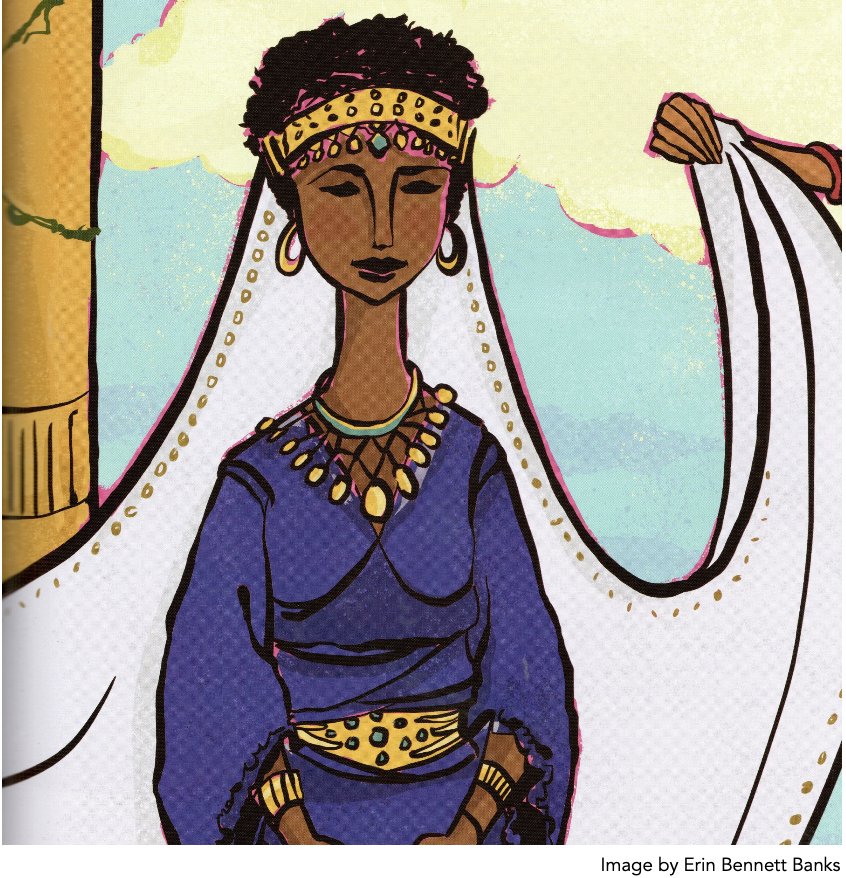
 Esther (Bible Story Summary in bulletin here)

Who are we? What makes us who we are? How do we know who we are and not forget?  These are big questions, and the answers matter.

Right now our country is in the midst of these question on a large scale, which we saw played out this weekend in striking contrast of parade and protest, violence and voices, and at the moment, all eyes are on Minnesota at the moment as we reckon with political assassination – something that seemed like an ‘them, over there’ thing until it because an ‘us, here’ thing yesterday.  Is that who we are now?

I attended two funerals this weekend, and funerals also try to answer these questions.  Most funerals wrestle pretty directly with our two big questions, Who is this God and what is God up to? And what is a good life and how do we live it?  This weekend I heard that God is love, and Jesus came to share this life with us and overcome death, so that the separation of death we suffer now will not have the final word. And I heard stories of two very different lives, both lived well, lives woven into other lives with love, and lived for something bigger than themselves.  

How do we know who we are? How do we figure out what is God up to? What makes a life good, and how do we live well? These are not solo questions. We do not ask them alone. Faith is not an independent, self-directed thing. Neither is identity. We do not decide on our own who we will be. We get to explore and become, alongside people who see us and reflect back to us who they see us becoming, and encourage us in our exploring. We are always in context. 

To understand our context we use stories. The stories told at funerals and around the tables afterwards, describing scenes and moments, show us who people are, wonders what makes them that way, and so probe against the question of what a lifetime is for, and how to live it well. Stories tell us where we came from, and reveal how people before us navigated their lives. Stories help us to know who we are.

Reading the story of Esther on Purim grounds the Jewish people in their identity and context. Here was a time when they could’ve all been exterminated, and instead they were delivered. Here is another story of a Jewish person living in the royal court of their oppressors, like Daniel in Babylon, and Moses raised up by the Egyptian princess, and Joseph in Egypt before him.  Here is the story of a young woman whose courage to speak up saved her entire people throughout the whole empire. But she did not have that courage all on her own.  She said to Mordecai, “Have all the Jews pray and fast for me for three days, then I will go speak to the king, even though by doing so I may die.”

But instead of dying for approaching the king without permission, Esther’s request was heard, and the people were saved, and Haman was destroyed instead.  Mordecai himself announced the day of Purim should be celebrated, and so it still is.  

In telling it again and again, year after year, Haman becomes the representative of all anti-semites, and Esther is the paragon of courage. The story tells of this scattered and weak people, who by the hand of God, outlasted the Persian empire that almost wiped them out, and the Babylonian and Assyrian and Egyptian empires before that, and the Roman and Greek empires after it.  You come from somewhere! It says. You belong to something! Telling it again and again together, with food and ritual and songs and symbols and sounds and sharing with others and giving to the poor, helps to ground them in the truth of who they are and keep practicing who they are called to be. And it helps them watch for where God might be calling them to act now. Because in the book of Esther, God is not front and center. The people have to wrestle, and discern, and choose, and act, without some of the flashier directness God uses in other parts of scripture. So, it feels like the kind of discernment we modern people have to do too, when we hear Mordecai wonder if God might have allowed Esther to be in her position “for such a time as this.” And this ancient scroll drops that phrase into words the first time in human history. “For such a time as this” is the kind of line that blows open our imaginations, yanks us from our self-defined ruts and the constraints of what is – and propels us into the possibility that we’re actually living in a broader story, not dictated solely by what we can see, a cosmic timelessness that lands in time at certain points and calls us to respond.

In a little while we will gather at the communion table and we will hear the words of Jesus – the very words Jesus spoke over 2000 years ago, when he invited his disciples and so invites us all these centuries later – to come to this table, and share this bread and this cup – that this is his body and blood shared for us, his very life given for our life, drawing us into life that will not end.

How do we know who we are? How do we figure out what is God up to? What makes a life good, and how do we live well? 

Do this in remembrance of me, Jesus says. Come back to who we are together. You are not alone and apart. You are part of me and joined together as a people claimed for God’s way and defined by God’s love.  

Our identity is not our own. We are in Christ. That means that we have died his death and been raised into his life, and this life that cannot die is what defines us.  Sin says we are apart and against, we must earn our belonging and we can refuse others’ theirs, we have to hide in shame when we mess up and strive to make our life valuable on our own, but we are dead to sin. All need for fear and self-protection has died with Christ.  All our losses and pain are not ours alone to hold, we are held together by God in the hands and hearts of other people. Christ’s complete belonging to God and all others is given to us. That is who we are. Beloved Children of God, each one of us uniquely made and directly called to participate in and share God’s love. And we come from a community of those who’ve died and been risen to freedom and hope.  This identity is unshakable and secure, because God decides it is so. 

But sin is loud and fear’s voice is persuasive. We forget who we are. So when we come to this table, it is like sitting down to eat with all those gone before, and all those right now around the whole world who are also in this community of the died and risen One, whose lives are part of Jesus’ life, and who live as a people claimed for God’s way and defined by God’s love.  

Then we do what Jesus told us to do at this table, but we also retell the story. We remember how it began, and this remembering together and practicing together, helps us remember and practice being who we are right now, with courage and hope, and helps us look forward to the day when what we are practicing for becomes the full reality forever.  

Today we prayed a blessing on our high school graduates. As they keep asking the questions that human lives are shaped around, How do I know who I am? How do I figure out what is God up to? What makes a life good, and how do I live well? Their immediate context will change but their larger context remains the same. The somewhere and someone they come from is not just their families and friends, it’s us, but not only the little LNPC us here and now, the big us. They come from a story that reaches back to the beginning of time and forward beyond time, a story shared in ritual and rhythms, in relationships and in remembering. They come from Esther, and Joseph, and Ruth, and Samuel, and Jacob, and Hagar, and Moses, and Mary and Joseph, and all the followers of Jesus who had no clue what they were doing but followed anyway and God took care of them and invited them to join in what God was up to anyway. They come from these stories practiced in candlelit Christmas eves, and finding Easter Hallelujahs and being served communion by the person next to you, and most importantly, praying and being prayed for. Watching other people struggle with suffering and sadness, and holding them up to God.  Knowing other people are holding you up to God because they’ve literally sung “God in your loving mercy hear our prayer” about something you just named aloud. 

When Esther was faced with something impossible, something terrifying, with huge consequences – it could maybe save her whole people? Or she could maybe die? – she said, ask everyone to pray for me, and I will do it.  

When you belong to the people of God, you are not alone. The people of God are people of prayer, people who help each other remember it is God who saves, and it is God who acts, and it is we who join in, we who get to be part of the action and the saving that God is doing. These people are here in this room, and these people are everywhere. Your community is vast.

We live short lives inside a long story. Empires rise and empires fall, but God is constant. This is our context.  The people we love live their good lives and then die, and we miss them, and then we tell stories to help us know who they were, and know who we are because of them, and help us figure out what makes a good life and how we might live, and watch for what God is up to in all of this. And their life goes on beyond what we remember and so we remember that ours will too.  

As we bump along our own lives, mostly doing our best and making it up as we go, we are held in a web of story, and prayer, and remembering, and retelling. That is how we keep bravely asking the human questions, and this is how our identity is shaped and held. 

Who we are is the people who’ve died to death and been raised to life, who practice being available to God and letting God’s love and healing come through us. And in the cosmic timelessness of Jesus Christ, our lives are always for such a time as this. 

Amen.

Sunday, November 21, 2021

The True Wisdom

Jan Richardson's The Best Supper. You can see her work at janrichardson.com, 
and register for her Advent retreat at adventdoor.org

 1 Corinthians 2:1-16

One of my favorite Thanksgiving stories pops up again every year in the news and social media because it is ongoing.  Six years ago a 64-year-old woman named Wanda Dench sent a text to her grandson inviting him to Thanksgiving dinner. But it was a wrong number, and a 17-year-old boy named Jamal Hinton received the text, and asked, “Who’s this?” She shot back boisterously, “Grandma!” After some sorting out and selfies confirmed they were, in fact, strangers, he asked, “Am I still invited?” And she answered, “Of course! It’s what Grandmas do! Feed people!” So he accepted and went to her house for Thanksgiving dinner. 

Jamal has been at Wanda and Lonnie Dench’s Thanksgiving table every year since. When Lonnie died of Covid, last year’s with Wanda was a table of shared grief.  This week Jamal and Mikeala will be back at Wanda’s table where they belong.  

We all belong to God and we all belong to each other. 

All of us. All the humans. Without exception. 

There is no more fundamental truth than this, nothing more real in all the world, actually. 

But oh, how we forget it, and doubt it and disguise it and deny it.  How we cover it up with layers of interpretation and competition and hedging our bets and building our coalitions and hiding our true selves. 


And soon this hunger for belonging - this absolutely core, unshakable reality that we yearn to feel because we know it in our depths as the truest thing, the most real thing - soon it becomes something we commodify. We dole it out in tiny amounts, and sell to the highest bidder, we seek it relentlessly, addictively, in harmful and dehumanizing ways. And we make it probationary or provisional, limited and guarded, shutting out some in order to welcome in others. 


We long so badly for this connection to God, this belonging to the very source of life, our identity, our purpose, our human-made-in-the-image-of-the-Creator-core-being –that we set up rules to mediate it, to say who has it, and who doesn’t, and how to earn it, and who can dispense it, and what can make you lose it or gain it. And oh, the contortions we twist and the energy we expend trying to gain or earn what already defines us!


We forget- in that deep existential kind of forgetting - that belonging to God and belonging to each other is something hidden before the foundations of the world, decreed before the ages for our glory, utterly true and eternally unchanging. And then once in a while, like unexpectedly sharing Thanksgiving with a stranger, we remember.


There are two wisdoms, friends. Paul says. 

There is the wisdom of this age.  At LNPC we’ve been calling it “the way of fear.” This wisdom is built on power and centered on scarcity. It tells us always life is urgent and you must never let up or let down your guard. Each of us is in this alone, other people are competition or threat, and judgment and condemnation are constant companions.  

The way of fear seeks salvation from smart leaders, wise investments and the careful construction or dismantling of isms. It says we can be saved by weapons, or by legislating against weapons, by this candidate or that party, by this act of piety or that specific prayer, by this way of seeing the world or that list of beliefs.  It says you can force others to respect you through violence or through moral rightness, and these also prove your worth or earn you a place at the table. 

And we put stock in that kind of wisdom, we pay money to it, and educate our children in it, and take it in through our televisions and computer screens and phones and car radios, scrolling, listening, reading, soaking in so many words: his words, her words, their words. 


And like the dingy beam of a dying flashlight, we hold up this worldly wisdom before us, and we squint into the darkness, letting it guide us. And we’re killing each other. And we’re blaming each other. And we are finding more ways to divide into ever smaller and more homogenous camps, until there will be no belonging left and it will be just me against you – all the mes and all the yous against all the other mes and all the other yous. Despairing. Alone. Afraid.


But there is another wisdom.

Ancient and true. Secret and Hidden. Decreed by God before the ages, running like an underground river through time.  The wisdom that spoke the world into being with a single word, the wisdom that bound it all in harmony and order, a delight to its creator, functioning in love and cooperation. The wisdom of the Word made flesh when the Creator of all came to dwell among us. Stupidly. Weakly. Foolishly, to live without power and to die alongside us, on our behalf. 


There is no worldly wisdom in this. It is what the Narinians call, “the deeper magic from before the dawn of time.” Unbreakable and resilient, absurd and steadfast, it comes concealed in weakness to stand always with the weakest among us.  


Paul was a Roman citizen from a prominent Jewish family, well-established with an impressive pedigree. He studied under the most prominent rabbis of the day, and was fluent in classical literature, philosophy and ethics. Paul was educated in the wisdom of the world. He was a successful, powerful, influential figure, and a zealot.  He knew how to speak the wisdom of the age, in the language of the rulers of the age.


But when he comes to the Corinthians, he chooses to leave all that behind. He sees it as a distraction, a shiny diversion that might keep people from seeing the real reality. I did not come with all the methods and the political skills of lofty words or persuasion. He says.  I came in weakness and fear, with much trembling. I wanted you to see God’s actions instead of focusing on my words -  So that your faith might not rest on human wisdom but on the power of God.

In other words, he says, I vowed to know nothing among you except Jesus Christ and him crucified.


Paul uses this language -  “Jesus Christ and him crucified,” “the cross,” “the foolishness of the cross,” again and again, as a kind of shorthand to refer to the whole of the incarnation, death and resurrection of Jesus- that is, that the Almighty came into this world as a helpless a baby, into the arms of those he came to save, to share this life with us. And then died, taking all that separates us from God, all destruction and brokenness, even death itself, into God’s very being. 

Then Jesus rose from the dead, and everything we thought was real about the power of death and division is exposed as utter fraud by the unquenchable light of the world, the wisdom hidden before the ages shining forth, and there is nothing, nothing, nothing that can separate us from the love of God in Christ Jesus. It’s settled and final: We belong to God, we belong to each other. This is what Jesus trusted, and embodied, what he died for and rose into and referred to again and again as ‘The Kingdom of God.’


And yet… and yet we choose sin. Which is to say, we choose self-protection and division and destruction and existential forgetting. We choose to tear others down and to fear, fear, fear that anything, everything, could tear us down. 


But here is the free gift of salvation, friends. Right here: You belong to God. You belong to all the rest of the people in this whole big world.  And they belong to God, and they belong to you. Fact. Done. All that is needed is to say yes. Yes, I accept that. Yes, I receive that.


And because we’re steeped in the wisdom of the age, bobbing around every day in the way of fear, this is not a once and done acceptance. It’s an, over and over, Oh yeah! That’s right! kind of remembering, a chance to return, at any moment, every day, back to the truth that holds us.


Biblical scholar Mary Hinkle Shore describes spiritual wisdom like a pair of lenses at an eye exam, where click, click, click, suddenly the fuzzy blur is sharp and clear, the chart in focus. You can see what was there all along, only obscured by the various lenses that misinterpreted it for you. 


Paul calls this having the mind of Christ. Jesus was both always connected completely to the Father and always belonging completely to the world. Always at home in God, always living in a settled state of trust. And we can enter that, too, at any moment. Christ’s faith is our faith, Christ’s mind is our shared mind now, Christ’s lens is our lens. The Holy Spirit makes us into Christ’s body here on earth so that we embody belonging to God and belonging to each other.


There is nothing that happens to us that God doesn’t share.  And sharing it with each other is how we see God, because that is where Jesus is. Bearing with us, already. 

That is the wisdom of the Spirit  - that God doesn’t swoop in and triumphantly sweep away all of life’s pain and heartache. God sets a place at the table of life for each person and sits down alongside us. God offers God’s very self to us, broken and given, so that we might be made whole.


Having the mind of Christ helps us see this.  And it makes us brave. Brave to face the truth. Brave to tell the truth. Brave to live the truth with each other. Even when the truth is, This sucks! This hurts so bad! it’s terrible and I hate everything about it! Because we know all sorrow and suffering is embraced and joined by God.  

And also, we know it’s not the end. It’s not the real, final, and true word about all of this or all of us. And right here, in the midst of whatever it is, we keep belonging to God and we keep belonging to each other. And this world is absolutely and forever loved by God, who is, at every single moment, bringing wholeness and love, healing and hope, through all the cracks and crevices in infinite and often unnoticed ways, and who is leading it all toward undiluted and unending love.  That’s the real reality.


A few minutes ago, when we baptized little Ohlin, we poured over him this promise and spoke into him this ancient and deep word of life, Ohlin you are held in the reality of God’s love, part of the harmony of all things, from before the foundation of the world and long after you are gone from it.  

And you, First Presbyterian Church of South St Paul, in this mystical and sacred act, promised to teach Ohlin this eternal wisdom, and when he forgets his belonging or the world’s belovedness, you are the ones who remind him. 

And you committed to Ohlin to live out your own remembering alongside him until he begins remembering for himself, and then helps you all in your remembering, and you’ll remember together. And you’ll send him into the world to remember with and for others, and to find Jesus right there where Jesus already is, to see God and join in God’s work of redemption. 


That this power was just bestowed upon a baby, that this act that undermines all the might and corruption and brokenness of this world just happened right here is a mystery that can hardly be grasped. 

None of the rulers of this age understand this wisdom, Paul says.

And why should they? It makes no sense. Its logic is love; its awareness is transcendent.


There are two short-cuts that I know of back to the true wisdom.  

The first one is sabbath. 

This wisdom tells us to stop and rest every single week. To put down everything, and not do anything impressive or productive at all– it deprives us of all our devices of accumulation, our instruments of efficiency, our tools of measurement and our weapons of comparison, and forces us to just be human beings with each other. Our glorious and pitiful, nervous and intriguing selves are utterly loved by God in all our sagging, annoying, endearing and honest humanity. This regular, intentional stopping doesn’t make us fall behind or miss out; but actually restores our souls, returns us to being human and grounds us in our belonging once again. Be still and know I am God.  


The second short-cut back to the true wisdom is gratitude.


Br. David Stendyl Rast asks, 

“Is not gratitude a passage from suspicion to trust, from proud isolation to a humble give and take, from enslavement to false independence to self-acceptance in that dependence that liberates? 

Yes. he answers. Gratitude is the great gesture of passage.

And this gesture of passage unites us. It unites us as human beings, for we realie that in this whole passing universe we humans are the ones who pass and know that we pass. There lies our human dignity.

There lies our human task.

The task of entering into the meaning of this passage (the passage which is our whole life), of celebrating its meaning through the gesture of thanksgiving.”


Sabbath and gratitude can point us back to the wisdom deeper than words.  

But we do not make moments of awareness and transcendence happen. 

They come upon us. 

From time to time, when we are unprepared and unsuspecting, we are seized by a kind of wakefulness that resonates in our depths. 

Cradling a new baby, swaddled and sleeping, warm against your chest…  

Standing still under a vast, dark and starry sky….  

Pausing, breathless and still, holding eye contact with a deer you’ve just startled while meandering in the woods…. 

Being held in someone’s strong embrace while you weep…. 

Rocking back and forth in violent hilarity with a friend gasping in unruly laughter beside you….

Through the whisper of memory, the glimpses of fullness, the flashes of beauty, and the tastes of wonder, God keeps calling us back to the deep.

The true wisdom will mostly show up in weak, gentle and surprising ways, but it is steady, persistent, unfailing.  Underneath and behind and inside everything is the heartbeat that keeps the whole world alive: 

We belong to God; we belong to each other. 
We belong to God; we belong to each other.


Here’s the really good news about all of this:

It remains true whether we remember it or not. 

Whether we are actively looking for it, practicing it and embodying it, or whether we’re stranded in fear or lost in exhaustion and all we can see is the next anxious moment in front of us, God’s persistent reality of love, hope, belonging and connection is already holding us all.  

The table of welcome is always set, and every one of us is endlessly invited.

This week, may we accept the invitation.


Amen.


What Jesus does with my malice

Matthew 22:15-22 There are certain public figures who, from time to time, I give a lot of my attention to. Their actions stir my rage. They ...