Showing posts with label questions. Show all posts

Sunday, June 15, 2025

Who We Are and How We Know


 Esther (Bible Story Summary in bulletin here)

Who are we? What makes us who we are? How do we know who we are and not forget?  These are big questions, and the answers matter.

Right now our country is in the midst of these question on a large scale, which we saw played out this weekend in striking contrast of parade and protest, violence and voices, and at the moment, all eyes are on Minnesota at the moment as we reckon with political assassination – something that seemed like an ‘them, over there’ thing until it because an ‘us, here’ thing yesterday.  Is that who we are now?

I attended two funerals this weekend, and funerals also try to answer these questions.  Most funerals wrestle pretty directly with our two big questions, Who is this God and what is God up to? And what is a good life and how do we live it?  This weekend I heard that God is love, and Jesus came to share this life with us and overcome death, so that the separation of death we suffer now will not have the final word. And I heard stories of two very different lives, both lived well, lives woven into other lives with love, and lived for something bigger than themselves.  

How do we know who we are? How do we figure out what is God up to? What makes a life good, and how do we live well? These are not solo questions. We do not ask them alone. Faith is not an independent, self-directed thing. Neither is identity. We do not decide on our own who we will be. We get to explore and become, alongside people who see us and reflect back to us who they see us becoming, and encourage us in our exploring. We are always in context. 

To understand our context we use stories. The stories told at funerals and around the tables afterwards, describing scenes and moments, show us who people are, wonders what makes them that way, and so probe against the question of what a lifetime is for, and how to live it well. Stories tell us where we came from, and reveal how people before us navigated their lives. Stories help us to know who we are.

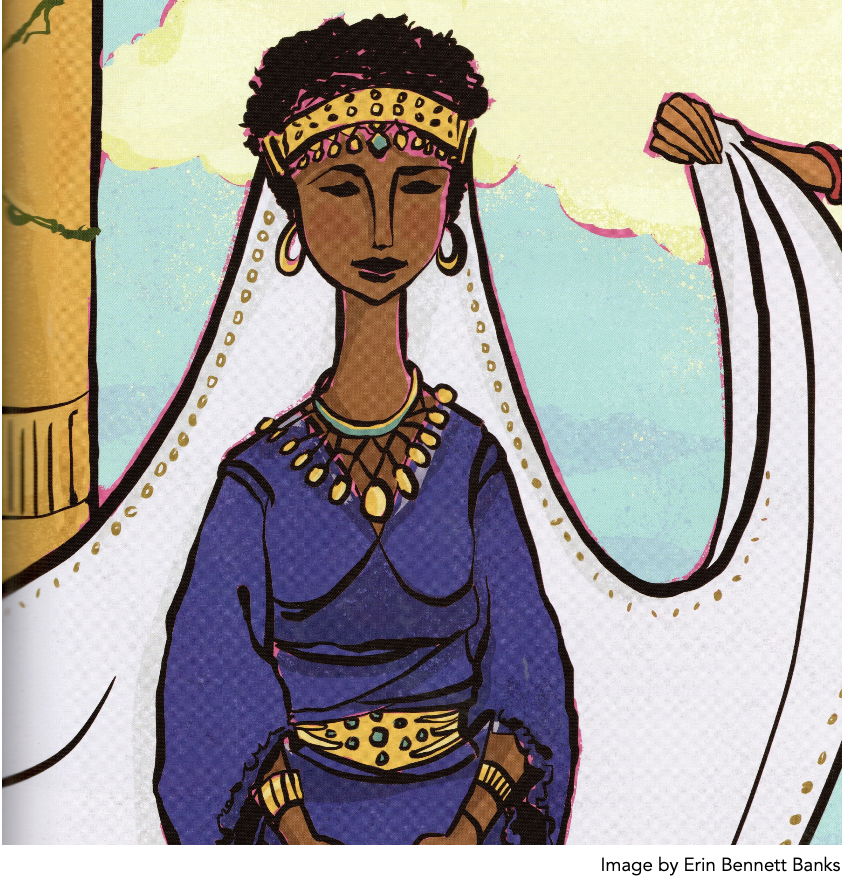
Reading the story of Esther on Purim grounds the Jewish people in their identity and context. Here was a time when they could’ve all been exterminated, and instead they were delivered. Here is another story of a Jewish person living in the royal court of their oppressors, like Daniel in Babylon, and Moses raised up by the Egyptian princess, and Joseph in Egypt before him.  Here is the story of a young woman whose courage to speak up saved her entire people throughout the whole empire. But she did not have that courage all on her own.  She said to Mordecai, “Have all the Jews pray and fast for me for three days, then I will go speak to the king, even though by doing so I may die.”

But instead of dying for approaching the king without permission, Esther’s request was heard, and the people were saved, and Haman was destroyed instead.  Mordecai himself announced the day of Purim should be celebrated, and so it still is.  

In telling it again and again, year after year, Haman becomes the representative of all anti-semites, and Esther is the paragon of courage. The story tells of this scattered and weak people, who by the hand of God, outlasted the Persian empire that almost wiped them out, and the Babylonian and Assyrian and Egyptian empires before that, and the Roman and Greek empires after it.  You come from somewhere! It says. You belong to something! Telling it again and again together, with food and ritual and songs and symbols and sounds and sharing with others and giving to the poor, helps to ground them in the truth of who they are and keep practicing who they are called to be. And it helps them watch for where God might be calling them to act now. Because in the book of Esther, God is not front and center. The people have to wrestle, and discern, and choose, and act, without some of the flashier directness God uses in other parts of scripture. So, it feels like the kind of discernment we modern people have to do too, when we hear Mordecai wonder if God might have allowed Esther to be in her position “for such a time as this.” And this ancient scroll drops that phrase into words the first time in human history. “For such a time as this” is the kind of line that blows open our imaginations, yanks us from our self-defined ruts and the constraints of what is – and propels us into the possibility that we’re actually living in a broader story, not dictated solely by what we can see, a cosmic timelessness that lands in time at certain points and calls us to respond.

In a little while we will gather at the communion table and we will hear the words of Jesus – the very words Jesus spoke over 2000 years ago, when he invited his disciples and so invites us all these centuries later – to come to this table, and share this bread and this cup – that this is his body and blood shared for us, his very life given for our life, drawing us into life that will not end.

How do we know who we are? How do we figure out what is God up to? What makes a life good, and how do we live well? 

Do this in remembrance of me, Jesus says. Come back to who we are together. You are not alone and apart. You are part of me and joined together as a people claimed for God’s way and defined by God’s love.  

Our identity is not our own. We are in Christ. That means that we have died his death and been raised into his life, and this life that cannot die is what defines us.  Sin says we are apart and against, we must earn our belonging and we can refuse others’ theirs, we have to hide in shame when we mess up and strive to make our life valuable on our own, but we are dead to sin. All need for fear and self-protection has died with Christ.  All our losses and pain are not ours alone to hold, we are held together by God in the hands and hearts of other people. Christ’s complete belonging to God and all others is given to us. That is who we are. Beloved Children of God, each one of us uniquely made and directly called to participate in and share God’s love. And we come from a community of those who’ve died and been risen to freedom and hope.  This identity is unshakable and secure, because God decides it is so. 

But sin is loud and fear’s voice is persuasive. We forget who we are. So when we come to this table, it is like sitting down to eat with all those gone before, and all those right now around the whole world who are also in this community of the died and risen One, whose lives are part of Jesus’ life, and who live as a people claimed for God’s way and defined by God’s love.  

Then we do what Jesus told us to do at this table, but we also retell the story. We remember how it began, and this remembering together and practicing together, helps us remember and practice being who we are right now, with courage and hope, and helps us look forward to the day when what we are practicing for becomes the full reality forever.  

Today we prayed a blessing on our high school graduates. As they keep asking the questions that human lives are shaped around, How do I know who I am? How do I figure out what is God up to? What makes a life good, and how do I live well? Their immediate context will change but their larger context remains the same. The somewhere and someone they come from is not just their families and friends, it’s us, but not only the little LNPC us here and now, the big us. They come from a story that reaches back to the beginning of time and forward beyond time, a story shared in ritual and rhythms, in relationships and in remembering. They come from Esther, and Joseph, and Ruth, and Samuel, and Jacob, and Hagar, and Moses, and Mary and Joseph, and all the followers of Jesus who had no clue what they were doing but followed anyway and God took care of them and invited them to join in what God was up to anyway. They come from these stories practiced in candlelit Christmas eves, and finding Easter Hallelujahs and being served communion by the person next to you, and most importantly, praying and being prayed for. Watching other people struggle with suffering and sadness, and holding them up to God.  Knowing other people are holding you up to God because they’ve literally sung “God in your loving mercy hear our prayer” about something you just named aloud. 

When Esther was faced with something impossible, something terrifying, with huge consequences – it could maybe save her whole people? Or she could maybe die? – she said, ask everyone to pray for me, and I will do it.  

When you belong to the people of God, you are not alone. The people of God are people of prayer, people who help each other remember it is God who saves, and it is God who acts, and it is we who join in, we who get to be part of the action and the saving that God is doing. These people are here in this room, and these people are everywhere. Your community is vast.

We live short lives inside a long story. Empires rise and empires fall, but God is constant. This is our context.  The people we love live their good lives and then die, and we miss them, and then we tell stories to help us know who they were, and know who we are because of them, and help us figure out what makes a good life and how we might live, and watch for what God is up to in all of this. And their life goes on beyond what we remember and so we remember that ours will too.  

As we bump along our own lives, mostly doing our best and making it up as we go, we are held in a web of story, and prayer, and remembering, and retelling. That is how we keep bravely asking the human questions, and this is how our identity is shaped and held. 

Who we are is the people who’ve died to death and been raised to life, who practice being available to God and letting God’s love and healing come through us. And in the cosmic timelessness of Jesus Christ, our lives are always for such a time as this. 

Amen.

Sunday, November 10, 2013

Questions that hurt


A few years ago I came across something online called “Eternal Earthbound Pets;” pet insurance for the rapture. For $135 for the first pet (and $20 each additional at the same address), a group of well-meaning and well-organized, animal-loving atheists will care for your pet for the duration of its life, if you are raptured up to heaven in the end times. 

The frequently asked questions page considered such things as,
“How long will it take someone to get to my pet, after the rapture happens?” 

“Since we assume chaos will reign immediately after the rapture, we can make no precise predictions as to response time, but have committed certified atheist pet rescuers in a certain mile radius from our clients.  Your animal will be rescued in as timely a manner as possible and after no more than 12 hours.”

“What if it turns out a relative of mine is left behind and wants to care for my pet?”
“Unless otherwise specified, unraptured relatives will have the right to claim and care for your pet, but if they choose not to, we guarantee to fulfill the contract and provide quality care for your earthbound pet.”

This arrangement struck me as a delicious win-win for all involved.
For Christians planning to be raptured, what a great service this is!
And sure, it’s a bit of a gamble, because while the end times certainly could come in our lifetime, there is no guarantee – so you may be out $135.  But isn’t it worth $135 for the peace of mind that you have knowing you’re a prepared and responsible pet owner?  Because really, who wants to come into glory worrying about poor Fido starving to death back home in a post-apocalyptic nightmare?
How much better that all the doomed humans fighting it out against the anti-Christ and his evil minions have something good to occupy themselves with besides their own too-late and terrifying circumstances? 

(Although, if we’re completely honest, it’s a bit of a double bind, because of course, you’d like everyone to be saved, and you’d may even make some effort in this life to share the gospel with as many people as possible, but secretly, you hope that if anyone is stubborn and unfortunate enough to hold out on God it will be your pet-rescuer.  What a disaster it would be if, when gathered in the golden streets at the throne of our Lord and Savior, you were to turn your head and see your certified atheist pet rescuer standing right there next to you among the saved?  God-forbid!)

Thankfully, because the atheists involved sign a contract guaranteeing they do not believe in Jesus Christ as Lord, and are in fact committed avowed atheists, mutual trust joins mutual stereotyping to create this almost foolproof system and you, and Fido, will probably be all right.

But let us not forget that is a win for the Atheists as well!  Those who volunteer to care for the pets of raptured Christians, of course, have nothing to lose and everything to gain, since in their mind they will never be called to fulfill this extreme and, let’s face it, kind of big commitment, as they do not believe such an occasion will ever actually arise!  It’s a small gamble for them too, because of course, they could be wrong, but they’re preparing for that, so all in all, pretty risk-free, if you think about it.[1] We’re all just anonymously benefiting from each other’s faulty belief systems.

That is what the Sadducees question to Jesus today reminds me of. Supposedly high stakes, but utterly risk free questioning.

Sadducees were in charge of the temple. They were educated and devout- united with Pharisees in their hatred of Jesus, but divided from them over many other things, including belief in resurrection. The Sadducees saw authority only in the Pentateuch, the first 5 books of Scripture, believed to be written by Moses. And since the Pentetuch doesn’t mention anything about it, resurrection after death must not be real.

The stage is set.

And now the Sadducees approach Jesus with a riddle of sorts, a real stumper.  And the catch is, they’ve got nothing at all invested in the answer. They don’t even believe in resurrection to begin with! It’s a nothing to lose question for them.

So here goes the question.

Woman’s husband dies.  Law of Moses says the brother should marry to continue the family line for the husband. Brother marries. Brother dies childless. Second brother marries.  Dies childless.  This goes on seven times, (one bride for seven brothers). Now in the “resurrection,” they say, whose wife will she be?
You can imagine, when they’re finished setting up the scenario, that the listeners and onlookers are silent and grinning, watching the hot ticket rabble-rousing Rabbi Jesus as he is confronted with this resurrection-busting question, “Oooh! What’s he gonna he say?!” 

But something goes awry.
Jesus doesn’t take the bait.
Instead he goes underneath their whole argument to the very foundation of what’s real, what’s at stake for us all.

Those who belong to “this age” Jesus says, deal with this marriage thing.  But in the age to come there will be no need of it.
In other words, this thing we call marriage? This social contract to protect widows, this mechanism to continue the family line, this law to preserve and protect people? That’s completely irrelevant and unnecessary in the resurrection.  In fact, Life itself will not be recognizable. 

With our limited imaginations, and locked inside time and space, and our own human constructions, we can’t even begin to fathom that life means anything other than what life means to us right now.
The Sadducees assumed life eternal just means this, only longer.  This, forever and ever.  More eating and sleeping and working and raising kids and paying parking tickets and planning anniversary parties and feeding pets and seeing chiropractors and asking for raises.

Once, as I was planning a difficult visit that dearly I wanted to go well, a wise friend reminded me not to keep adding days on in attempt to make it go better, “Kara, remember, it’s not about quantity, it’s about quality.”

Resurrection makes that shift, taking us out of quantity and into quality. It alters substance completely, it changes all the rules, not merely a never-ending quantity of the same lurching efforts, it is qualitatively different than life as we know it.

The resurrection is, to the Sadducees, just an idea, something to argue over, something to debate, something that separates them from the people around them, the fools, who believe in this silly notion, and something which others, who do believe in it, can use to judge them. It’s hypothetical and risk-free, and ultimately requires nothing from them.

And there is so much irony in this moment, not least of which is that when Luke reports this story, the temple itself, meant to last forever, is gone, and along with it, the role of its caretakers, the Sadducees; there is no more need for them. They have fallen out of collective consciousness enough that Luke has to remind his readers who they were and what they believed.  And yet, here they stand in their time-groundedness, throwing around their hypothetical arguments as though they’ve got no skin in the game of life and death.

No way is resurrection real and dangerous; they’re confident of that.
What’s real is this business of people dying – that’s indisputable. Marrying and being childless are real. Having mouths to feed, a legacy to leave behind, a widow to care for.  Dying young with nothing to show for it, being forgotten generations later, that’s frighteningly real.
What’s real is that each of them is making their way in the world in their own connections and isolation, loss and fears, relationships and obligations, duties and dreams, and the cold hard truth it all comes down to that ultimately, every one of them, like every one of us, will one day die.  And the truth is not a single one of us knows what happens after that.
And instead of bringing questions from those real and vulnerably places, they stand there with their clever riddle, and it is inconceivable to them that resurrection would have anything to do with you and me right here and now. 

But Resurrection, it turns out, is the realest thing there is.
And he is standing in front of them.
The most gripping irony of all in this conversation is that the one whom they question about hypothetical resurrection, is in fact the real embodiment of it. The love of God alive and in the flesh. They can’t imagine or accept that there is anything beyond the life we see and know here and now, even though right here and now, God eternal is in their midst.

And then he says this startling and wondrous thing: God is the God of the living, not the dead. God is the God who comes in and shares life.  God brings life out of death, is always creating anew, takes what is dead and shaping new life. The God of the living is with us, even now, as God is with all those who’ve gone before, whose lives are taken into the living one as well.

Our faith, our trust, our hope, is not in something that we guess or argue may or may not happen after we die.  It’s not in our own strength of belief or lack of doubt, our foolproof arguments or racked up good deeds, our hope is not in any other form of insurance we’ve got for our own souls, or for those we love, to make sure we’re not overlooked now or left behind one day.  Our faith, our trust, our hope, is in the living God, the God of the living, who is deeply invested in life with us, who’s got skin in this game.

And one day, when time is no more, these broken and patched together systems we’ve set up in this life to try to ensure people’s security, protect people’s humanity, offer a chance at something like wholeness, will cease to be. They will not need to be. The barriers to wholeness will be torn down, and with them our meager human attempts to create, uphold, or mirror it. 

So, whose wife will this hypothetical (and may I add, unfortunate) woman be when all is said and done? They ask Jesus.
In other words, Whose property? Whose responsibility?  Questions of status quo. Questions of the dead. Questions of theory and making do, and life going on forever just exactly like it is now.
Not whom will she love? Who will she share her deepest self with, who will accept and know her, who will she embrace and uphold? What might life be like when all the dying is past? Who is with me in my losses and when I think I can’t go on? Not questions that face their own humanity and hers, not questions of the living.

My friends, he answers, you misunderstand, completely. 
Marriage, he says, is part of this side of things. 
In its very best manifestations, it is a sacred covenant between us and God that tries to surround and protect here in the temporary realm, something of the eternal. It creates a vessel that can hold and tend the eternal core of it all, which is love. 
But love itself is what abides.  Love, wholeness, life, each person fully known and completely cared for, each person joyfully contributing, and the harmony and balance of all things once again in sync, as we live side by side and face to face with our Creator.  Life - completely, qualitatively different.

So instead of the risk-free questions that require nothing from us, the ones that that separate us out from each other and let us walk away unscathed and unaffected and unseen, let’s ask the real questions, the ones that shake us to the core, that fill us with hope and dread, that bring us face to face with ourselves and each other, and the anxiety of not knowing.  
 The God of the living is with us in life. 
And Resurrection happens. 
So we might as well raise the life and death issues, the things that make and break us, the places of death that cry out for life.  Let's ask the questions that hurt.
Because whether we realize it or not, friends, we’ve got it all invested. Everything.
Like it or not, we’re all in. 
 And so is God.


[1] The owner of the site was recently forced to publically declare it as a joke, admitting that it began as a kind of social experiment and was not real, when the New Hampshire Department of Insurance subpoenaed him to come in discuss complying with insurance policy law and register the product. Since then the site has, unfortunately in my eyes, closed down business.  But it tapped into a market, and now there are several altruistic, all-volunteer versions of the service available to fill in the need if and when it should arise.

Keep on living the life after death

  Philippians 4:1-14 Is this the first time you’ve heard those names? Euodia and Syntyche?  I mean, they haven’t made the rounds in preschoo...