Showing posts with label story. Show all posts

Sunday, June 15, 2025

Who We Are and How We Know


 Esther (Bible Story Summary in bulletin here)

Who are we? What makes us who we are? How do we know who we are and not forget?  These are big questions, and the answers matter.

Right now our country is in the midst of these question on a large scale, which we saw played out this weekend in striking contrast of parade and protest, violence and voices, and at the moment, all eyes are on Minnesota at the moment as we reckon with political assassination – something that seemed like an ‘them, over there’ thing until it because an ‘us, here’ thing yesterday.  Is that who we are now?

I attended two funerals this weekend, and funerals also try to answer these questions.  Most funerals wrestle pretty directly with our two big questions, Who is this God and what is God up to? And what is a good life and how do we live it?  This weekend I heard that God is love, and Jesus came to share this life with us and overcome death, so that the separation of death we suffer now will not have the final word. And I heard stories of two very different lives, both lived well, lives woven into other lives with love, and lived for something bigger than themselves.  

How do we know who we are? How do we figure out what is God up to? What makes a life good, and how do we live well? These are not solo questions. We do not ask them alone. Faith is not an independent, self-directed thing. Neither is identity. We do not decide on our own who we will be. We get to explore and become, alongside people who see us and reflect back to us who they see us becoming, and encourage us in our exploring. We are always in context. 

To understand our context we use stories. The stories told at funerals and around the tables afterwards, describing scenes and moments, show us who people are, wonders what makes them that way, and so probe against the question of what a lifetime is for, and how to live it well. Stories tell us where we came from, and reveal how people before us navigated their lives. Stories help us to know who we are.

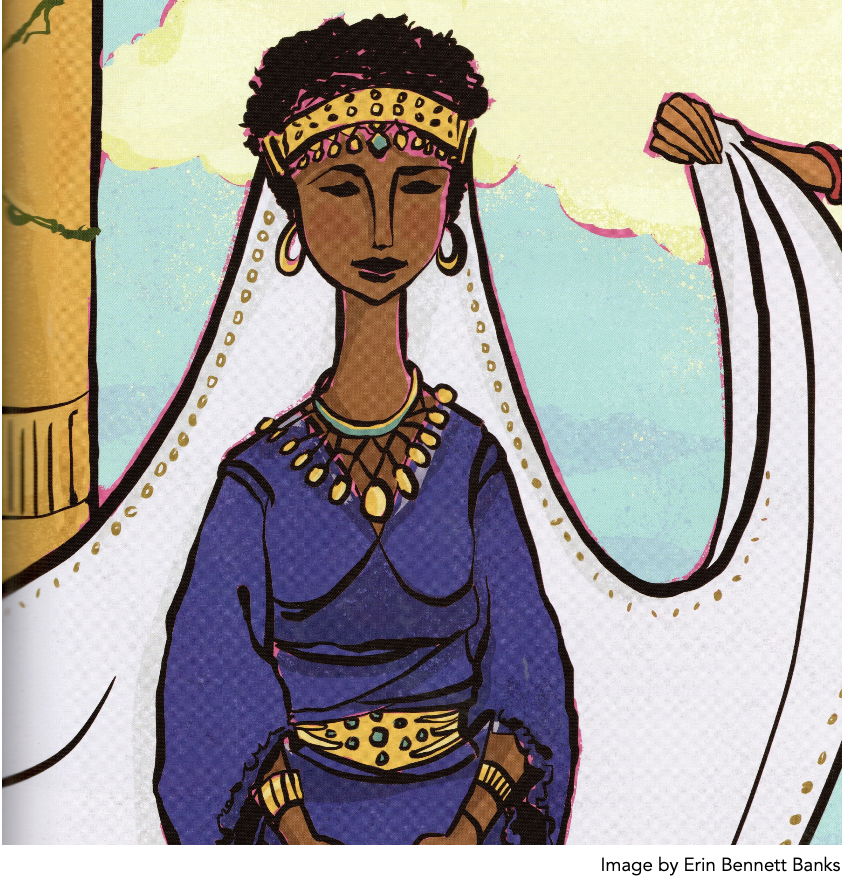
Reading the story of Esther on Purim grounds the Jewish people in their identity and context. Here was a time when they could’ve all been exterminated, and instead they were delivered. Here is another story of a Jewish person living in the royal court of their oppressors, like Daniel in Babylon, and Moses raised up by the Egyptian princess, and Joseph in Egypt before him.  Here is the story of a young woman whose courage to speak up saved her entire people throughout the whole empire. But she did not have that courage all on her own.  She said to Mordecai, “Have all the Jews pray and fast for me for three days, then I will go speak to the king, even though by doing so I may die.”

But instead of dying for approaching the king without permission, Esther’s request was heard, and the people were saved, and Haman was destroyed instead.  Mordecai himself announced the day of Purim should be celebrated, and so it still is.  

In telling it again and again, year after year, Haman becomes the representative of all anti-semites, and Esther is the paragon of courage. The story tells of this scattered and weak people, who by the hand of God, outlasted the Persian empire that almost wiped them out, and the Babylonian and Assyrian and Egyptian empires before that, and the Roman and Greek empires after it.  You come from somewhere! It says. You belong to something! Telling it again and again together, with food and ritual and songs and symbols and sounds and sharing with others and giving to the poor, helps to ground them in the truth of who they are and keep practicing who they are called to be. And it helps them watch for where God might be calling them to act now. Because in the book of Esther, God is not front and center. The people have to wrestle, and discern, and choose, and act, without some of the flashier directness God uses in other parts of scripture. So, it feels like the kind of discernment we modern people have to do too, when we hear Mordecai wonder if God might have allowed Esther to be in her position “for such a time as this.” And this ancient scroll drops that phrase into words the first time in human history. “For such a time as this” is the kind of line that blows open our imaginations, yanks us from our self-defined ruts and the constraints of what is – and propels us into the possibility that we’re actually living in a broader story, not dictated solely by what we can see, a cosmic timelessness that lands in time at certain points and calls us to respond.

In a little while we will gather at the communion table and we will hear the words of Jesus – the very words Jesus spoke over 2000 years ago, when he invited his disciples and so invites us all these centuries later – to come to this table, and share this bread and this cup – that this is his body and blood shared for us, his very life given for our life, drawing us into life that will not end.

How do we know who we are? How do we figure out what is God up to? What makes a life good, and how do we live well? 

Do this in remembrance of me, Jesus says. Come back to who we are together. You are not alone and apart. You are part of me and joined together as a people claimed for God’s way and defined by God’s love.  

Our identity is not our own. We are in Christ. That means that we have died his death and been raised into his life, and this life that cannot die is what defines us.  Sin says we are apart and against, we must earn our belonging and we can refuse others’ theirs, we have to hide in shame when we mess up and strive to make our life valuable on our own, but we are dead to sin. All need for fear and self-protection has died with Christ.  All our losses and pain are not ours alone to hold, we are held together by God in the hands and hearts of other people. Christ’s complete belonging to God and all others is given to us. That is who we are. Beloved Children of God, each one of us uniquely made and directly called to participate in and share God’s love. And we come from a community of those who’ve died and been risen to freedom and hope.  This identity is unshakable and secure, because God decides it is so. 

But sin is loud and fear’s voice is persuasive. We forget who we are. So when we come to this table, it is like sitting down to eat with all those gone before, and all those right now around the whole world who are also in this community of the died and risen One, whose lives are part of Jesus’ life, and who live as a people claimed for God’s way and defined by God’s love.  

Then we do what Jesus told us to do at this table, but we also retell the story. We remember how it began, and this remembering together and practicing together, helps us remember and practice being who we are right now, with courage and hope, and helps us look forward to the day when what we are practicing for becomes the full reality forever.  

Today we prayed a blessing on our high school graduates. As they keep asking the questions that human lives are shaped around, How do I know who I am? How do I figure out what is God up to? What makes a life good, and how do I live well? Their immediate context will change but their larger context remains the same. The somewhere and someone they come from is not just their families and friends, it’s us, but not only the little LNPC us here and now, the big us. They come from a story that reaches back to the beginning of time and forward beyond time, a story shared in ritual and rhythms, in relationships and in remembering. They come from Esther, and Joseph, and Ruth, and Samuel, and Jacob, and Hagar, and Moses, and Mary and Joseph, and all the followers of Jesus who had no clue what they were doing but followed anyway and God took care of them and invited them to join in what God was up to anyway. They come from these stories practiced in candlelit Christmas eves, and finding Easter Hallelujahs and being served communion by the person next to you, and most importantly, praying and being prayed for. Watching other people struggle with suffering and sadness, and holding them up to God.  Knowing other people are holding you up to God because they’ve literally sung “God in your loving mercy hear our prayer” about something you just named aloud. 

When Esther was faced with something impossible, something terrifying, with huge consequences – it could maybe save her whole people? Or she could maybe die? – she said, ask everyone to pray for me, and I will do it.  

When you belong to the people of God, you are not alone. The people of God are people of prayer, people who help each other remember it is God who saves, and it is God who acts, and it is we who join in, we who get to be part of the action and the saving that God is doing. These people are here in this room, and these people are everywhere. Your community is vast.

We live short lives inside a long story. Empires rise and empires fall, but God is constant. This is our context.  The people we love live their good lives and then die, and we miss them, and then we tell stories to help us know who they were, and know who we are because of them, and help us figure out what makes a good life and how we might live, and watch for what God is up to in all of this. And their life goes on beyond what we remember and so we remember that ours will too.  

As we bump along our own lives, mostly doing our best and making it up as we go, we are held in a web of story, and prayer, and remembering, and retelling. That is how we keep bravely asking the human questions, and this is how our identity is shaped and held. 

Who we are is the people who’ve died to death and been raised to life, who practice being available to God and letting God’s love and healing come through us. And in the cosmic timelessness of Jesus Christ, our lives are always for such a time as this. 

Amen.

Sunday, November 8, 2020

True Story


Psalm 78:1-7

Life is more than just our experiences, it’s the stories we tell – to ourselves and to others – about our experiences. Story is how we understand them and the meaning we make of them.
 
We are in the middle of a big experience right now.  A new president has been elected.  A new chapter is opening up for our country.  But what you think that means depends on the stories you are listening to, and the ones you are telling yourself.  The future in front of us is either terribly hopeful or horribly terrifying.  Same set of facts, different stories. How we face the world, the choices we believe we have, the choices we will choose to make, depend on the story we are telling about this moment. 
We are part of this story. This is part of our story. Absolutely.  It shapes who we are as Americans; it will impact the experiences we have with each other in the coming months and years. But this is not the whole story.
 
There is a bigger story. A longer trajectory. A deeper narrative that holds us. 
Beyond the 244 years of this country’s existence, and the 45 presidents we’ve had, you and I are part of a people and tradition that extends over two thousand years, and we are shaped by those who’ve gone before, even as we are connected by the God who holds the universe in love to all those around us and every human that has ever been or ever will be, so our story is even broader, deeper, wider: it’s timeless and eternal.
 
We live inside our experiences, but they are not our story. The Psalmist encourages us to remember this, and to tell the bigger story.  
The rest of Psalm 78—nearly 70 more verses past this encouraging part—gets specific and uncomfortable. It goes into great detail to tell the Israelites story through the Exodus and wilderness into the generations that follow, up to King David. And it’s not too flattering. It tells the story of a people who over and over again doubted and turned away from God, and a God who over and over again cared for them.  God provided and they complained. God delivered them, and they chose captivity. God gave them what they asked for and more, and they chose scarcity and turned on each other. God led them and they refused to follow. 
 
Back and forth the Psalm goes, like a boat rocking on the waves: the people complain; God gets angry and still provides. The people turn away; God gets angry and punishes them. Then God comes to God’s senses and restores them again. They repent and say good things about God, but they don’t mean it, and they continue tearing each other down and turning their back on God. God gets angry and calls them out, and then welcomes them back in with great compassion and provides for them once again.  Over and over the people are unfaithful. Over and over, God is faithful.
 
That is our story. That is the ancient story of humankind and the ageless story of our faith, and our scriptures don’t sugarcoat it. The bible doesn’t make its protagonists shiny and perfect. It tells of their failures and their infidelity and God’s consistency and salvation nevertheless and always. Telling this story is what the Psalmist is suggesting we do, and with the rest of this Psalm, he shows us how.  Humans are unfaithful and inconsistent. God is faithful and trustworthy.
 
Our experiences and the things that have happened in our lives, in our families, in our country, in our world, they are the ingredients, but they are not the story. How we tell them – to ourselves and to each other, to the next generation, and the one after that – that is the story. And sometimes we get the story wrong, and we need to go back and look at what happened again and tell a different story. And sometimes we think the story goes just one way, but the real story, God’s story, is always bigger than our premature conclusions. And God’s story – the true story – is always about hope and redemption. 
 
We are in an important moment as a country – and our children are watching and listening. They are watching us go back and look at how we’ve told the story of race and equality in this country, how we’ve told the stories of economic opportunity and fairness and justice for all and they are seeing us realize we weren’t telling ourselves the truth, we weren’t facing the whole story. Our kids are watching us start to listen more carefully to our past, and listen more intentionally to our siblings in this country whose experiences are different than this story, and different from our own. They’re watching us sort out what all of this means and begin to wonder what it might be like to tell our story differently, and to try to figure out how we go forward together into a different story, how we build a nation together that is what we all long for it to be.
 
But even as we do this work, we are part of a bigger story – one that puts this smaller story into context. The Story we are living in understands that human beings are consistently unfaithful and God is consistently faithful.  And in order to live in hope (which is always from God) and not despair (which is never from God), we need to tell the bigger story. The story of God teaching us that we belong to God, no matter what, and we belong to each other, no matter what, and nothing we do or don’t do can break that belonging – even when we pretend it’s not true, or forget it is true, or actively argue that it can’t possibly be true. It remains the true story. 

So we will claim this story, and let it claim us, and will live in this story, and tell this story to each other to help each other remember.  And we’ll tell those who come after us so they can live in it too, and they can tell those who come after them, so they can set their hope on God and not forget who they are and what God does, and they too can live in God’s way instead of the way of fear.   
 
Our kids need to hear about when we messed up, when we said something that hurt someone deeply, when we didn’t come through for someone, when we lied, or cheated, or turned our back on someone, or turned our back on God.  They need to hear about when we gave up hope, and lost our faith, and forgot who we were and whose we were.  Because the true story is about what God does.  They need to hear about forgiveness, and redemption, and healing, and fresh starts and new beginnings – because they need to know that who they are is not defined by their failure and unfaithfulness but by the love and faithfulness of God.
 
This is who Church is - those vulnerable and brave enough to tell the stories about our own unfaithfulness and God’s faithfulness even so, working through it all, to move us into life, with and for each other. 
 
One day we will tell stories about this time– about our country and about the pandemic, about the seismic changes happening in the world, the climate crises and catastrophes, and all the upheavals of this time.  And if the stories we tell are true, they will not be about good verses evil, or us verses them. They will not make us look good or cover over our mistakes. They will be about God’s faithfulness through our unfaithfulness. About how normal humans came alongside each other in our brokenness and God worked through us to achieve remarkable things. How we were saved not through might and power, or by violent acts or vile words, but by God acting through our smallness, and sameness, and willingness to look each other in the heart and recognize that the one I want to hate belongs to me too. 
They will be stories of how we forgot that we are meant to care for each other, but then God spoke through a photo of a child in a cage, or the cries of a man with a knee on his neck, and turned our hearts back toward each other. 
Or how we forgot we are meant care for this earth and its creatures, but God spoke through a fierce child from Sweden, and terrible raging fires in Australia and California, and restored us to our place of responsible stewardship for creation. 
Or how we forgot that we are not invincible and indispensable, on demand at every moment, but God spoke through our quarantines and lockdowns and suddenly, when our busy was taken away from us—and it was terribly disorienting, and we were afraid a lot of the time and bored just as often—God woke us up to the deeper life that can only come to us when we’re moving slower and listening more closely, and God showed us how much we mean to others, and what they mean to us, and God gave us new and different ways to stay connected, and the Holy Spirit helped us to hang on tighter and love more deeply, and God reminded us that we are not indispensible but we are integral. 
Or how we forgot that our neighbors are beloved children of God until they got sick or we did, and with masks on someone brought soup and bread to someone else—someone learned how to make soup and bake bread and then brought it to someone else—and God touched our lives through culinary contributions, and through needing each other this way God helped us start seeing other people we need too, like doctors, and nurses, and mail carriers, and teachers and grocery store workers, and garbage collectors, and we realized that the people we’d taken for granted were the essential ones all along, and God showed us that we all belong to God and we all belong to each other, and we listened and obeyed and let God change our hearts.
 
No matter what happens next or what comes after that, we follow a God of unfailing faithfulness and infinite compassion who works even in our consistent unfaithfulness and through our weakness to bring hope and life to us all. This is the true story, ancient and eternal. And we will keep telling it.
Amen.


PRAYER
God, please show me the stories I am telling myself
that are holding me back from the fullness of life you have for me.  
Destroy my stories of self-protection 
and make me vulnerable and open.
Heal my stories of injury 
and make me a conduit of your healing.
Forgive my stories of enemies 
and make me a courageous peace-maker.
Break open my stories of irreconcilability 
and make me a willing listener. 
Redeem my stories of wrong 
and help me join in your ongoing justice.  
Release me from my stories of grievance 
and help me to grieve.
Break my stories of despair 
and teach me to hope.
Set me free 
to know and share your joy,
to receive and share your love,
to bear and share your hope.
Help me to live in your true story.
Amen.

Sunday, May 5, 2019

The story of your life


According to a study conducted by political scientists at Louisana State University and the University of Maryland,  
"Just over 42 percent of the people in each party view the opposition as "downright evil." “Nearly one out of five Republicans and Democrats agree with the statement that their political adversaries “lack the traits to be considered fully human — they behave like animals.””
But their line of questioning did not stop there.  They continued by asking, “Do you ever think: ‘we’d be better off as a country if large numbers of the opposing party in the public today just died’?”
 And some 16 percent of Republicans (or 7.9 million voters) and 20 percent of Democrats (that translates to 12.6 million voters) do think on occasion that the country would be better off if large numbers of the opposition died. 
(As reported in the NY Times)

Every human being is living out of a story. 

Saul had a story. Saul’s story was that the Israelites had been corrupted by bad ideas. They had been tarnished by interaction with the wrong kind of people. Saul has the pure ideal  - what you believe matters a great deal. How you live matters. 

For Saul, it was crystal clear. The right way of life is threatened by these bad people, who worship not the true God, but a man, a criminal killed by the death penalty. These people are are not just wrong, they are evil. They are warping the truth and leading good people astray.  They must be stopped.  Saul is a righteous man. He is full of righteousness. He is morally right, his cause is just, he is virtuous and true, upright and worthy. And he gets lots of props for it.

Nobody decides to be self-righteous.  But we live out of stories that perpetuate it.  I am this so I am clearly not that. I identify with this group, so by default, and sometimes gradually, I agree to abhor that group.  I hold to this ideal, am guided by these good and right principles, so how can I associate with those who do not hold to what is good?  I am confident of my rightness, bolstered in it, secure beyond doubt by all the things that keep reinforcing my story, and therefore I am dead certain of their wrongness. 

Left to our own devices we will all seek to justify ourselves at the expense of others. This is, by the way, sin. Disconnection from God and each other.  Left to our own devices we will seek righteousness at every turn; we are so very tempted to be right.  We will make enemies faster than friends, and they’ll last longer. 

Saul is going to Damascus with a story. 
He’s a zealot for the faith, drawing on the stories in Hebrew scripture of those whose holy zeal pleased the Lord, and who turned Israel away from their sin and corruption and back to God. He is fanatical and relentless, invested and dedicated,and has become a rather famous heretic-hunter. A few chapters back he held the coats and watched while the Jesus-follower Stephen was stoned to death. Because with evil spreading like this, perhaps it might be better if large numbers of these folks just died.

Saul had a story, and his life had one mission: to stamp out evil and stand up for what is good and right and true. Imagine if Saul had had a Twitter feed.  All that he could accomplish today!

We are almost through our year on grace, friends. And our theme right now is grace infinite – grace that comes to us, and through us, and keeps going, never running out. Grace is the way God interrupts our story and gives us a new one. God either meets us in our places of death and nothingness, or requires that something in us die and we face our nothingness, so that we might find real life. 

Saul is on his quest for God, guided by his story, firm in his ideals, righteous and true.  And it’s all going as planned when suddenly, in a blinding light and voice from heaven, he is confronted by voice, who calls him by name.  Saul, why are you persecuting me? 
Who are you? He answers. 
And God, the great I am, answers him with a name.
I am Jesus, whom you are persecuting. 
Get up and enter the city and you’ll be told what to do.

And Saul is thrown into an identity crisis. 
An identity crisis is when the story you are living no longer works for you. 
All you thought made the world make sense no longer holds up.  
A person in an identity crisis is a person without a story.
Saul’s story is taken from him. He is a person without a story.
Directionless and helpless, he is led by the hand into the city like a frightened child. For three days he lives in darkness, confusion and fear, unable to eat or drink. 

Then the voice of God calls out again. 
But this time it’s Ananias, one of the community of Jesus-followers, whom God calls by name. 
Ananias. 
Here I am, Lord. He answers, all faith and eagerness, just like the prophet Isaiah, Here I am, Lord, send me!
Everyone has a story, and Ananias is no exception. 
He is a follower of Jesus the Christ.  He is ready to do as God commands. He also knows who Saul is.  And he and his community have every reason to despise and fear him. 
Saul is the enemy. His ideology is wrong, his beliefs are dangerous, and, if the rumors are to be believed about what he has done, he may even be lacking the traits to be considered fully human — he behaves like an animal, after all.

God tells Ananias to go to this certain street to a certain house and find this certain man, Saul of Tarsus. This man is praying and has seen a vision of Ananias coming to lay hands on him so that he regains his sight. 

But Ananias balks. Perhaps he hasn’t heard correctly. Perhaps God is not informed as to exactly who this person really is, what evil he’s done. Certainly God cannot mean for Ananias to help this man. He’s the enemy.  
Our stories are very, very powerful.

‘Lord, I have heard from many about this man, how much evil he has done to your saints in Jerusalem; and here he has authority from the chief priests to bind all who invoke your name.’ 
But God says, Go, I have chosen him to be an instrument to bring my name before Gentiles and Kings and the people of Israel, I myself will show him how much he is to suffer in my name. 
So Ananias goes, even though it could be a trap. Even though this person is someone he has good reason to fear and distrust, in humility he goes to share in Saul’s death experience. 
He goes in the ministry of being with someone in an identity crisis.

Ananias arrives and finds Saul in his paused state of weakness and waiting, a man without a story.  Ananias places his hands on Saul, and touching him, he calls him, “Brother Saul” and says, “the Lord Jesus Christ, whom you met on the road, has sent me so that you may regain your sight and be filled with the Holy Spirit.” 
And when they encounter one another, it’s Jesus they meet.  

No idea will save you.  No rightness or righteousness will save you.  Only encounter with the person of Jesus Christ. Jesus did not give Saul an ideology, a superior insight or a moral high ground. He gave him a person: I am Jesus. 
I am Jesus whom you persecute. 
I am Jesus whom you now meet in the touch and ministry of another.  
I am Jesus who crucifies your story and gives you another in its place. 

And from there Saul finds himself welcomed into the community of Jesus- followers, that just a few days earlier he had intended to destroy.  And they find themselves welcoming in this one they knew as their oppressor who had been intent on their destruction.  
And the grace of God meets them all in the person of the other. 

When Saul comes to the Damascan community of Jesus-followers, he is no longer the invincible warrior for God, fighting for what is right. His self-righteousness is gone. His upbringing, education and training in reason or argument cannot bolster him.  His undisputed faith or stellar reputation are now meaningless. His legendary courage and rock solid conviction of purpose are worse than worthless here. 
All of Saul’s somethingness has been stripped away.  
He comes vulnerable. He comes in his nothingness.  
He comes only as a person, among persons.

And they receive him. 
They release their idea about him and receive him as a person.  
They give him a bed, and meals, and friendship. They tell him the resurrection stories and talk about their own trust and transformation.  Instead of revenge or retaliation for the death of Stephen, instead of fear and shunning and self-protection, they see him and receive him as a person and love him.

In the Body of Christ, Saul experiences the risen Messiah. The voice who called out to him from the blinding light is given hands, and faces, and names, flesh and foibles and families. They become his ministers, and they receive each other as Christ.

In the presence of their enemy they surrender their own story and receive a new one. It’s a story of healing, nurture and blessing. And forgiveness. They forgive Saul. And his story is reframed and retold, as God’s interruption of grace always does. 

Now he looks back at his life and sees the damage he has done, and the futility of his self-righteousness, and the truth of his belovedness and belonging to God and to these others.  

Who are you, Lord? 
I am Jesus, the person whom your ideas persecute. 
I am found among those you are persecuting. 
And so are you. 
Your identity is given to you, your story is restored, in the ministry of shared weakness and death, in the encounter between persons.

We don’t want to see each other as persons. Marshall Rosenberg, the founder of Non-violent communication, says, "It's hard to believe that those who are doing things far outside our value system are human beings like the rest of us. It's very challenging."   

We wont give the benefit of doubt to each other because we are afraid.  
Perhaps we’re scared of an identity crisis. 
What if we lose our story? What if this person makes me change my ideas?  
What if accepting this person is the same as accepting their ideas?  
What if their false and dangerous ideas spread to the people I care about?  
What if, by seeing them as human, equal and beloved, our story is corrupted, and we no longer know who we are?  

The human temptation is always toward self righteousness. It is always toward building our own somethingness. We are always tempted to write our own story. To build and maintain our own identity. To form our own I am from our ideas and accomplishments. 
But the Christian life is one of being knocked to the ground and given an identity crisis, and then a new story. 

Saul dies to his story of zealous righteousness, and awakens to his story of grace, experienced alongside these others whom he had seen as enemy. This experience is so transformative that it becomes his story, his life message, his purpose.  Everything he had been about up till now is seen anew through the lens of amazing grace. Throughout all the letters he ends up writing and all the places he ends up going, before the Gentiles and Kings and people of Israel he speaks to, Saul tells his story as a recovering self-righteous-aholic who has been saved by grace.

We find out a few verses later that Saul’s name is changed to Paul – which means, “Humility,” perhaps the last name that he, or anyone else, would think to give to this man. And yet, he lives into it – even up against his own reoccurring instinct toward self-righteousness, which he names, grace is the story he keeps living and telling. And it turns out Ananias' names means "The Lord gives grace."

We call this story, “the conversion of Paul.” But it’s also the conversion of Ananias, and the conversion of the Damascan community of Jesus-followers.  It’s the transformation of all of them.  To follow Jesus is to welcome Christ in the person of their enemy.  To serve God is to come vulnerably to be cared for by God at the hands of their enemy.

Everyone is living from a story.  In any other story we have about ourselves, our jobs or families, our educations or accomplishments, in what we’ve lost or survived, it becomes easy to start thinking, “I did that. I earned that. I survived that. I guess I was great.”  It’s easy to see ourselves as the good and others as the bad, easy to place ourselves above, over and against one another. 

But you can’t do that in a story of cross and resurrection. You can’t get comfortable in the rightness of your ideas in a story that keeps sending you back to your sin, back to your nothingness, to find there the person of Jesus Christ, who meets us with grace and forgiveness and belonging we can’t earn. 

You were in sin and Jesus found you.  That is the story of your life. That is the story of Saul’s life now. And we have the freedom to live now out of this story. Inside all the other stories in our lives- our jobs and our families, our communities and the things we care about and pursue, inside them now we live this story: that we are sinners saved by grace.  Like good and holy Saul, like faithful Ananias and the Jesus-followers of Damascus, we are always in need of conversion.

Where is Jesus saying to you today, I am Jesus whom you persecute?
Or, I am Jesus whom you meet in the touch and ministry of another?  
Or, I am Jesus who crucifies your story of righteousness and gives you a story of grace in its place? 

Grace comes to us, and through us, and keeps going, never running out. In grace, Jesus calls us by name and gives us an identity crisis. Then the Holy Spirit brings us to other persons, to find there between us the very person of Christ. Our story of disconnection from God and each other is crucified, and we are given a new story, of belonging to God and belonging to each other.  
May God resurrect us again.
Amen.

Sunday, June 3, 2012

The Story we belong to

Romans 8:14-17, 22-27
Acts 2:1-21
To celebrate Pentecost we walked through the journey we've taken this year- from September through May through the Old Testament on a path that began outside and took us past symbols of all the stories and into the chancel, where we took a "family photo," gathered around the table for communion, and then settled in for a recap of our journey.

The world - created for a
peace prayer service
Normally, Pentecost is a great celebration of the Holy Spirit.  Which it is.  Or it is a birthday party for the church  - where it all began.  Or it is a recognition that the gospel is for all people and without bounds.  It is all of these things. But for us today, it is a chance to lift up the story – the whole story of God – because of Pentecost we, this little group of people – are part of it. Today is a day to stand in Pentecost and look back at the parts of the story we’ve told this year.

So let us begin at the beginning.
In the beginning…we met God.  The delighted artist, who created, of all things, LIFE, and then made in God’s own image those to share it with, to nurture life along with God. And all things were in harmony, interconnected and free.  And it was so very good. And we declared that God brings life out of nothing, that we belong to this God, and that God celebrates life and rests, and invites us to do the same.                                                                                                           
   
The tree, where we nailed things
that separate us from God and each other
And then we watched as in the middle of that creation God put a tree – God’s own vulnerability, the chance to be rejected, chosen against by God’s own image-bearers. And the people did so; and the relationship was broken.  But God meets us where we are and we can never drive God away, and so the story continued.

After some generations of people it seemed the world was full of evil and relationship between God and humanity, and between human beings, was seemingly broken beyond repair. So God planned to wipe out creation and start over- but first plucked out Noah and his family and some animals – a sample, if you will.

But by the time the roaring waters receded, the remorseful God repented, and hung the bow in the sky to symbolize that God would never again destroy the world that God loved. 
The people may be unable to choose God, but God would never again choose against them. God promises never to gives up on us, no matter what. 
And the Story continued.

 Some generations later God adapted strategy yet again, to bless the world through one family, and so Abraham was called to be a blessing. But true to form for the God who likes to bring life out of nothing, Abraham and his wife Sarai could have no children.  
And we sat here and listened to Sarah tell her story, and watched her grief as she struggled with this deal God had made with Abraham that both excluded her and depended entirely on her. And we shared her joy in the end when God kept the promise and she bore a son, and we bore witness to the God who keeps promises.
As that son grew to be a boy the relationship between Abraham and God changed; the promise had been given and the dynamic closeness had waned. Then God asked for the unthinkable: that Abraham sacrifice the promise, sacrifice his own son. And instead of contending with God as he had in the past, Abraham proceeded to obey mindlessly, defeatedly, leading Isaac to the mountaintop, knife in his bag.

But God had no intention of letting him go through with it, and at the last minute God stopped him.  And we wondered together if God had wished that Abraham had fought him on it earlier, and either way Abraham was reminded once again that God is relentlessly for us, and unlike the gods of the day to whom the people gave blind obedience, the true God desires a real relationship with real people.  So we learned that God wants us to talk back, we are expected to engage, participate, wrestle.
And the Story continued.
  
When Abraham and Sarah’s son Isaac was grown, he had two sons.  Esau and Jacob. And Jacob tricked his father and stole Esau’s, who sold his status and inheritance for a bowl of stew.  And it oddly appeared that God preferred the less worthy brother, and the mother helped him get away with it because she clearly did as well. 
And Jacob fled.  Then years later, when he’d grown and learned and suffered karma and also prospered, the night before he was about to face once again this brother he had deceived, he found himself wrestling, quite literally, with God, and with all the struggles of his life, all night long, and he is injured, and he wins
Broken down and made whole, he exchanged his swagger for a limp, and as he met his brother again we learned that sometimes newness looks like limping. 
And the story continued.   
                                                                                                        
Then we heard the story of Joseph, Jacob’s youngest son, and watched it come to life in black and white and color on canvas as we listened to his dreams, to him being dropped into a pit and sold into slavery by his brothers, and sent off to Egypt, and rising in the ranks, and being thrown in prison, and interpreting dreams, and redeeming himself, and becoming the savior of all of Egypt and many peoples beyond, and finally, being reunited with his brothers and father and making peace. 
Story of Joseph, created during worship by artist Susan Hensel

And instead of seeing God speaking or acting in drama, voice, flood, or overt instructions, God moved behind the scenes, between the people and within the situations, and we know this because all throughout the story we heard the constant refrain, “And God was with Joseph.”
And we saw that God works both within and despite us, and we can actually see God’s work in our lives in both ordinary and extraordinary ways.
  
And the story paused there so we could enter into Advent, but we saw the story continue in the waiting for a savior, in the stories of the prophets’ cry of honesty and John the Baptist’s wild pronouncements and Joseph’s living in a reality he did not have any choice in, and Mary’s dance and words of hope when she stood before us.  

And we watched God move in their lives in very different and eerily similar ways to ourselves, and saw again that this God who made it all and craves connection, and calls us to be part of all this with God is at it again, this time irreversibly, by coming, entering into it, and God is changed as much as the world is.

Then we picked up where we left Joseph and the generations that came from his brothers, Jacob’s sons and their offspring, the twelve tribes of Israel, who had prospered in Egypt for generations until the new Pharaoh was threatened and didn’t remember the story of Joseph, and enslaved the Hebrew people. 
They suffered there in slavery for more than a generation until God called Moses from a burning bush and revealed God’s name, Yahweh, I am, and then led the people to freedom. Only they didn’t go right to freedom, remember?

They stopped for 40 years in the wilderness, the liminal space, the space in between slavery and freedom, where what you were is taken out of you, and you learn what it is to be free, to be God’s people instead of Pharaoh’s people. 
And we learned that God redefines relationship, life and direction in these in-between places, and that sometimes we have to let go of the old before we can step into the new. 

And while they were there, God gave them guidance and direction for how to be free, how to live in a way different than the way of Pharaoh, and we imagined this way together with the kids at St. Joe’s, asking, if we could create a world that was as good as we can imagine, what would it be like?
And they said brilliant things like, all people would feel safe, and nobody would go hungry, and all sorts of other profound and simple things that we discovered were right in the way God had given them to live when God gave them the ten commandments, and that God still delivers us, every single day, if we let God, from slavery to freedom. And the story continued.

Then we met Ruth, and once again, God receded into the background and let the simple, ordinary and extraordinary people’s lives tell the story.

And it was a story of Hesed – that word for which there is no English equivalent but which permeates and indeed drives the whole story of God, Hesed, which brought the world into being and pulses underneath every interaction God has, Hesed, which we saw meant something like “Belongingness” – And in the Hesed of God this foreigner with nothing to offer became a great grandmother of David.

And we saw that an I-will-go-there-with-you God, calls us to be an I-will-go-there-with-you people.
And the story continued...
  
...with David, the boy who became king after Saul, after the people demanded God give them a king and God complied. And we spent an evening reading David’s journals, his laid-open, bare-naked heart when he’s sick or scared, or proud and excited, when he’s hopeful and despairing, he holds it all open to God and these words from his heart and harp became prayers that people have used for thousands of years, giving us words when we have none or when we all want to share in a prayer together.  
And we imagined together the delight of God who longs to connect with us when God hears us share our innermost struggles and joys with God in the words of one long ago who did the same.   
And the story continued.

Then we met Solomon, not nearly as nice a guy as his dad David, but who was clearly a politician and statesman, a man who got things done.  And under Solomon the people of Israel became a real nation like the others, and wealth and prosperity and security was theirs, (along with things like taxation and forced labor). 
And Solomon builds a temple with the plans his father had left behind and it becomes a glorious thing, and even though God can meet them anywhere and always has, God sees that the people need a place to come, where they know they can meet God and God can promise to meet them, and so the temple becomes that place. 
And we recognized that our temple is this shared feast, these people, this gathered community of people, wherever and however it happens. Wherever we are on our journey of faith, when we come together God promises to meet us. 
  
Lord's Prayer in many languages
And then the story paused once again, but really continued, just differently, so we could spend Lent with the Lord’s Prayer, immersing ourselves in it through many paraphrases and the beautiful unpacking of five different voices and perspectives, and discovered, among other things, that we have some pretty great preachers among us, but also that prayer is all sorts of things and that God listens when we pray. 
Then on Palm Sunday we witnessed the people’s, (and confronted our own), expectations that God come the way we think God should, and do the things we think God should, and God comes the way God wants to come and sometimes that looks like suffering and dying for us, and there’s nothing we can do about that but sit back in awe and wonder and gratitude at such a thing.

Then on Good Friday, when we heard the words of God at creation alongside the words of godforsakenness at the cross, and we left in darkness and sorrow. 
But on the third day we returned here to resurrection.  
And we celebrated.  That God who brought life out of nothing brings life even out of death, and desires so desperately to share life with us that sharing death with us became the way life prevails. And so God is redeeming, creating, and entering in every second of every day. 

We heard stories of resurrection from living prophets, three among us who shared how they had experienced God bringing life out of death in their own lives and the world around them, and then we returned to the unfolding story and hunkered down with the prophets.

And now for the past six weeks we’ve hurtled through hundreds of years of heartbreaking loss. The people kept forgetting their story and turning away from God and returning to slavery in all sorts of forms, the nation was split up and eventually decimated, and the temple was destroyed and their identity was forgotten or traded away. 
And God was angry and hurt and frustrated, and gracious and tender and patient, and impatient and sorrowing and overflowing in love, and it went on and on.  And the prophets did their criticizing and energizing thing: criticizing the dominant culture and pointing out and grieving that things are not as they should be, and energizing the people to a future found in God, in the world as God intends it to be.

 We watched Hosea embody God’s grief and commitment, and Isaiah tell the truth of God’s future like it is an absolute fact, and Huldah help Josiah help the people remember who they are and who God is. 
And we had a potter sit in our midst as we heard the words of Jeremiah who talked about God sometimes tearing us down and creating us anew,
King Nebechenezzer
& his golden statue
and then Nebechenezzer set up a golden Bieber statue right in our midst and the children acted out Shadrach, Meshach and Abednego’s refusal to bow,
and we saw how comedy exposes the empire for what it is, and how God’s freedom to be who God will be was upheld in their words, “Even if God does not save us, we still will not bow.” 
And then, finally, we arrived at Malachi, and heard within it words from a Christmas hymn and realized that when love breaks in, when God arrives on the scene in the flesh, everything after and before that moment is changed, and every part of this unfolding story, while it stood alone, also led to the moment when God would come in and redeem the past and the future, and never again be separated from the people God loves in the world God adores.                                                           

Which brings us to this moment.  Pentecost. The celebration of the church.  The Body of Christ. The Holy Spirit within and between us. The whole world involved.
photo taken at the beginning of the service
 And here’s the picture of the prophetic community. You and me and all of us, part of this rich and amazing story. 

This is your story.
And we’ve only told a tiny part of it! There is so much more! – within this book and in the world around us, there is so much more, that, as John says, “all the books in all the world could not contain it.”
So go into the world.  Be people of the story. Do what the prophetic community does:  remember. grieve. hope. talk about it with each other.
This is God’s world. God isn’t letting go.  God is doing something all around you.  Go and be part of it.  Because this story continues!
Amen.                                                            

Sunday, October 16, 2011

Sarah's Story


At LNPC we're in a series, telling the old stories of our faith in many different ways. Today, we had a visit from Sarah, played by local performance artist, Julie Kurtz.  And Sarah shared her story with us firsthand...


The promise wasn’t to me. It was to Abram. He was to be “the father of many” – Abraham.  Clearly I was not part of that.  I was the mother to none.

The strangers said I would have a son. Me.  They didn’t say he would. They said I would. 
Of course I laughed.

What did they know of my womanhood? My time was past.  Besides, my womb had been closed my whole life. My arms were never to hold a little one, my breasts long past the days when they awaited a purpose, ripe and ready.  My body had always been an empty, aching vessel - once agile, but now deflated, comfortably worn and finished.  I had accepted my fate.  I always did. Even in the days when there was still some hope. The days when we would wander, always at the word of God – get up and go here, pack up and move there. 

And in some places, Abram, the spineless coward, would pass me off as his sister, and I would comply.  Because I love him. Because I trust him. Because I don’t want anything to happen to him.  He always was a worrier. 
And his God kept intervening.  Punishing the men who would take me as their own, driving them mad in one way or another until they would demand to know from Abram the truth and he would have to tell them I was really his wife and they would return me to him and we’d be on our way.  You should have seen the pandemonium it caused when I was taken into the Pharoah’s house!  Oh the misery on that household that would not let up until Abram and I were restored to one another!  Because I belong to Abram, and Abraham belongs to God.
Of course, It never occurred to us to just trust this God who had sent him there in the first place and be who we were without taking matters into our own hands, but then, that was never our strong suit.

Back in the day, before this all began, before the promise that turned everything upside down and sent us packing, blowing across deserts like tumbleweed from one place to the next, we were so young and strong and sure of ourselves. We could make each other laugh, and oh, the schemes we’d concoct!  We’ve always been a great pair, a clever pair. Life was comfortable and we were in it TOGETHER.  Abram & Sarai, everyone would say.  Oh that Abram & Sarai… Did you see Abram & Sarai…? like it was one word.  We could finish each other’s sentences. It sometimes felt like we shared the same brain.

Then the damned promise.  That uprooted us and gave us a mission, a calling. Or, him anyway.  And the hope, the driven terrible hope that lived in his eyes and grew between us like a tangled weed.  Father of nations!  Offspring like the stars! 
I could not conceive.  My body stubbornly refused to fulfill his God’s promise, to agree to the arrangement they’d come up with.  And it’s not like Abram could keep quiet about it, either.  Oh, the fretting that man did!  Every year added to my age was anguish; I was standing in the way of what he was meant to be, what God was supposed to do.  The barricade to fulfillment was me, my useless flesh, my barren self.

But every time he despaired and nearly gave up, something would happen to him out there in his God moment and he’d come back all fired up about the promise again.  Believing again.  Do you have any idea the pressure that puts on a woman?  I knew it wouldn’t happen.  While my sisters had all raised children, and their children had grown, married and conceived, I remained empty, yearning and ashamed. 
How was I to live in this belief of his?  This faith of his that pulled him somewhere I couldn’t follow?  I was not the one hearing these promises.  And I knew I could never be the one to fulfill them.  At least not in myself.  I was a liability, an obstacle.  And we’ve always trusted one another, through thick and thin, across more miles than could be counted, through more adventures and disasters and struggles and celebrations than I could ever describe, we’ve been Abram&Sarai.  Even with his damn obsession and the drive of this promise I didn’t understand, we’ve always been there for each other, sacrificed for each other, or at least been willing to take a hit for the other. 
So I made up my mind.  I would not stand in the way of this promise any longer. There was something I could do to help fulfill it. So I gave him Hagar, my slave.  Hagar, with her young, strong body, full and firm, latent with potential; a warm, ready place for a baby to grow. 

Oh, if I could take back that moment.
Oh, to remove that day from existence like scooping a worm from the flour bag!
But we must live with our choices, musn’t we?  

It was never the same after that.  After he had known her, who had only known me, I no longer knew him in the same way.  Somehow he was stranger to me.  My Abram – a divide now yawned between us that I couldn’t have bridged if I had wanted to. 
And I didn’t want to.

And she! Oh, how she lorded it over me!  As her belly began to swell she looked upon me, her mistress, with such contempt, as though I were less than worthless. 
The two of them… I could barely stomach the thought of it; it plagued me relentlessly!  That she would give to him what I never could? 
This child wouldn’t be ours; it would be theirs. 

I couldn’t stand the sight of her; the pain burned inside me into a molten rage and I “dealt harshly” with my slave woman. 
After she fled from me I regretted what I had done. Not only was I useless, I was wicked.  I should never have behaved in that way.  No matter what has happened, I am still Abram’s wife, I said, and mistress of this household. And it is incumbent upon me to remember my place and the duty I have to uphold the dignity of my husband and position.  I am the one who did this.  And I will bear the consequences graciously if it kills me. 
She did come back, and I swallowed my pride and struggled daily to push past my shame and anger and the gnawing, constant grief, and keep my head high and my emotions restrained.  But after that, part of me was dead.

The years went on and we managed.  We found a way, our odd little family.  Abram doted on Ishmael, his son, and I fulfilled my duty and cared for the boy for Abram’s sake and the sake of this project we were now in, living the dream for this God who had settled him here, anchored him in this boy, leaving only me to drift through the desert alone. 

For a while, I fought the hostility inside me every day; the regret, pain and confusion, and mostly the loneliness and isolation.  We were still together, he still reached for me in the darkness of the night, there was still some comfort in the familiarity of his arms and the daily patterns and unspoken rhythms of a lifetime side by side; we still shared language and even occasionally laughter, but what we’d had was gone. And sometimes I’d gaze at him and realize with a start that I’d no more know his thoughts than a perfect stranger’s.  We were closed to one another.  
But over time, the anger softened into defeat, and I accepted the life we had grown into.  I was no longer young, and my old age had worn away regret and gradually filled in the places with a not-unpleasant mixture of gratitude and resignation.

Then it happened again, this promise giving, this sudden burst of belief, and Abram returned one day, like he had the first time, seventy years before, flushed and luminous and filled with purpose.  He set about circumcising all the males in the whole place and going on about the promise once again.   He said God had changed his name, that he was to be Abraham now, ancestor of a multitude of nations, for through him were to come nations and kings.  And he announced that there was now a covenant, God claiming them all as God’s people forever. And this was fine. I’d grown accustomed to accepting this spectacular direction our lives had become oriented to and his breathless reports of God’s words, only a few days later he started in again on me. 

He stood as we were finishing dinner -  Ishmael, the continuously in motion teenager, had gone off somewhere in his usual flurry, and I was about to clear the meal, and Abraham grabbed my hands and pulled me down to sit beside him.  Sarai, he said, with a strange mixture of sadness and hope in his watery eyes, Ishmael is not the promise. 
Then he stood over me and laid his hands on my head, closed his eyes and said, You are now to be called Sarah, the princess of a people, for God will bless you and give to me a son through you. God will bless you and you shall give rise to nations, kings of people shall come from you.  Sarah you are and Sarah you shall be. 
His hands still heavy on my head, he knelt back down in front of me, and then gently slid them from my head to my face, cradling it before him.
I sat like a stone. 
I could feel his breath on my face, he was so close.  Finally I raised my eyes and looked into his crazy, hope-filled face and I felt nothing. 
There was nothing. 
I gave him nothing.

How could he? 
How dare he? 
I reached up and gently took him by the wrists, removed his hands from my cheeks, and lowered his arms away from me.  Then I turned away from this man, and slowly rose to my feet and walked out of the tent.

I was finished.

Some time later three visitors appeared in our camp in the heat of the day.
We don’t often have visitors, and Abraham was turbulent with hospitality, caring for their animals, offering them rest and shade, setting the whole camp into motion to provide respite and welcome to these travelers stopping in.  He rushed into our tent and told me how to do my job, always a sure sign of his nervous energy, and I set about making cakes for his guests, while Abraham, all ninety-some years of him, hiked up his robe and ran to the herd to select a calf and have it prepared for a feast. 
Once all was ready and they were eating in the shade of the tree, one of them said to him, “Where is your wife, Sarah?”

Inside the tent, my heart skipped a beat.  Abraham had not spoken my name; I had declined to come out of the tent and meet the guests.  (I had made it silently and unmistakably clear that these little projects of his no longer included me). 

I drew near the entrance to hear what they were saying.
“She’s there, in the tent.” Abraham answered. He seemed embarrassed.  Good.
Then one of them said, “I will return in due time, and I will find your wife Sarah with a son.”

When I heard that, I laughed to myself.
Oh, I am so beyond that! I thought.  WE are so beyond that.  He’s old, I’m old; he and I are FINISHED, and NOW, in my old age, when my life has been riddled with disappointment beyond words, NOW I am to have pleasure?  I highly doubt it, strange sir.  Nice sentiment, but you seem to have caught the illness that touches folks around here…there is to be no great happiness for me.  What you say is IMPOSSIBLE.

And I ask you, truly, What else could I do but laugh? 
The tears dried up long before my womb.  I had nothing left to weep. Nothing.

But somehow they knew. Somehow God knew.  I may have been hiding there in the tent, but these strangers had read my mind. 
Why did Sarah laugh? was the question. Why did she laugh and say, Shall I indeed bear a child now that I have gotten old?
I slipped outside the door, my heart pounding in fear.  They looked over at me and I at them, trembling.
Is anything too wonderful for God? 
And the visitor turned back to Abraham and repeated, louder this time, “In due time I will return and Sarah will have a son.”
“I didn’t laugh.” I blurted across to them.
And he stood and looked at me once again.  And a shiver went through me.
“Oh yes. You did laugh.” he said.

More time and drama came after that.  More moving, more of the same adjusting to the new. Lot came back into our lives for a time, we even had another “pretend you’re my sister” incident, like the good old days, complete with another household in upheaval until God alerted them that I belonged to Abraham and we were once again on our way, wondering at how we’d managed to repeat an old mistake so egregiously.  But it was nice to feel desirable again, anyway, to get back into the groove with Abraham, a little like our young selves, all this adventure and motion. 
And something within me had come back to life.  I could feel it healed over, like fresh, fertile soil in my soul, willing to begin anew with Abraham, willing to open myself to the possibility that life might hold something promising.  Even if I didn’t understand it.

That strange day with the visitors lived always in the shadows behind everything that happened.  It hovered there, without explanation, but also without disappearing.  And I had grown to treasure it for its inexplicable warmth.  If nothing else, for what it felt like to finally be seen. To hear my name as the opening to a stranger’s promise. To have my very self laid so bare for such a brief and shocking moment.  And to find, in some strange way, solidarity with Abraham in the holy, in the place he had always stood alone and told me of later. To feel the mystery electrify the air between us all, hear the voice of God together - it seemed to burn away the hardness between us, to fill the gulf that divided us and draw us close, and we could see each other again, reach each other again. 

And then one ordinary day, God did as God had said. 
One regular, uneventful day, unremarkable day, the Lord did for me as the Lord has promised.
I conceived.
And in due time, I bore Abraham a son in his old age,
just as God had promised. 

On the day he was born, when I held his tiny life against me, and felt the tapping of his new little heartbeat against the timeless thudding of my own, when I lowered him to my breast and gazed at the downy softness of his impossibly beautiful head, I said in my joy, the hot, fresh tears streaming down my face, “God has brought laughter for me; everyone who hears will laugh with me!  Who would ever have said to Abraham that Sarah would nurse children?  Yet I have borne him a son in his old age.”

Abraham called him Isaac. Which means “laughter.”
 And on the eighth day he circumcised Isaac, to bear the mark of one held in the covenant of God, one belonging to the God who will never forsake the people of God’s promise. 
Abraham was one hundred years old when his son Isaac was born to him.
And I not much younger.

Is anything too wonderful for God? 
How could I not laugh?
I held in my own arms the promise itself, the sign of a God who will never forsake the people of God’s promise. The joy pours out of me yet, for my body bore the promise made flesh, and my breasts nursed not just my own fulfillment, but the future of God’s people: nations and kings, numerous as the stars, a people chosen and brought forth by God.  A people of God’s blessing, with God’s purpose.

This promise of Abraham’s, that guided our whole lives, it never belonged to him. 
Or to me.
We belonged to it.
The plan of God doesn’t come from what is possible; it comes from what is promised.
And nothing we do can hinder it or break it, can prevent it from coming. 
One could, I suppose, decline the invitation to participate, and I suppose I almost did, for a while.
But God is relentless and committed;
God will do what God will do. 
And blessed, oh so blessed, are those through whom God does.


Therefore...

    Romans 12:1-8 When I was ten years old at summer camp, we could earn points for various activities. My favorites were archery, target sh...