Showing posts with label Sabbath. Show all posts

Sunday, March 31, 2024

Resurrection Unresolved

Mark 16:1-8

Happy Easter!

Once a year we like to make a super big deal out of resurrection, even though none of our gospel accounts show us anything about it. What they do show is an empty tomb, mostly, and a bunch of disciples who do a pretty terrible job of getting even close to as excited as we are on Easter Sunday. 

The words Matthew, Mark, Luke and John use for the initial reactions of those first told of the resurrection are: “alarmed,” “trembling and bewildered,” “afraid,” “disbelieving”, “terrified,” “doubting,” “startled and frightened,” “wondering,” and “it sounded to them like nonsense.”  Not a single “Hallelujah!” among them!


So, I submit that maybe we’re a little removed from the whole story and invite us back to the whole resurrection thing today with fresh eyes.


First off, I’d like to point out that, knowing he’s going to rise from the dead, we don’t even pause to wonder why it took so long.  We just fill the Saturday of a Dead Savior with last minute Target runs for Easter tights, vacuuming the house, and preparing the ham for tomorrow, and don’t really give a single thought to the unsettlingly long delay between the death of Jesus and his resurrection. At the precipice of despair, when the worst thing ever has happened, it all just stops and stays for a while. 


In any world-altering project we competent humans undertake, this is the moment we would be all hands-on deck, nobody stopping, nobody sleeping, a beating heart of adrenaline-hyped project managers and bleary-eyed, caffeinated engineers making sure it all comes off as it’s meant to.  

But instead, God – and every single human in this story, made in the image of God - leaves the building and turns out the lights. They go home and crawl into bed and spend an entire day on purpose not doing it. Luther says Jesus sabbathed in the grave. Dead guy not in any hurry to get this show on the road.


We race to resurrection. We’d actually prefer to skip the death part completely, if possible. And if it must happen, let’s just dip our toe in and move on quickly. 


How strange it is, that in the wake of Jesus’s violent death, when all is utterly lost and darkness has triumphed unequivocally, the greatest drama of the cosmos grinds to a quiet halt. And another story takes center stage and demands precedence. Candles are lit, stories are told, prayers and naps and holding one another and reading alone and recalling the faithfulness of God and practicing the gratitude of belovedness are what happens.


Centuries later we know where this story is going, so we skip the pause and just boogie ourselves on to the celebrating. But while it’s easy for us non-stop, state of the art, capable modern creatures to miss that that the whole salvation story stopped at the most disastrous moment to remember God is God and we are not, uncooperative Mark makes jumping to victorious, joyful resurrection celebration super awkward.  


Because, after Jesus’ most faithful followers are told to spread the news of his resurrection, and then go meet the risen Jesus back where they began--in the ordinary places of life--Mark actually ends his whole gospel account with them backing slowly away from the weird stranger in the corpseless tomb, stumbling into the daylight, hiking up their skirts, and high tailing it out of there as fast as their legs can carry them, keeping mum about the whole crazy situation. 


This is such an uncomfortable ending that by the 3rd century a short new ending was tacked on, and by the 5thcentury an even longer one, where everyone did what they were supposed to and believed in the risen Lord, because people couldn’t bear the story stopping with the dissonant note left hanging in the air, just begging for someone to walk across the room and play the chord that resolves it.

So not only does the salvation story stop and stay a while at the worst part, like it’s not at all concerned about getting things sorted for us, but then Mark leaves the whole narrative of Jesus unresolved and unsettling. 


Let’s just say a fair-minded teacher would hesitate to give a passing grade to this project. The comments might say, “lacks clarity of purpose and audience, central idea not well presented, participants could show more effort, completely missing a conclusion, C-”. 


The truth is, in no universe, does what God is doing here make sense to our cause and effect, good guys/bad guys, earning and proving, comparing and competing, winning and losing sensibilities. In fact, we might say that God’s project upends all of that entirely.  


Here’s how we do Easter: a few typical options

Option 1: Easter is for later. It means we’re given an individual get-out-of-hell-free card, an eternal win on the uncompromising board game of life. So, if we play our cards correctly, we reap some well-earned rewards! (And we can help others get their cards too).  


Option 2: Easter makes us feel better. Jesus died and rose to calm the existential dread that meets us in the night, the voice that whispers we are not enough, that somehow, we’re failing at life. We’re honest enough to know we actually can’t do it on our own. And we hear Easter saying, You are enough.


Option 3: We’ve had it with all the gobbly-gook of religion and have washed our hands of it, except when we’re dragged to church by our smiling in-laws who are crossing their fingers that this time, we’ll change our mind and come back to faith.


Here’s how God does Easter: 

Instead of rescuing some people out of it, God plunges right into it all, right alongside us all. Instead of backing our self-improvement projects, Jesus goes right for our sin – which is just a shorthand way of saying, whatever blocks us off from God and each other, whatever tells us we are not worthy of God’s love, or that we are but someone else is not, whatever breeds fear, isolation, self-centeredness and destruction – this is what Jesus takes on for us and brings to the cross.  There is nothing - no suffering, sorrow, or loss, no horror done to us, or by us, that Jesus does not carry us directly into the heart of God, even the final terrible divider, death itself. Jesus was defeated and broken by all that defeats and breaks us. He was dead and buried. It was all over. For a while. Except it wasn’t. Jesus rose from the dead, and the end of the story has been written: there is no death so great that life is not greater, no evil so powerful that love will not prevail. 


And perhaps this is a message not yet felt on Easter morning, but maybe tasted earlier, in the moment the sabbath began and they all turned back to the truth that God is God and we are not, and practiced trusting God even if they weren’t feeling it, because it’s what we do. And they waited. With God, and with one another, they waited to see what God would do next. Maybe in their waiting, they remembered whose story this all is. And then the next morning, a few of them reached empty tomb to put spices on Jesus’ body. And they forgot again. Because


here’s how the first followers of Jesus did Easter: 

alarm, terror, confusion, skepticism, trembling and bewilderment. The idea of Resurrection did nothing for them whatsoever. Being told about it just freaked them out.


Because resurrection is not an idea or belief. It’s what comes after death. It’s the new life that comes after what was, has died. It’s the hope that is born from a place of loss and despair. It’s when tragedy is shot through with overwhelming love and inexplicable peace, when patient grieving abates and washes away and something new and unexpected wakes up and yearns to be born in us. It’s when you find that fear’s hold on you has been broken and you are free.  It’s when you find yourself able to love, able to reach out and be with and for another despite all the risks of heartbreak or failure.  It’s life, life, life. 


He was dead. The tomb was empty.  Resurrection didn’t mean anything until Jesus met them later, alive. Then they too were resurrected. Back in the ordinary places of life he told them to follow him into, they found God bringing resurrection all over the place, and began their new life of trusting in what they could not make happen, waiting and watching for what God would do next, in them and through them.


Except Mark doesn’t show us that part. 


What God is doing is beyond our capacity to grasp. So maybe it’s helpful to us that Mark stops while it’s unresolved and people are freaking out and confused and keeping it real, because the story keeps going, and pretending to resolve what isn’t resolved doesn’t make the truth any less true: that God is relentlessly bringing life, life that death itself cannot stop. 


The story of the Living Christ is still going. God’s still writing it with the ink of our lives. Our job is not to jump to resolution and hide from the discomfort and dissonance, but to wait and watch. God is always here, always at work, always turning death, impossibility and nothingness toward life and love, always bringing resurrection, always inviting us to join in.

But there can be no resurrection without death. So we go to the places of death, and we wait.  Jesus came in to this life to be with and for us. When we are with and for each other, that is where we find the risen Lord.


If this Easter finds you in the darkness of despair, I invite you into the great surrendering pause of practicing trust even if you don’t feel it, that is, to wait and watch for what God will do next. Please allow some of us wait there with you.


If you come to this Easter ready to heed the call of the messenger in the tomb and join in resurrection, I invite you to back into your ordinary life. Jesus said to follow him there. That’s where he will be. Go into your week and wait and watch for what God will do next and be ready to respond.  


If you’re here today to make someone else happy and you think none of this applies to you, I’m sorry, it actually does. You are already loved and claimed by God, and your life is just as much a conduit of God’s love and justice, hope and healing, as the person sitting next to you. I invite you too, to wait and watch for what God will do next.


Resurrection happens!  

We’re invited to surrender into the story. To trust that Jesus is out there ahead of us in the completely ordinary places of our lives, and the utterly ordinary lives of everyone on this planet. And when we’re over our shock at the whole thing not going at all how we think it should, and ready to find him, that’s where we should look. That’s where we’ll find God bringing resurrection all over the place. So we will practice trusting in what we cannot make happen, remembering together whose story this really is, and waiting and watching for what God will do next, in us and through us. 


Christ has risen, Hallelujah!  

Amen.

Tuesday, May 17, 2022

In Gratitude for Life & Lilacs


The lilacs are about to pop open on the wall of shrubs overshadowing the chicken coop my daughter and husband built last week from the repurposed wood of the disassembled swingset that proudly dominated our backyard for 16 years until it sagged with rot, carpenter ants, and disuse, and the tiny children who once scrambled all over it grew up suddenly to do things like drive my car and ask to keep backyard chickens instead.

It goes so fast.  All of it.  

Years ago I read the article below and I kept it for its sabbath wisdom, for the way it invites me to live in time and to pay attention.  These fleeting few days a year, the lilacs' heady odor fills my yard, seeps through the open windows of my home, and even blankets me in my bed as I sleep.  Lilacs have become for me another way to mark time, to live in gratitude.

I've missed the lilacs before.  This year I'm here for it.

LIFE & LILACS

June 22, 1996 | ELLEN GOODMAN and Boston Globe


The lilacs have gone by. I take note of this with an unexpected snap of regret as I take my morning commute from the kitchen to the driveway.

The flowers had made their annual appearance on the bushes that stand beside my backdoor. For two weeks, they had permeated the air with a seductive promise.


I planned to take up their offer, to spend time in their company. But now the last of the blooms has turned a crusty deadhead shade of beige. And I had paid only the most transient of visits, enjoyed only a contact high, a small whiff of their possibilities.


This morning, it is the absence of lilacs that finally stops me in my tracks. I brake belatedly to pay the toll of attention to what is now missing. A year’s worth of lilacs, an entire life span of flowers.


I repeat the phrase in my mind: The lilacs have gone by. It is what gardeners say. But in fact, the lilacs stayed in one place and I had gone by them, hurrying, on the way, on the move.

Behind me in this small city garden there are irises in bloom. The peonies are on the way, the ants already feasting the sweet sap off their buds. They will be followed by day lilies and black-eyed Susans, by asters and fall. Is it seasonal, this consciousness of the racing pulse of daily life? Is the awareness of flowers “going by” more than a banal metaphor for transience? Is it, rather, some alarm coded into our DNA as if it were a clock?


The days are still lengthening, but lately my friends have been wistful about time, the common currency of their lives. They talk of spending too much time on what are dubbed essentials. Too many hours seem to be taken out of their week, as if the week were a paycheck, too much withheld before they get to some small luxury, a moment of discretionary spending.


At lunch last week, a woman not given to maudlin cost accounting had figured out on her actuarial table that she has probably 30 more chances to see the pink ladyslippers in the woods. Thirty is a lot said the woman who is approaching 50 herself. But it is also, suddenly, finite.


This morning, dangling out of my briefcase is a plastic bag of excess black-eyed Susans that I dug up in a rush last night. Flowers for a friend. On the phone last week, we talked about the sense of channel-surfing through life. Work, click, kids, click, parents, click, errands, click. With split-second timing it was possible to cover everything – but only if we stay on the surface. What happens when life becomes a list, we asked each other? When even the pleasurable things become items to check off? What happens when we are getting through the days? What are we getting through and to? But our thoughts were interrupted by call-waiting.


Sometimes, you catch a glimpse of something in human nature that longs to spend time lavishly. To relish as well as to produce. On a late spring morning, there is a wistful reminder in this natural datebook. How quickly things “go by.” Life and lilacs.

Saturday, April 30, 2022

The Gift of Rest

 My friend Lilly Lewin is in Scotland, lucky Lilly. She has asked me to cover one of her regular "Freerange Friday" posts on Godspace while she is away.

Here is my article on Sabbath, shared with that community.

The Gift and Lesson of Sabbath Rest

“Are you tired? Worn out? Weighed down by heaviness? Come to me. Get away withme and you will recover your life. I will show you how to take a real rest. Walk with meand work with mewatch how I do it. Learn the unforced rhythms of grace. I won’t lay anything heavy or ill-fitting on you. Keep company with me and you will learn to live
freely and lightly.” 
(Mt. 11:2830 adapted from The Message) 

My grandfather was famous in our family for being able to “fit 10 lbs in a 5 lb box. inherited and honed this trait, and for much of my teenage and adult life I was a proud multitasker. I knew how to pack more things into less time, to wow people with my ability to accomplish.

But I slowly began to discover that while I could competently fit 10 lbs in a 5 lb box, I didn’t know how to fit 5 lbs. in a 5 lb. box. And 4 lbs. would have been impossible. didn’t have any margins, any room, any rest. I could do many things at once but I could not do one thing. Or nothing. I was trying to be more than one human being, live more than the one human life. I was ignoring the perimeters, boundaries and limits God has given me. I was packing so much into my life and moving so fast, that I was not receiving my life as a gift to receive and enjoy, but turning my life into a task to accomplish.

For the past fifteen years, as a person, a parent, and a pastor, I have been learning about and practicing Sabbath. Sabbath is time dedicated on purpose for no activity other than to dwell in our own lives and let God meet us there. Sabbath reorients us to reality. When God led the Israelites in the wilderness, God gave them the Ten Words, or what we know as the Ten Commandments. These are descriptions of life of a free people with God in charge instead an enslaved people under Pharaoh. Hinged between the Words that describe belonging to God (the first three commandments) and the Words describing belonging to each other (the last six commandments) comes the longest and most detailed Word: “Keep the Sabbath.”

One day in seven, God says, you stop all work. You do this because you are not to be defined by your output or measured by your productivity. One day in seven everyone rests, and all distinctions that you erect to define your value and quantify your worth disappear. Old, young, rich, poor, slave, free, citizen, foreigneryou are all simply and completely human beings, alongside one another, all beloved children of God. This is the hardest lesson to absorb, so we have to practice it regularly, God tells us. We have to regularly step out of the mindset and activity of the world around us, the measuring, comparing, competing, striving, producing, and consuming. We have to regularly stop doing and practice just being. As all the other creatures and the earth itself already do, we must surrender to the cycles of rest and renewal that God built into the fabric of existence, which we are passionately determined to circumvent. 

One day in seven, this Word says, those who belong to God on purpose remember that we are not God. And God’s people on purpose remember that we are neither better nor worse than anyone around us, but connected in a mutual belonging to God and each other. This is what it means to be human. This is what it means to be free. 

By stopping every week on purpose, we acknowledge that there is nothing we can’t set down and step away from. In fact, the urgency and control that keeps us constantly in the driver’s seat is a lie. Life is about something other than doing work and measuring our worth. So we stop. On purpose. Ready or not, sabbath interrupts and takes over. We don’t start Sabbath after all the work is done, the house is clean, the thankyou notes are written, and the gutters are cleared. The day arrives and we surrender our uniforms and go off the clock. The phone goes off, the screens go dark, the work is put down, and the only thing left is human beings being human, in the presence of God, who was there all along.

A Sabbath day is for listening to our souls, our bodies, our hearts. What do I need now to feel my freedom and belovedness in God? Sleep? Play? Nature? Connection? Movement?Creativity? After 14 years of practice, a Sabbath day still often feels like a bonus day in the week, a step out of time itself. It’s surprising in its expansiveness. It is gentle and open, and things bubble up and surprise us within it, like an impromptu board game or picnic. A guiltfree sinking deeply into a novel. A meal prepared slowly and together. A long, meandering, purposeless walk away from the usual paths. 

In stark contrast to the world around usthe relentless pace, the endless selfgratification, the frantic climbing, and urgent, nonstop workhere is a gift of rest and perspective that is already part of our faith, just not one most Christians pay much attention to. 

Sabbath is one of God’s big ten, right up there with not murdering, because unless we regularly stop, we forget. We forget that we are creatureswith bodies and minds and hearts that need tending. We forget we are dependent on the love and care of a creator who is ready to meet us when we stop moving long enough to be met. We forget that we are in this together, alongside everyone else, and that we need one another because life isn’t meant to be done alone and against. And human beings who forget their humanity are arguably the most destructive force in the universe. 

Rest is not a reward to be earned. It’s the starting point. And because of how we live in today’s fast-paced world, resting is uncomfortable and strange. We are trained to measure the worth of a day by what we accomplish.

So it’s a challenge to spend a day with the express goal of accomplishing nothing, just being.  I’ve learned to expect restlessness, and often tears. I receive both as reminders to me of how unaccustomed have become to being present to my own basic humanity, and I let the agitation and unexpected emotion lead me back to gratitude for this one precious life I’ve been given

Practicing Sabbath has given me a greater capacity to set boundaries and make hard choices with joy. It has taught my children to honor their capacities and their own and others’ need for rest and renewal. It has deepened my congregation’s trust in God and love for the world.

Sabbath reminds me what’s real: I am a person cared for by God and deeply connected to others. I forget this when I don’t stop and rest. When I do stop and rest, I remember.

__________

Kara K Root is a writer, spiritual director, workshop leader, and the Pastor of Lake Nokomis Presbyterian Church in Minneapolis, MN, a Christian community that shapes its life around worship, hospitality and Sabbath rest.

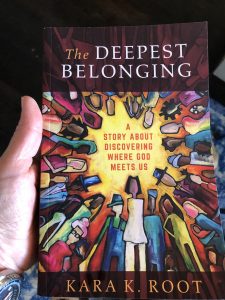
Kara Root Book

By Kara Root


Sunday, November 21, 2021

The True Wisdom

Jan Richardson's The Best Supper. You can see her work at janrichardson.com, 
and register for her Advent retreat at adventdoor.org

 1 Corinthians 2:1-16

One of my favorite Thanksgiving stories pops up again every year in the news and social media because it is ongoing.  Six years ago a 64-year-old woman named Wanda Dench sent a text to her grandson inviting him to Thanksgiving dinner. But it was a wrong number, and a 17-year-old boy named Jamal Hinton received the text, and asked, “Who’s this?” She shot back boisterously, “Grandma!” After some sorting out and selfies confirmed they were, in fact, strangers, he asked, “Am I still invited?” And she answered, “Of course! It’s what Grandmas do! Feed people!” So he accepted and went to her house for Thanksgiving dinner. 

Jamal has been at Wanda and Lonnie Dench’s Thanksgiving table every year since. When Lonnie died of Covid, last year’s with Wanda was a table of shared grief.  This week Jamal and Mikeala will be back at Wanda’s table where they belong.  

We all belong to God and we all belong to each other. 

All of us. All the humans. Without exception. 

There is no more fundamental truth than this, nothing more real in all the world, actually. 

But oh, how we forget it, and doubt it and disguise it and deny it.  How we cover it up with layers of interpretation and competition and hedging our bets and building our coalitions and hiding our true selves. 


And soon this hunger for belonging - this absolutely core, unshakable reality that we yearn to feel because we know it in our depths as the truest thing, the most real thing - soon it becomes something we commodify. We dole it out in tiny amounts, and sell to the highest bidder, we seek it relentlessly, addictively, in harmful and dehumanizing ways. And we make it probationary or provisional, limited and guarded, shutting out some in order to welcome in others. 


We long so badly for this connection to God, this belonging to the very source of life, our identity, our purpose, our human-made-in-the-image-of-the-Creator-core-being –that we set up rules to mediate it, to say who has it, and who doesn’t, and how to earn it, and who can dispense it, and what can make you lose it or gain it. And oh, the contortions we twist and the energy we expend trying to gain or earn what already defines us!


We forget- in that deep existential kind of forgetting - that belonging to God and belonging to each other is something hidden before the foundations of the world, decreed before the ages for our glory, utterly true and eternally unchanging. And then once in a while, like unexpectedly sharing Thanksgiving with a stranger, we remember.


There are two wisdoms, friends. Paul says. 

There is the wisdom of this age.  At LNPC we’ve been calling it “the way of fear.” This wisdom is built on power and centered on scarcity. It tells us always life is urgent and you must never let up or let down your guard. Each of us is in this alone, other people are competition or threat, and judgment and condemnation are constant companions.  

The way of fear seeks salvation from smart leaders, wise investments and the careful construction or dismantling of isms. It says we can be saved by weapons, or by legislating against weapons, by this candidate or that party, by this act of piety or that specific prayer, by this way of seeing the world or that list of beliefs.  It says you can force others to respect you through violence or through moral rightness, and these also prove your worth or earn you a place at the table. 

And we put stock in that kind of wisdom, we pay money to it, and educate our children in it, and take it in through our televisions and computer screens and phones and car radios, scrolling, listening, reading, soaking in so many words: his words, her words, their words. 


And like the dingy beam of a dying flashlight, we hold up this worldly wisdom before us, and we squint into the darkness, letting it guide us. And we’re killing each other. And we’re blaming each other. And we are finding more ways to divide into ever smaller and more homogenous camps, until there will be no belonging left and it will be just me against you – all the mes and all the yous against all the other mes and all the other yous. Despairing. Alone. Afraid.


But there is another wisdom.

Ancient and true. Secret and Hidden. Decreed by God before the ages, running like an underground river through time.  The wisdom that spoke the world into being with a single word, the wisdom that bound it all in harmony and order, a delight to its creator, functioning in love and cooperation. The wisdom of the Word made flesh when the Creator of all came to dwell among us. Stupidly. Weakly. Foolishly, to live without power and to die alongside us, on our behalf. 


There is no worldly wisdom in this. It is what the Narinians call, “the deeper magic from before the dawn of time.” Unbreakable and resilient, absurd and steadfast, it comes concealed in weakness to stand always with the weakest among us.  


Paul was a Roman citizen from a prominent Jewish family, well-established with an impressive pedigree. He studied under the most prominent rabbis of the day, and was fluent in classical literature, philosophy and ethics. Paul was educated in the wisdom of the world. He was a successful, powerful, influential figure, and a zealot.  He knew how to speak the wisdom of the age, in the language of the rulers of the age.


But when he comes to the Corinthians, he chooses to leave all that behind. He sees it as a distraction, a shiny diversion that might keep people from seeing the real reality. I did not come with all the methods and the political skills of lofty words or persuasion. He says.  I came in weakness and fear, with much trembling. I wanted you to see God’s actions instead of focusing on my words -  So that your faith might not rest on human wisdom but on the power of God.

In other words, he says, I vowed to know nothing among you except Jesus Christ and him crucified.


Paul uses this language -  “Jesus Christ and him crucified,” “the cross,” “the foolishness of the cross,” again and again, as a kind of shorthand to refer to the whole of the incarnation, death and resurrection of Jesus- that is, that the Almighty came into this world as a helpless a baby, into the arms of those he came to save, to share this life with us. And then died, taking all that separates us from God, all destruction and brokenness, even death itself, into God’s very being. 

Then Jesus rose from the dead, and everything we thought was real about the power of death and division is exposed as utter fraud by the unquenchable light of the world, the wisdom hidden before the ages shining forth, and there is nothing, nothing, nothing that can separate us from the love of God in Christ Jesus. It’s settled and final: We belong to God, we belong to each other. This is what Jesus trusted, and embodied, what he died for and rose into and referred to again and again as ‘The Kingdom of God.’


And yet… and yet we choose sin. Which is to say, we choose self-protection and division and destruction and existential forgetting. We choose to tear others down and to fear, fear, fear that anything, everything, could tear us down. 


But here is the free gift of salvation, friends. Right here: You belong to God. You belong to all the rest of the people in this whole big world.  And they belong to God, and they belong to you. Fact. Done. All that is needed is to say yes. Yes, I accept that. Yes, I receive that.


And because we’re steeped in the wisdom of the age, bobbing around every day in the way of fear, this is not a once and done acceptance. It’s an, over and over, Oh yeah! That’s right! kind of remembering, a chance to return, at any moment, every day, back to the truth that holds us.


Biblical scholar Mary Hinkle Shore describes spiritual wisdom like a pair of lenses at an eye exam, where click, click, click, suddenly the fuzzy blur is sharp and clear, the chart in focus. You can see what was there all along, only obscured by the various lenses that misinterpreted it for you. 


Paul calls this having the mind of Christ. Jesus was both always connected completely to the Father and always belonging completely to the world. Always at home in God, always living in a settled state of trust. And we can enter that, too, at any moment. Christ’s faith is our faith, Christ’s mind is our shared mind now, Christ’s lens is our lens. The Holy Spirit makes us into Christ’s body here on earth so that we embody belonging to God and belonging to each other.


There is nothing that happens to us that God doesn’t share.  And sharing it with each other is how we see God, because that is where Jesus is. Bearing with us, already. 

That is the wisdom of the Spirit  - that God doesn’t swoop in and triumphantly sweep away all of life’s pain and heartache. God sets a place at the table of life for each person and sits down alongside us. God offers God’s very self to us, broken and given, so that we might be made whole.


Having the mind of Christ helps us see this.  And it makes us brave. Brave to face the truth. Brave to tell the truth. Brave to live the truth with each other. Even when the truth is, This sucks! This hurts so bad! it’s terrible and I hate everything about it! Because we know all sorrow and suffering is embraced and joined by God.  

And also, we know it’s not the end. It’s not the real, final, and true word about all of this or all of us. And right here, in the midst of whatever it is, we keep belonging to God and we keep belonging to each other. And this world is absolutely and forever loved by God, who is, at every single moment, bringing wholeness and love, healing and hope, through all the cracks and crevices in infinite and often unnoticed ways, and who is leading it all toward undiluted and unending love.  That’s the real reality.


A few minutes ago, when we baptized little Ohlin, we poured over him this promise and spoke into him this ancient and deep word of life, Ohlin you are held in the reality of God’s love, part of the harmony of all things, from before the foundation of the world and long after you are gone from it.  

And you, First Presbyterian Church of South St Paul, in this mystical and sacred act, promised to teach Ohlin this eternal wisdom, and when he forgets his belonging or the world’s belovedness, you are the ones who remind him. 

And you committed to Ohlin to live out your own remembering alongside him until he begins remembering for himself, and then helps you all in your remembering, and you’ll remember together. And you’ll send him into the world to remember with and for others, and to find Jesus right there where Jesus already is, to see God and join in God’s work of redemption. 


That this power was just bestowed upon a baby, that this act that undermines all the might and corruption and brokenness of this world just happened right here is a mystery that can hardly be grasped. 

None of the rulers of this age understand this wisdom, Paul says.

And why should they? It makes no sense. Its logic is love; its awareness is transcendent.


There are two short-cuts that I know of back to the true wisdom.  

The first one is sabbath. 

This wisdom tells us to stop and rest every single week. To put down everything, and not do anything impressive or productive at all– it deprives us of all our devices of accumulation, our instruments of efficiency, our tools of measurement and our weapons of comparison, and forces us to just be human beings with each other. Our glorious and pitiful, nervous and intriguing selves are utterly loved by God in all our sagging, annoying, endearing and honest humanity. This regular, intentional stopping doesn’t make us fall behind or miss out; but actually restores our souls, returns us to being human and grounds us in our belonging once again. Be still and know I am God.  


The second short-cut back to the true wisdom is gratitude.


Br. David Stendyl Rast asks, 

“Is not gratitude a passage from suspicion to trust, from proud isolation to a humble give and take, from enslavement to false independence to self-acceptance in that dependence that liberates? 

Yes. he answers. Gratitude is the great gesture of passage.

And this gesture of passage unites us. It unites us as human beings, for we realie that in this whole passing universe we humans are the ones who pass and know that we pass. There lies our human dignity.

There lies our human task.

The task of entering into the meaning of this passage (the passage which is our whole life), of celebrating its meaning through the gesture of thanksgiving.”


Sabbath and gratitude can point us back to the wisdom deeper than words.  

But we do not make moments of awareness and transcendence happen. 

They come upon us. 

From time to time, when we are unprepared and unsuspecting, we are seized by a kind of wakefulness that resonates in our depths. 

Cradling a new baby, swaddled and sleeping, warm against your chest…  

Standing still under a vast, dark and starry sky….  

Pausing, breathless and still, holding eye contact with a deer you’ve just startled while meandering in the woods…. 

Being held in someone’s strong embrace while you weep…. 

Rocking back and forth in violent hilarity with a friend gasping in unruly laughter beside you….

Through the whisper of memory, the glimpses of fullness, the flashes of beauty, and the tastes of wonder, God keeps calling us back to the deep.

The true wisdom will mostly show up in weak, gentle and surprising ways, but it is steady, persistent, unfailing.  Underneath and behind and inside everything is the heartbeat that keeps the whole world alive: 

We belong to God; we belong to each other. 
We belong to God; we belong to each other.


Here’s the really good news about all of this:

It remains true whether we remember it or not. 

Whether we are actively looking for it, practicing it and embodying it, or whether we’re stranded in fear or lost in exhaustion and all we can see is the next anxious moment in front of us, God’s persistent reality of love, hope, belonging and connection is already holding us all.  

The table of welcome is always set, and every one of us is endlessly invited.

This week, may we accept the invitation.


Amen.


Keep on living the life after death

  Philippians 4:1-14 Is this the first time you’ve heard those names? Euodia and Syntyche?  I mean, they haven’t made the rounds in preschoo...