Showing posts with label Lent. Show all posts

Sunday, March 3, 2024

Becoming Who We Are

 John 2:13-22

We are what we love, St. Augustine asserted, and this Lent we are exploring how what we love and desire is shaped by our unthought habits and repeated rituals.  It’s our chance to do a “liturgical audit” – to ask what habits are shaping me away from life? And what habits are shaping me toward life?

We learn habits through repetition; they become so ingrained in us that we don’t even think about them. So changing habits can be daunting. Once we recognize an unhelpful habit, we want instant results and immediate gratification.  We modern folks are not wired for the long, slow slog of repeating uncomfortable things until they become second nature. We’d rather keep repeating comfortable things, even if they’re not great for us. 

A couple years ago I realized my problem with exercise was not that I didn’t have the right health club membership, exercise partner, tennis shoes or motivation, but that I didn’t have the right habits. I was formed and forming myself as a person who thought exercise was a good idea and did it when I could, but mostly just practiced feeling bad I wasn’t moving as much as I believed I should be. But, it turns out that changing my habits has changed my desires, and lo and behold: I have become a person who exercises. 

When I decided I would not be all or nothing about it, my mantra became Anything worth doing is worth doing poorly. (This carries over quite well to things like thank you notes and birthday greetings, but not to things like home repair projects or driving). Consistency, rather than quality, was what mattered in my habit-learning quest, so I decided I would exercise every single day even if it was just for a few minutes, whether I felt like it or not. The promise was, if I did it every day, I would reach a point where it would become just like brushing my teeth—I would no longer have choose to do it, it would just happen. 

And I had evidence this could be so. I do, after all, brush my teeth—twice every day, in fact. And I tie my shoes like a pro without even thinking about it. Because a long time ago, I learned how by doing it imperfectly, over and over again, and probably I cried about it a few times. And now, I exercise. And as a totally non-athletic, lifelong avoider of sports, after a couple of years of moving on purpose every day, I sometimes really look forward to exercising – though mostly I love the feeling of having exercised.

Why can I apply these habit-forming ideas to things like eating vegetables or exercising, but I can’t seem to do so with prayer? I put up all sorts of hurdles and barriers between God and myself.  Even though I long to be connected to God, and I want to be a brave, kind person in the world, it appears I would much rather stay busy and distracted, even by tedious and unpleasant tasks, and practice feeing bad about “not praying enough,” than assume the inner stance of least resistance and terrifying openness to being encountered by God as just my vulnerable old self. 

Turns out, we humans have a long precedence of creating barriers to God for ourselves and others.

The marketplace situation in temple that Jesus blew a gasket over was not something out of the ordinary - it was business as usual. People had to change their normal money for temple currency, to buy sacrifices to offer to God here in this place where human beings and the Divine meet each other.


But that’s not how things started. Way, way back, when God was giving the Israelites instructions for how to live as God’s people, God said, 


Dedicate 10% of all your harvest from your cattle, crops, and vineyards, and bring it to God, and feast on it with God. This is a way to remember, every year through practice, that you belong to God.  And, so you don’t forget that you also belong to each other, every three years, use your saved up 10% to stay home and throw a feast in your own town for all who are in need. 


To help this happen, God’s law accommodated those who couldn’t reasonably travel long distances with 10% of all their harvest and animals. They could sell it, travel with the money, and then buy lovely things for feasting with God when they arrived at the temple. (Deuteronomy 14:22-29)


But over time, this directive that was supposed to make celebrating belonging to God and to each other more feasible for all, became a gatekeeping instrument, an obstacle to navigate, a hurdle to jump through. Now, whether you lived near or far, you needed to trade your money for temple money, and likely also exchange whatever imperfect gift you brought for a more perfect, worthy sacrifice. 


And so, a whole business arose in the temple to mediate the connection between human beings and God, and this is what Jesus came bashing and crashing and yelling about. 1500 years later, Martin Luther will call out the church for similar practices of selling and buying access to God, though in a far less dramatic tacking up of a piece of paper with some provocative statements written on it, onto a Cathedral door.


It turns out that even those of us who believe in a God of mercy and grace, belonging and wholeness, often tell a different story with our practices and habits, You belong if… you don’t belong unless… you only belong when…

After Jesus’ outburst, when the air clears of feathers, the coins stop rolling, and the shocked silence holds them all, someone clears their throat and asks, "What sign can you give us for doing this?," What an astonishing and wonderful question to our modern, secular ears! This question means they were willing to consider that God might be redirecting them through this – they were open to a Divine course correction.  


Lent is a great opportunity to be open to a course correction. But it can’t come from more of our own well-practiced, malforming habits. 


When Jesus answers them, he does that frustrating thing where he stays all metaphorical and vague, saying, Tear down this temple and I will rebuild it in three days. Only he uses the other word for “temple” not as in "sanctuary space," but as in “the place where God dwells.”  And the gospel author helpfully tells us he’s not talking about the building they are standing in, but about his very body. 

I am, Jesus will go on to say a million times in John, I am the way and the truth, I am the good shepherd, I am the light of the world, I am the resurrection and the life. I am the place where God dwells, the ground on which God and humans meet.


God became flesh and dwelled among us, breaking through barriers of time and space to be with us, and nothing can separate us from God's love.  According to the Apostle Paul, because we are in Christ, we are now the temple, the very place where God dwells. Our ordinary lives are the sacred ground on which Divine and human meet.  We are the Body of Christ, the dwelling place of God. 


And so, Lent’s Divine course correction opportunity asks us, 

How are we making our lives into a marketplace?  

How do we sell our attention and earn our worth? 

What hurdles do we put up to connection, and what barriers do we build against belonging? 

Do we despise our own imperfect gifts and try to exchange them for a more perfect, worthy sacrifice? 

As parents, or partners, or neighbors, or friends, do we construct all or nothing approaches that wall us off from the terrifying vulnerability of being human alongside one another and beloved of God, just as we are?  

How do we habitually resist being encountered by God?  

And what are the well-worn ways we withhold the possibility of access to God from those we despise? 

Do we avoid being brave and kind because we can’t do it perfectly? 

And with what patterns do we refuse to rest because we suspect being unproductive means being worthless? 


We are so practiced and proficient at our habits of disconnection and alienation from God and the world - which is another way of saying, we’re so good at our sin – that we do it without even having to think about it. It’s ingrained in us. No amount of our own effort can free us. We cannot save ourselves. 


The good news is Jesus is ready and willing to storm into our business as usual, and tear down every barrier we erect that divides us from God and each other. He is always opening cages and letting our guilty pride and pampered self-loathing fly off. Jesus will drive out every label and prerequisite we place on ourselves and others for how to be included or excluded as God’s beloved people. He’ll chase away our carefully calculated good deeds, toss out our smug judgments of one another, and gladly scatter in the dust all our well-honed measurements of worth.


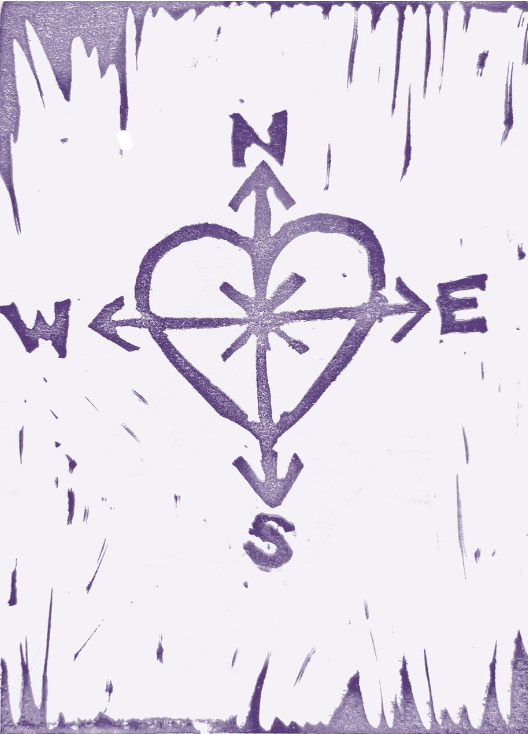
Once that happens, the compasses of our hearts are recalibrated by the promise that in Christ’s body, Christ’s own relationship to God, we are pulled into love and set on a new path. 


And just as we may not realize we have habits that are misdirecting us, we also probably don’t appreciate those habits we have that reinforce us in our belonging to God and all others. Just take today, for example. By getting out of bed and coming here, even when you don’t necessarily feel like it, because here something happens that we can’t make happen, without even realizing it, we’re being, with and for each other, the place where God dwells. 

Today when we confessed our sin and sought forgiveness, sharing words spoken by followers of Jesus for hundreds of years, and when we called one another to worship by receiving the welcome of God and remembering out loud why we’re here, and in a few moments, when we lift up our fears and joys to God with one another in prayer, we are practicing assuming the stance of least resistance to being encountered by the Divine. 

When we share what we have in offering for the work of God between and among us that is only sustained by our free giving, we are living in a different economy than the marketplace of the world. When we depart in blessing and are sent out to see strangers as siblings, and our neighborhoods and communities as the sacred ground where Jesus shows up, we are learning new habits of relating through repetition. When we remind each other to watch in the world for God’s hope and healing, and we use our time and gifts to share in that work, the compass of our heart is pulling us toward God’s trajectory for the world.  Each time we acknowledge beauty, and let ourselves listen deeply, we are attuning ourselves to the Creator. And every time we answer our knee-jerk dismissal of another person with an internal reminder of their belovedness, and an external acknowledgement of our shared humanity, we are joining in our own transformation. 

Talking to God is worth doing poorly. So is reaching out to someone we’re worried about. So is accepting help from others. Saying things wrong to someone we love, and imperfectly apologizing does far more to shape both of us in our already-belonging than fearfully guarding our words does. Practicing forgiving forms us toward freedom. 

By repeatedly doing these uncomfortable things until they become second nature, we’re participating in God’s relentless redemption of the world and of ourselves, so that, little by little,  by the grace of God and power of the Holy Spirit, living our belonging to God and all others become more and more habitually ingrained in us, directing our love so we become who we are. 

Amen. 

 (The sermon is the second in a Lenten series drawing from the themes in James K. Smith's, You Are What You Love. Here is the first). 

Sunday, February 18, 2024

What do I love?


 Each morning, the first thing I do is reach for my phone. I look at how good of a sleep I got according to my watch data, I read my emails, and check the breaking news.  This habit is not neutral. This is a practice that is forming me.  

Like a sponge, I wake up parched and immediately soak up the world’s tension and division announced to me in breathless headlines. I let the urgency, self-judgment, and need for productivity course through my veins and get my blood pumping. Little do I realize this going to my heart. I am shaping my desire by adrenaline and upheaval, I am being trained to chase competence, proficiency and efficiency, and sooth anxiety with data points and accomplishments.  And, I’m told I’m not fun to be around in the morning.

What is this daily practice telling me about what a good life is and how to live it?  What does it reveal about what I actually love, over against what I think I love?

James Finley shares a story of interning in a VA hospital on the treatment unit for alcoholism in the 1970s. The men on the floor, mostly Vietnam vets, had developed an initiation rite that was passed down. In order to be admitted to the unit, you had to pass through this rite.

Finley describes being in a large room, with chairs all pushed against the four walls and the center empty, except for two chairs facing each other. Nearly 100 men are sitting silently along the walls, heads down, eyes to the floor. 

In comes the person at the end of his rope, with alcohol destroying his life.  He’s nervous, glancing around the room, knowing he will need to pass this initiation to get in.  Those around the walls keep their eyes lowered, and remain completely still and silent. Finley says, “It’s serious as death, which it is.”

The interviewer invites the man to a center chair and sits down across from him. 

The questioner then asks, “What do you love the most?”

“The alcoholic, not know what to say, stammers something out like, “My wife.” at which point everyone in the room yells as loud as they can, “Bull----!” and then goes silent, staring at the floor. 

The rattled man looks back at his questioner, who asks again,

 “What do you love the most?”

“My children,” he tentatively answers.

“Bull---!”, hollers loudly back from all sides.

“What do you love the most?”

Finally, finally, the person says, “Alcohol.”

Immediately all the men rise to their feet and give the man a standing ovation. Then in complete silence they line up and hug him, one at a time, as tears stream down his face.

He is ready to begin his journey.

We can know a lot, believe a lot, have the best intentions and the loftiest goals, but our hearts are shaped by our habits.  Like a compass: our love is directed toward what we put our attention on, what we practice every day.  

Were someone to observe us from afar and describe who we are, they could not see inside us, read our thoughts or intentions, or deduce our motivations, they could only witness and describe what they see us doing with our lives, what direction we are moving. And the conclusions they draw about us would, in some ways, be more accurate than the conclusions we often draw about ourselves.

Generations before Christ, when the Israelites were delivered from bondage in Egypt, they were sent into the wilderness, for 40 years.  All the lifegiving liturgies and practices of their faith that sustained them behind closed doors as the people of God during their 400 years of slavery came with them. But other patterns and habits, the “liturgies” of the empire had been shaping them day after day, telling them their lives were worthless except for what they could produce. The way of fear dominated their waking hours, forming them in daily doses toward self-preservation, guarded competition and on-edge dread. 

But in the barrenness of the wilderness this liturgy was extinguished, and new patterns and practices took their place, shaping them toward a different way of being. Every single day, God, who claimed them as beloved children, miraculously provided them food and water, protection and care.  Little by little, day by day, through habits of trust and dependence on their Creator, they were remade from fear to trust, from degradation to dignity Instead of relentless, competitive striving, they were rooted and grounded in the belonging, generosity and rest of a loving God in whose image they were made for a life of giving and receiving ministry, to bear God’s love to the world. 

Today we read that Jesus’ own ministry begins when he is plunged under the waters of baptism, and hears God’s claim on him, You are my Son, my beloved, in whom I am well-pleased.  And then, immediately, Jesus is driven by the Spirit into the habit-disrupting, trust-teaching wilderness of his ancestors for 40 days of vulnerability to be cared for by God. 

Lent is the 40 days before the celebration of Jesus’ resurrection from the dead on Easter. It has always been seen as a kind of spiritual wilderness, a time of stripping away of our idols, isolation and captivity, and reorienting us back to God, who loves us and claims us for ministry. 

Lent turns the compass of our hearts back toward God, by first asking us, what is your compass pointing toward, that you may not realize? and then, like an initiation into recovery, disrupting our patterns of self-sufficiency and sin and recalibrating our loves.

Because when we see ourselves and our lives as they really are, and not just as we wish them to be: this is where God meets us, where transformation happens, where discipleship begins again, and again. In the wilderness of Lent, we too are tested by satan and waited on by angels, which is to say, we recognize how deeply seductive are the messages the world gives us about what a good life is, and how strongly they pull on us, but, there, in our most vulnerable and true selves, we are welcomed with ovation and open arms into the care of the one who calls us Beloved child in whom I delight.

My Lenten “liturgical inventory” began this week when I recognized how my waking up, (and for that matter, going to bed) rituals are mis-directing my heart. So I made the choice that I will not look at my phone for the first two hours of being awake. 

Each morning, I greeted the day in front of my eyes instead of on a screen. I was present to those around me instead of barking orders at them, and I felt myself inside my body, instead of racing through emails and giving my attention to whatever felt loudest or most urgent.  I managed to do this 5 of the 7 days. It is uncomfortable and hard.  But how hard it is shows me how necessary it is– like resting on sabbath Sundays reveals my dependance on doing. 

A week in, I’ve already discovered that when I come later in my day to the pressing news and to-do lists, first having awakened to God’s presence and been present myself with a different heart-orientation, it shapes my perspective, and I am noticeably less anxious the whole rest of my day.  

God is God, always here, always holding my life and this world in love, always moving both through and despite humans to bring redemption. I want to trust this, not just with my head, but with my heart, and so, then, also with my habits.  

May it be so. Amen. 

Sunday, March 19, 2023

How Jesus Encounters Us


 Who is this God?  And what is God up to?   

We’re journeying through Lent with three guides, well, five if you count the siblings.  Mary and Martha with their anger and grief, Lazarus with his pesky deadness, Nicodemus with his questions and fear; today this woman who doesn’t get named, with her baggage and her boldness, and actually, the disciples too in this one, all of these faith relatives of ours have their worlds blown open and their imaginations completely rewired for who God actually is and what God might actually be up to.

So let’s jump in with today’s guide, The Samaritan Woman.

I suspect the reason she’s not named is because the division and tension between Judeans and Samaritans before and beyond this story crept into the telling too. What’s most important to know is what’s most shocking and hardest to get over: she’s a Samaritan. Woman.  

Judeans and Samaritans were all Jews, they had the same ancestors- but they had different practices, different scriptures, different worship.  


Each one was right; each one knew the other was wrong. With so much scorn and disdain, they avoided each other whenever possible. Which was often possible. This meant that despite the shortest route from Judea to Galilee being through Samaria, it wasn’t often used by Judeans.  And if Jesus had taken the regular route, this conversation its consequences would never happened.  Jesus and the Samaritan Woman might never have met.  

But God so loved the world.  And Jesus went through Samaria.  

So the conversation happened.


The writer of this story wants us to infer a few things about her right away from details we might not pick up being 21st century readers: she is coming to the well at the hottest time of day, when nobody comes to the well, and she is coming alone. Probably she has stopped trying to come in the early morning with the other women and children, when nobody really talked to her anyway, and it was too painful to see them surrounded by their big, loud families, discussing their sons, and husbands, while she trudged along behind them with her water jug on her shoulders, no one to share her load. So even though it’s a miserable, scorching walk in the middle of the day, it’s easier to come alone.


But today there is someone at the well.  A man. Judean, clearly not Samaritan.  She ignores him and goes about her business, until he clears his throat and addresses her, Excuse me, can I have a drink of that water?


And the conversation begins.   

Encountering God, seeing Jesus, this life of faith and following, is not about answers handed down from heaven, not about good behavior or earned right or accumulated knowledge or perfect piety.  It’s a conversation– it’s a back and forth with doubt and insight, frustration and challenge, with breakthroughs and mysteries that remain unsolved. And most often, we meets Jesus in places of need -  sometimes our own, sometimes someone else’s. God comes to us in the real stuff of life, when we’re open and available to be encountered.  


Here, encounter with God looks like two people from opposite sides of the fence, one with sweaty, dusty thirst, the other, a lonely, isolated person with a complicated living situation doing an arduous daily task with no support or companionship. Their religions forbid men and women from interacting, forbid Judeans and Samaritans from interacting and yet, in the glaring differences and walls that separate absolutely, a moment of connection happens anyway, and astonishingly, in their shared need there is dignity, generosity and humanity.


So the conversation happens. Jesus and Samaritan Woman. 

He knows all about her tragedy.  She has no people; five times she’s been divorced, abandoned, or widowed.  A man could cast off a woman for nearly any reason, and if a husband dies and she has no sons, she has no protection, security, food or home. So she survives however she can, and probably has come to see herself the way the world sees her. She’s the disposable person, belonging to nobody. That’s her identity; that’s her lot; that’s her role.


But the longest recorded conversation Jesus has with anyone, is with her. He sees her.   He engages her like an equal, addresses her intelligence, listens to her, recognizes the totality of her story – the painful parts and the parts before and beyond those. He treats her like she already belongs, and in so doing, he gives her a new role and identity. 


When Jesus offers the woman living water, springing up from within; water of life as they are sitting here in this barren place where lack of water means sure and certain death, here at the ancient well of their shared ancestor, the place of God’s provision and protection, the well that sustains them, to which the whole village must arduously trek and laboriously draw water to stay alive, she is mystified, and feels the yearning within her rise up, and at the same time as she feels the tamped down longing come to live she is right at this moment being quenched, being giving this living water he speaks of. 


Jesus doesn’t see her as a tragedy or a reputation or a burden or a cipher. When he sees her personhood the life within her so long dead, like Lazarus, wakes up. He treats her like she participates and so she does. 


She recognizes him as a prophet, poses to him the question that divides their people, right out in the open, she names it. Just like Nicodemus great teacher of the law, who wrestled and pushed back with his questions, just like Martha and Martha who confronted him and demanded an answer, she lays the difficulty right at his feet.  Your people, say the temple in Jerusalem is where God is found and only if you worship there are you truly seeking God. Our people say this mountain before us is where God meets people. Which is it then?


And he responds with those words we’ve just heard in a previous conversation – spirit and truth – trust me, he answers, the time is coming when it won’t matter where people worship. Those who seek God do so in spirit and truth. God will meet people in that place. 


And like Nicodemus, she ventures a statement loaded with question, I know the Messiah is coming…. 

And he responds with the timeless words of Yahweh, when the voice of God from the burning bush declared to their shared ancestor Moses, “I AM.”


And the whole world cracks open.

She leaves her jar.  Like James and John left their nets to follow, she walks away from the thing that had brought her there to begin with, and leaves behind who she was at the well beside him. And she runs. Free, fast, unencumbered. She runs back to her town and tells everyone – Come and see!   Come and see this man who knows everything about me.  He can’t be the Messiah, can he?


And they come. 

They listened to her.  And why wouldn’t they?  

Can you imagine what they saw when she flew back into town without her water jug? Confident, luminous, upright and unflinching?  She undoubtedly looked completely different than she did when she skulked out of town in the midday heat. She left an empty shadow of a person, and returned radiant, filled with passion and purpose, her shoulders high, her head, raised, her voice firm and eyes lit up, her face looking straight into the faces of others instead of down at the ground in front of them.  How could they not take in what she was saying?  

The living water he promised, the water she’d so desperately craved when he offered it, they felt it bubbling right up out of her and spilling onto them, drawing them back to the source of the water themselves, and then the whole town encountered Jesus.


 Imagine being the unsuspecting disciples, who left to buy lunch, and returned to a different evangelism strategy? The poor disciples are upset and confused and a little pouty about whether someone else brought him food when that was their job.

Not only is this unnamed Samaritan woman with a sketchy social standing the first person to whom Jesus reveals that he is Messiah, but she is legitimately the first preacher in Christianity. Before the disciples even, she is the first evangelist, and she’s effective! Her whole town signs on quick, and this stop wasn’t even on the tour schedule!  


But Jesus tells them they are part of something that started before them and continues after them – their part is important but this isn’t their show.  The work they do now was begun by others, and these people they dismiss without a thought are the ones who Jesus will be staying with for the next few nights, so just sit back and let it unfold – for God so loves the whole wide world.


And the disciples now must bear witness to the reality that Jesus will always be found in the world, for the whole world, and will not stay confined to our plans or spaces or ideas or tribes. Nobody gets a corner on God, and as soon as we’ve labeled ourselves ‘the temple people,’ or ‘the mountain people,’ or ‘the true followers’ with ‘the correct beliefs,’ we’re about to be surprised by Jesus hanging out with the ones we’ve despised and dismissed.  And then we must ask again, Who is this God and what is God up to? 


I wonder what the first preacher would ask us if she were here? 


Maybe she’d ask about our conversations with Jesus.  

When have we felt seen and known, in the back-and-forth honesty with God? 

When have our ideas of the world or ourselves been overthrown, and instead we’ve found ourselves deeply connected to something we’d been missing and hadn’t even known we needed?  

Have we ever had a moment of ditching our own water jugs, or nets, or tombs, and finding a new identity and purpose inside the love and purposes of God?


Have we tasted the living water? Unexpectedly felt the thrill of coming alive? 

Something in us touching something outside of us and discovered quite unpredictably that life we did not make happen bubbled up within us and end up blessing others? 

When have we felt the life within us joining miraculously in the life in the world? 

When have we found, in our need or in someone else’s need, the presence of God meeting us in the giving and receiving? 


God comes to us in the real stuff of life, when we’re open and available to be encountered.  

 Like the Samaritan Woman, Nicodemus, Lazarus, Mary, Martha, the whole town of Samaritans and the baffled disciples, Jesus encounters us in the ways we’re least suspecting and most needing. 


Amen.


Thursday, February 18, 2021

Our Ashes, God's Breath


Psalm 51:1-12, 17

The ashes we use on Ash Wednesday come from burned palms - palms waved with Hosannas and high hopes at Jesus’s coming, then discarded in confusion and disgust when what came next was death instead of victory and triumph.  

There is an honesty and familiarity in the ashes. They’re personal. They represent the incineration of our lost hopes and ruined plans, our decimated dreams and broken relationships. They come from “the debris of good intentions, the residue of our mistakes and failures.” (R.A.)

From ashes to ashes, and dust to dust.

 One commentator says, “The[se] words do not refer to some universal concept of inanimate matter nor is the dust from an outside source. No, the ashes are us. The dust is the actualities of our lives. Our physical bodies. Our passions, limitations, mistakes and memories. Our families and friends. Our streets and neighbourhoods. The world in which we live. Our embodied journeys in time and place.”  (Rodney Aist - Wild Goose)

These are the ashes of the burned stores and restaurants in Minneapolis as our city and country cried out in anguish and anger, and this is the dust of the ripped out walls in our church basement to open up space for new life. This is the dirt in which we’ve buried those we love and lost this year, and the dirt from which we grew tomatoes and zucchini to share with our neighbors through the summer. These are the ashes of our bonfires on the church lawn, sitting 10 feet apart when we could not gather side by side indoors. They're the dirt on the boots that trampled through our nation’s capital sounding out loud the chasm of division and pain in the heart of our nation. And these are the spent embers of our energy and enthusiasm for more of this pandemic kind of life after months and months of isolation and distance. 

But “from the cinders of the cross come the soil of resurrection.” (R.A.) From our death, our brokenness and impossibility, God moves to bring new life.  God breathes life into dust to create the Adam, the creature of the earth, Adamah.  We are made from dust, and we bring to God the dust of our lives knowing "what God can do with dust." (as Jan Richardson says.) 
 
Each year at Lent we return to these ashes, as the emptiness, nothingness, from which our God creates. This is the soil we offer to God to grow new life – in us, and in the world. 

It is a relief to gather this way. To see visibly our mortality on the faces of those looking back at us across a screen. We are a community of honesty, and it is here that God meets us.
 
Now we wait. 
We cultivate a spirit of waiting. Waiting for God to do what only God can do. For God to do what God does. 

Lent is a gift. We rest in the honesty and the waiting. 
We hold up our ashes to God and watch for what God will do with them.
May you be blessed in your Lenten wait.


PRAYER PRACTICE
Our Lenten prayer journals are a way for us to pause and process as we receive each week and set intentions for the following week. 
This week:What do these ashes on your own face represent to you? What are the ashes you bring to God, seeking resurrection and life?

Friday, July 31, 2020

Widening our hope scope

Devotion for Being Apart -
July 30


This summer, I will share new devotions from time to time,
and invite you to browse through devotions that have been posted on this blog.


Last week I stopped by the church building for the third time since mid-March. It's like a time machine.  Frozen in place from the day we walked out of it.  Dee's cookbooks are in the narthex for sharing - where we put them at her Memorial service. The Lenten "hope" bracelets are at the back of the sanctuary for people to take one on their way out of worship. And our bible people are smiling down on the empty pews from the windows.  The building feels stuffy and still, and a little sad.

But one thing stopped me in my tracks.  It was our Lenten theme of hope, still speaking from the hallway wall:


Our questions, with the Psalm 23 collage we did in All-ages Sunday school.

So here it is.
When we hung these questions on the wall, we were living in the "what if?"  We had no idea what was coming, and would not have believed someone if they'd tried to tell us.
I mean, imagine, in retrospect, what "what ifs" we could have said!
What if there's a global pandemic?
What if suddenly kids can't go to school for the rest of the school year?
What if all public places shut down and everyone stays home for weeks on end?
What if hundreds of thousands of people get sick and thousands in our country and around the world die?
What if our economy teeters on the brink of collapse, and people lose their jobs or have to work from home, and those who work at grocery stores and on delivery trucks become "frontline workers?"
What if a black man is brutally murdered in our city by a police officer and the whole country ignites in protests and our nations wakes up in a new way to the problem of racism? 

AND SO ON.


All those what ifs came to pass! False security has crumbled, brokenness is on full display, our future feels uncertain, and life is in a strange suspension and upheaval unlike anything anyone now living has ever experienced before, (As my 90 year old grandma asserted to me last week).

Now we are living in the "Even if"s of our previous "What if"s!
And God is still God.
Love is still love.
Life and hope are coming up where we don't expect them.

Looking forward 
as we wait for word on schools, and as we watch the virus numbers and death rate climb, as we watch our city try to figure out a way forward.... it would so easy to fall back into "What if."  

But I suggest we look around ourselves at the things that would have been unthinkable, terribly dreaded "what ifs" that have happened, and we notice that here we are, in them, right now, and then we, paradoxically, let that feed our hope.  

We might think of this as practicing "Even though" reflections.
Even though we can't meet in person as a congregation for months on end, still we are church, still worshiping together, still holding each other in prayer.
Even though we can't physically be with those we love, still we are connected, still finding ways to laugh and cry and talk and listen.
Even though... Even though... Even though...


This is what Israel did all the time. They looked back at what God had done, they looked around for what God was doing, and they let them point them ahead to trust what God would do.  At least, this is what they sometimes did, and what the prophets and poets kept inviting them to do.  And through it, they learned that when we are stuck in "What if," then recognizing the "Even though " can lead us back to "Even if."

Even though my job has changed significantly, I'm working, and so many people right now are in this same boat. So...
When I feel myself asking, What if I lose my job? I can trust that
Even if that happens, I will be cared for by God and a way forward will become clear.

Even though the kids struggled in the Spring, we made it through, and everyone learned from that experience. So...
When I feel myself asking, What if the kids don't go back to school in-person?  I can trust that
Even if that happens, we will be cared for by God and a way forward will become clear.

And so on.
And we begin to widen our hope scope, and build our hope muscle.

By the way, I love how hope is a time traveler. The words we hung on the wall back in February have come here to speak to us now.  
Fear asks, "What if?" and Hope answers, "Even if!"  
Thanks be to God.

And now the words drawn and illustrated on the mural taped below our lenten questions by "then" us for "now" us, Psalm 23:


The Lord is my shepherd, I shall not be in want.
   He makes me lie down in green pastures;
he leads me beside still waters
; 
   he restores my soul.
He leads me in right paths
   for his name’s sake. Even though I walk through the darkest valley,
   I fear no evil;
for you are with me;
   your rod and your staff—
   they comfort me. 
You prepare a table before me
   in the presence of my enemies;
you anoint my head with oil;
   my cup overflows. 
Surely goodness and mercy shall follow me
   all the days of my life,
and I shall dwell in the house of the Lord
   my whole life long.

CONNECTING RITUAL:
 
Perhaps tonight before we go to bed, whatever time that is in each of our homes, we can pray in this way, and so join our souls with each other and the people of the whole earth:

Let your prayer be a kind of litany to God, a call and response in which God answers you.

1-  Begin with the Even though... this is the gratitude time, that purposely acknowledges the presence and activity of God.

Think back to all that you've lost, all that has changed in this time, name it and let the Holy Spirit fill in the rest of the sentence.  This formula makes space to recognize the steadfast love of God.

Even though...   still...
This formula makes space to recognize the resurrection life of God in places that feel fraught.  Watch for signs of hope you can see in the midst of circumstances that have taken place or are taking place right now.
When... God...

2-  When you feel ready to move on, let yourself tap into the places of anxiety and worry in you.  You say the What if... and let God bring you to the Even if...

What if...

Even if...

Friday, March 8, 2019

Dust and breath


"Be still and know that I am God." Psalm 46:10

Remember that you are dust, And to dust you shall return.
Lent is a reminder that we are human beings, creatures, that we come from earth, soil, dust, and we will return to it.  No matter what we do on this life to try to outlive our humanity, to avoid our weakness, to transcend our station, we still ultimately die, we are creatures, trapped in our creatureliness.

But to be made from dust, to have the breath of life breathed into us…

"The Hebrew name for the divine is composite of the words Hayah, Heveh Yehiyeh (was, is, will be).  It conveys the mystery of timelessness, of infinite beingness." This is our source. This is who holds our life. The name of God is made entirely of vowels and can’t really be pronounced. It is said that if you say the name of God as it is written it would sound like an exhaled breath. 
Let’s do that together.
We just said God’s name.
The first thing a child does when it comes into the world from the waters of its mother’s womb is say the name of God.
The last thing a human being does before leaving this planet is to say the name of God.

Grace is God’s being, shared with us. That God’s love is poured out in love and care for us is the foundation of our own being. We are made to be cared for by our creator. We are made to care for each other.

But so much of the time, we reject the care of others and we pretend we don’t need god’s care.  We act as though we are in it alone. This, by the way, is sin, which we will talk more about this weekend. 

Lent is a whole season to return to the truth of our belonging to God and each other –which isn’t found in strength or invincibility, but in weakness, nothingness, and impossibility.  

Not in anything we do or accomplish or say or become or fail at. Just in our breath. Just by being. We are creatures, made in the image of God.

We cannot, on our own, transcend our nothingness. But we can trust the one who transcends all, the ineffable name, we can trust that our lives are held in something greater, that our being is secure in the love of the one who ministers to us.  God comes into this world in Jesus, taking on all death, all nothingness and impossibility, taking it into Godself so there is nothing anymore that can separate us from God.

Lent is an invitation into the courage to be honest, your real, vulnerable old self, the part that simply is.  The part that comes with breath and body and sadness and longing. It's a chance to take off some armor, to lay down some weapons, to rest in the love of God that holds you, that you mostly act like you don't need when really you absolutely do.

What would you like to let go of to make space in your life for God to encounter you?
What do you use to avoid your nothingness, to build your somethingness, to forget your creatureliness?
When boredom, despair, sadness or emptiness rise up, what do you use to distract yourself?
What's your "go to" pacifier or diversion?
Social media? TV? Snacking? Alcohol? Solitaire? Addictive patterns and habits?
How do you check out of uncomfortable feelings?
What do you use to numb?
This Lent we are going toward our nothingness.
We are welcoming the absence, and seeking God there.
You are invited to fast from (let go of temporarily) whatever it is you use to avoid the abyss.
Turns out we have a God who goes right into our places of suffering and absence, and shares them with us. We generally avoid meeting God there.
This lent we are going there.
Return to me with all your heart. God says.

Be still. our scripture says.
This appears two places in scriptures as a command from God. The first place the command is given, the people of God have been delivered out of Egypt, but Pharoah has changed his mind, and has sent his entire army after them to destroy them. They are at the edge of the Red Sea, the chaos of waters in front of them and Pharoah's whole army behind them, in the face of certain death, and God says,
Be still. The Lord will fight for you.

The second place this command is given is in our Psalm, where it says, Nations are in an uproar, kingdoms totter, God raises his voice and the earth melts.
Be still and know that I am God.

Be still is not an invitation for when you already feel content, when things are going well and you're longing for some spiritual boost. It's for the chaos. For the impossibility. For the crisis, and the injustice and the division and the shame.

When things feel overwhelming around us. Be still.
When you find yourself fleeing your nothingness. Be still.
When you feel weak or lost. Be still.
When you sense the urge to make yourself big, to prove yourself, to insulate yourself. Be still.
Be till and know.
Be still and know I am God.
You are not God.
Stop moving.
Breathe in.
Feel your breath filling your body.
Feel your feet on the ground.
Feel your creatureliness.
Be here. Be now. Be still.
Let God be God.
You be still.
Let God meet you here.


Sunday, February 18, 2018

To be made of dust and water

Daniel Bonnell, The Baptism of Christ


One Wednesday night in cold February, 2008, I stood in line holding my nearly six month old son on my hip as he sucked his little fist and clung to me with his other arm.   In front of me was a dear 99 year old woman. I watched the pastor smear ashes on her soft, wrinkled forehead and say, “From dust you came and to dust you shall return.” 
I felt my heart rise to my throat and the tears come to my eyes as I witnessed this and thought, not long now.
The pastor’s words felt very true as I watched this woman slowly turn to walk away, leaning heavily on her cane. The truth of our mortality, I thought, right before my eyes.
But I snapped back to attention when the next thing I knew, the pastor was pressing her ash-covered finger to my baby’s own soft, tiny forehead and saying the very same words to him, from dust you came and to dust you shall return. Then the tears did come. I didn’t want what was true for the old woman with a long, full life behind her and one foot in the grave to be true also for my tiny one, not long out of the womb with his whole life in front of him.  But it ‘s true of us all.
And Lent is about telling the truth.

We’ve begun our 40 days of Lent, to mirror Jesus’ 40 days in the wilderness. It’s the 40 days that lead up to Easter (minus the Sundays, which for Christians are always days of resurrection).  And we begin Lent with these verses from Mark, that pack into a very small space Jesus’ baptism, his temptation in the wilderness, and beginning of his ministry – all in whirlwind kind of storytelling that leaves no room for details.  Baptism. Wilderness. Ministry. Ready, set, go!

Jesus comes up out of the waters of his baptism, and the Spirit like a gentle dove alights on him, and the voice of God says, “You are my child, Beloved One. I am delighted in you.” And then, suddenly, violently, the same Spirit drives him, still dripping, into the wilderness. 

The wilderness is a big motif in scripture and a big metaphor in our lives. Perhaps we think of wilderness as barren and lonely, and it often it is. Isolated, cut off from what gives you security, community, purpose and direction, wilderness feels somehow both wandering and stranded at the same time, with the very real possibility that you will not make it out alive. 
But in Mark’s breathless and brief telling, the wilderness feels almost crowded and noisy, Jesus was surrounded by wild beasts and inundated by temptations delivered by Satan, and ministered to by angels.

And Mark says almost nothing about the temptations.   The other gospels describe this in some detail, but Mark finds it sufficient to say he was tempted by evil incarnate, and leave the rest to the imagination.
Perhaps for Mark it doesn’t matter specifically what the temptation was; just that it was a real temptation.  He wasn’t teased by the devil, or given a safe opportunity to flex his refusal muscles or assert his boundaries, like practicing a language, or doing a training exercise.  This wasn’t a game; Jesus was genuinely tempted. 

Tempted, like we are.  Tempted to hunker in our corners and shout insults at the other side, rallying against our enemies. Tempted to give in to despair, or let anger swallow us up.  Tempted to make our world really small and really safe and really pleasant and ignore anything that feels too big or overwhelming, especially the plights of others.  Tempted to numb the pain – with alcohol, or medications, or pornography, or non-stop work or being sucked into the social media vortex, whatever dangerous addiction or mindless pastime we can find to help us not to feel bad, even if it means we wont feel much at all. 
Temptation is real and all of us face it. Jesus did too.

And in the wilderness, stripped down to desperation, everything offered to him - each deal or suggestion or idea that evil incarnate held before him - seemed really, really good, and he was tempted to give in, to take the sweet relief offered and be done with the struggle.  It was a fight within himself, a battle to resist, complete with doubt and second guessing and anxiety.  Oh, and also there were wild beasts.  Mark doesn’t elaborate on them either.
And then angels come and minister to Jesus in the wilderness.
And that’s all Mark has to say about them too.

But the story doesn’t begin in the wilderness; it all begins with baptism.
And so even as the sign of the ashes on our foreheads on Ash Wednesday made visible, traced over the blessing spoken on us at our own baptisms, we begin Lent here, too, the place of our identity, belonging and naming, Beloved. 
We begin at baptism. Today we will remember our own baptisms as we baptize little Rowen.

When God with us came into this life he took on death alongside us. Before his ministry begins, Jesus is plunged under the water symbolizing chaos and death, and pulled back into the light of breath and life. He metaphorically dies and is risen –and when we are baptized into his death and resurrection, we do the same.

We don’t do it very dramatically here- you should go home and watch the youtube video of the Orthodox priests in Georgia thrusting babies head first into water and then flipping them over and and dunking their feet, three times back and forth, head feet head feet head feet, in less than 5 seconds total, and then dropping them into an outstretched towel before these waterlogged little ones know what hit them and set up wailing.  
Here we just pour an almost tidy amount of water on the head.

But the intention is that it symbolizes our death and our resurrection, both our actual death and our death to all that keeps us from life –and a rising to life in Jesus’ own life and death, now to be defined by love, the Kingdom of God, the reality we choose to live in.

Rowen can’t choose this yet. He gets to be told later that God’s love was spoken and poured over him before he could do anything to earn or reject it. And that it will be the very last thing true about him as well. It never ends. Nothing he can do can make God stop loving him. This is what gets to define him now. Not any success or failure in his life, not anything anyone else thinks about him, or even what he thinks about himself. Only this: God naming him beloved. 
Brittany and Jonathan, when you hand your son over to the waters, you are handing him over to the real reality. You are saying, Yes, death will come for him. But death is not the final word. The final word is life – love, resurrection, hope.  And the first and last word of his identity is beloved, child of God, delight of God’s heart.

The most terrible temptations he will face, pure evil that is in this world, the wild beasts that will threaten to tear him apart, the lonely and barren places he will walk through in his lifetime, cannot separate him from God’s love, cannot change his identity, or his calling. Beloved, child of God in whom God delights.

This means Rowen can live without fearing death. He can live without dodging his vulnerability or hiding his weakness. He can live without avoiding or numbing pain, or striving to try to earn his belonging.
Rowen will be invited to live into his baptismal identity. From this day forward, he is called to discover what it means to belong to God and belong to all others – to let love be what defines him, to receive and give forgiveness, to join in the ministry of God always underway, and to know in the wilderness that he is not alone and that it doesn’t end there.

I wonder if the reason Jesus’ wilderness experience comes immediately after his baptism, is because to truly be human Jesus must come face to face with evil incarnate. Must experience despair, and fear, and temptation, and being ministered to.  
To take in that God has claimed and chosen you to join in God’s reality and bring others into it too, brings you right up against your own complete inability to fulfill that calling, makes you face the despair at the futility of it all, if it is in your own hands. 
Because if it is all in our own hands we are doomed. 

It’s been a hard week. A school shooting brings to light the existence of absolute evil, and the terrible suffering we can often ignore, along with the culpability and failure of us all to be who we are meant to be and to love as we are meant to love, and the utter impossibility of protecting those who need protection and preventing horrible things from happening.  Life is precarious and sometimes terrifying.  And we rage and wail at it and wring our hands and try to overcome our limitations but we are just as helpless to create good and stop evil as we’ve ever been.  The truth of our mortality is right before our eyes. 

And yet, and yet, Jesus comes out of the wilderness proclaiming to the world that there is another way.  That the time is right now.  That God’s transformation of the world is already happening. And that you, and I, and everyone else, is invited us to trust in it, and join in it too. Because it’s not in our hands at all, this is God’s show.

In this time before Easter when we enter Lent, we endeavor to repent, and to trust in this good news, because normally in life, we are not very good at either one of these things.

And then we go with honesty into a kind of wilderness, where we face our fears and the beasts that threaten to tear us apart, where we name evil incarnate,  and feel the temptations to numb or hide, or hurt, or hate, so enticing with their false promises of relief. We go to that place of wilderness honesty and vulnerability. We join Jesus there.

From dust we came and to dust we shall return, every single one of us, ready or not. Lent helps us tell that truth, but also the truth about death being real but not the end. Lent invites us to live into the absurd truth that in weakness and fragility, love overpowers and outlasts hate and evil. 
Because we have looked at death without looking away, we will be ready to welcome life. We will be ready for the good news of the resurrection that opens wide our hearts when we let them be broken first by the truth of our mortality.

Only then can the angels minister to us, and only then can we come out the other side not only proclaiming but believing it for ourselves – that the kingdom of God has come near.  That God’s love and salvation has come into the world, is coming even now, and will one day be all that endures.  Only then are we ready to truly live out our calling – brave and vulnerable and real. On Easter we come out of the wilderness proclaiming to the world that there is another way.  That the time is right now.  That God’s transformation of the world is already happening. And that you, and I, and everyone else, is invited us to trust in it and join in it too. Because it’s not in our hands at all, this is God’s show.

Beloved, children of God, delight of God’s heart, this is the story that defines you, this is the identity into which you are called, this is the truth spoken over you, and this is the life into which you are sent.  Baptism. Wilderness. Ministry. 
Let us join Jesus there and begin again.
Amen.

What Jesus does with my malice

Matthew 22:15-22 There are certain public figures who, from time to time, I give a lot of my attention to. Their actions stir my rage. They ...