Showing posts with label living water. Show all posts

Sunday, March 19, 2023

How Jesus Encounters Us


 Who is this God?  And what is God up to?   

We’re journeying through Lent with three guides, well, five if you count the siblings.  Mary and Martha with their anger and grief, Lazarus with his pesky deadness, Nicodemus with his questions and fear; today this woman who doesn’t get named, with her baggage and her boldness, and actually, the disciples too in this one, all of these faith relatives of ours have their worlds blown open and their imaginations completely rewired for who God actually is and what God might actually be up to.

So let’s jump in with today’s guide, The Samaritan Woman.

I suspect the reason she’s not named is because the division and tension between Judeans and Samaritans before and beyond this story crept into the telling too. What’s most important to know is what’s most shocking and hardest to get over: she’s a Samaritan. Woman.  

Judeans and Samaritans were all Jews, they had the same ancestors- but they had different practices, different scriptures, different worship.  


Each one was right; each one knew the other was wrong. With so much scorn and disdain, they avoided each other whenever possible. Which was often possible. This meant that despite the shortest route from Judea to Galilee being through Samaria, it wasn’t often used by Judeans.  And if Jesus had taken the regular route, this conversation its consequences would never happened.  Jesus and the Samaritan Woman might never have met.  

But God so loved the world.  And Jesus went through Samaria.  

So the conversation happened.


The writer of this story wants us to infer a few things about her right away from details we might not pick up being 21st century readers: she is coming to the well at the hottest time of day, when nobody comes to the well, and she is coming alone. Probably she has stopped trying to come in the early morning with the other women and children, when nobody really talked to her anyway, and it was too painful to see them surrounded by their big, loud families, discussing their sons, and husbands, while she trudged along behind them with her water jug on her shoulders, no one to share her load. So even though it’s a miserable, scorching walk in the middle of the day, it’s easier to come alone.


But today there is someone at the well.  A man. Judean, clearly not Samaritan.  She ignores him and goes about her business, until he clears his throat and addresses her, Excuse me, can I have a drink of that water?


And the conversation begins.   

Encountering God, seeing Jesus, this life of faith and following, is not about answers handed down from heaven, not about good behavior or earned right or accumulated knowledge or perfect piety.  It’s a conversation– it’s a back and forth with doubt and insight, frustration and challenge, with breakthroughs and mysteries that remain unsolved. And most often, we meets Jesus in places of need -  sometimes our own, sometimes someone else’s. God comes to us in the real stuff of life, when we’re open and available to be encountered.  


Here, encounter with God looks like two people from opposite sides of the fence, one with sweaty, dusty thirst, the other, a lonely, isolated person with a complicated living situation doing an arduous daily task with no support or companionship. Their religions forbid men and women from interacting, forbid Judeans and Samaritans from interacting and yet, in the glaring differences and walls that separate absolutely, a moment of connection happens anyway, and astonishingly, in their shared need there is dignity, generosity and humanity.


So the conversation happens. Jesus and Samaritan Woman. 

He knows all about her tragedy.  She has no people; five times she’s been divorced, abandoned, or widowed.  A man could cast off a woman for nearly any reason, and if a husband dies and she has no sons, she has no protection, security, food or home. So she survives however she can, and probably has come to see herself the way the world sees her. She’s the disposable person, belonging to nobody. That’s her identity; that’s her lot; that’s her role.


But the longest recorded conversation Jesus has with anyone, is with her. He sees her.   He engages her like an equal, addresses her intelligence, listens to her, recognizes the totality of her story – the painful parts and the parts before and beyond those. He treats her like she already belongs, and in so doing, he gives her a new role and identity. 


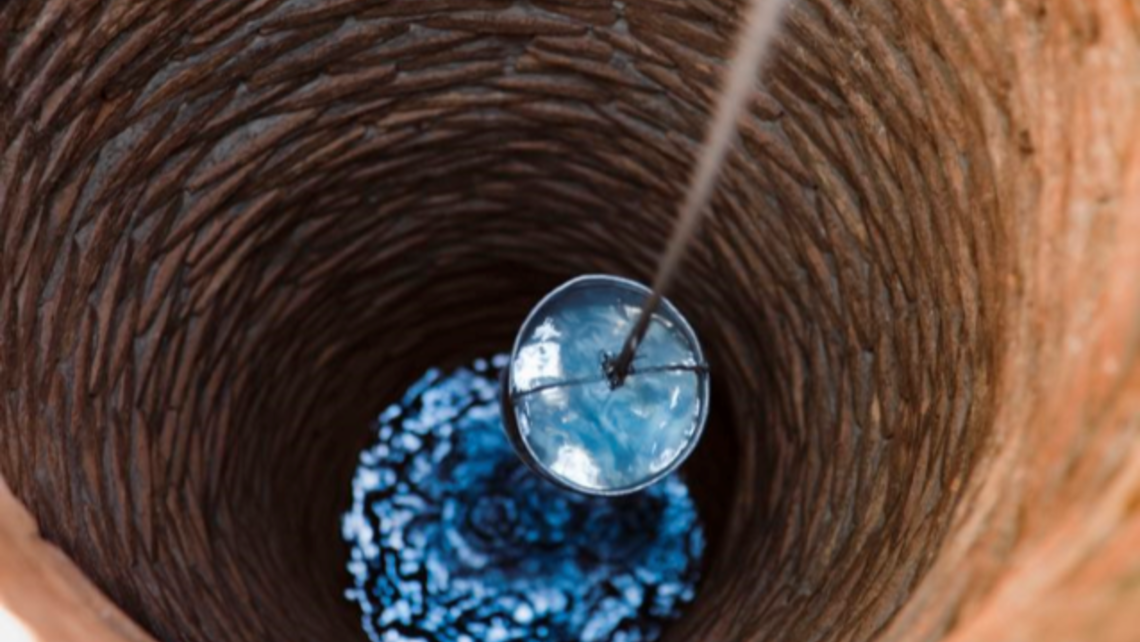
When Jesus offers the woman living water, springing up from within; water of life as they are sitting here in this barren place where lack of water means sure and certain death, here at the ancient well of their shared ancestor, the place of God’s provision and protection, the well that sustains them, to which the whole village must arduously trek and laboriously draw water to stay alive, she is mystified, and feels the yearning within her rise up, and at the same time as she feels the tamped down longing come to live she is right at this moment being quenched, being giving this living water he speaks of. 


Jesus doesn’t see her as a tragedy or a reputation or a burden or a cipher. When he sees her personhood the life within her so long dead, like Lazarus, wakes up. He treats her like she participates and so she does. 


She recognizes him as a prophet, poses to him the question that divides their people, right out in the open, she names it. Just like Nicodemus great teacher of the law, who wrestled and pushed back with his questions, just like Martha and Martha who confronted him and demanded an answer, she lays the difficulty right at his feet.  Your people, say the temple in Jerusalem is where God is found and only if you worship there are you truly seeking God. Our people say this mountain before us is where God meets people. Which is it then?


And he responds with those words we’ve just heard in a previous conversation – spirit and truth – trust me, he answers, the time is coming when it won’t matter where people worship. Those who seek God do so in spirit and truth. God will meet people in that place. 


And like Nicodemus, she ventures a statement loaded with question, I know the Messiah is coming…. 

And he responds with the timeless words of Yahweh, when the voice of God from the burning bush declared to their shared ancestor Moses, “I AM.”


And the whole world cracks open.

She leaves her jar.  Like James and John left their nets to follow, she walks away from the thing that had brought her there to begin with, and leaves behind who she was at the well beside him. And she runs. Free, fast, unencumbered. She runs back to her town and tells everyone – Come and see!   Come and see this man who knows everything about me.  He can’t be the Messiah, can he?


And they come. 

They listened to her.  And why wouldn’t they?  

Can you imagine what they saw when she flew back into town without her water jug? Confident, luminous, upright and unflinching?  She undoubtedly looked completely different than she did when she skulked out of town in the midday heat. She left an empty shadow of a person, and returned radiant, filled with passion and purpose, her shoulders high, her head, raised, her voice firm and eyes lit up, her face looking straight into the faces of others instead of down at the ground in front of them.  How could they not take in what she was saying?  

The living water he promised, the water she’d so desperately craved when he offered it, they felt it bubbling right up out of her and spilling onto them, drawing them back to the source of the water themselves, and then the whole town encountered Jesus.


 Imagine being the unsuspecting disciples, who left to buy lunch, and returned to a different evangelism strategy? The poor disciples are upset and confused and a little pouty about whether someone else brought him food when that was their job.

Not only is this unnamed Samaritan woman with a sketchy social standing the first person to whom Jesus reveals that he is Messiah, but she is legitimately the first preacher in Christianity. Before the disciples even, she is the first evangelist, and she’s effective! Her whole town signs on quick, and this stop wasn’t even on the tour schedule!  


But Jesus tells them they are part of something that started before them and continues after them – their part is important but this isn’t their show.  The work they do now was begun by others, and these people they dismiss without a thought are the ones who Jesus will be staying with for the next few nights, so just sit back and let it unfold – for God so loves the whole wide world.


And the disciples now must bear witness to the reality that Jesus will always be found in the world, for the whole world, and will not stay confined to our plans or spaces or ideas or tribes. Nobody gets a corner on God, and as soon as we’ve labeled ourselves ‘the temple people,’ or ‘the mountain people,’ or ‘the true followers’ with ‘the correct beliefs,’ we’re about to be surprised by Jesus hanging out with the ones we’ve despised and dismissed.  And then we must ask again, Who is this God and what is God up to? 


I wonder what the first preacher would ask us if she were here? 


Maybe she’d ask about our conversations with Jesus.  

When have we felt seen and known, in the back-and-forth honesty with God? 

When have our ideas of the world or ourselves been overthrown, and instead we’ve found ourselves deeply connected to something we’d been missing and hadn’t even known we needed?  

Have we ever had a moment of ditching our own water jugs, or nets, or tombs, and finding a new identity and purpose inside the love and purposes of God?


Have we tasted the living water? Unexpectedly felt the thrill of coming alive? 

Something in us touching something outside of us and discovered quite unpredictably that life we did not make happen bubbled up within us and end up blessing others? 

When have we felt the life within us joining miraculously in the life in the world? 

When have we found, in our need or in someone else’s need, the presence of God meeting us in the giving and receiving? 


God comes to us in the real stuff of life, when we’re open and available to be encountered.  

 Like the Samaritan Woman, Nicodemus, Lazarus, Mary, Martha, the whole town of Samaritans and the baffled disciples, Jesus encounters us in the ways we’re least suspecting and most needing. 


Amen.


Sunday, March 1, 2020

The Conversation that Changes Everything

The Woman at the Well - aka. The Samaritan Woman

This week I spent 24 hours on a confirmation retreat reading theology with our high schooler, and a few hours preparing for our adult confirmation class that starts next week. One topic that does, and should, come up is, Why is the Bible important? What does it have to do with our lives? 

We believe the bible is the word of God, which is to say, it is a witness to the Word made flesh, Jesus, and that it tells the truth about who God is and who human beings are, and something of what it means to live a good life, filled with purpose and meaning. The bible shows us who God is by showing us who God has been for those who’ve gone before.  

We believe the bible isn’t like any other book - or family scrapbook collection of writings, as the case may be – because, while God can use anything, and does, the Holy Spirit opens us to hear God speak into our lives especially through this collection of poems, prayers, letters, memories, and ancient tellings of a God who is involved with this world, interacting with people, that has fed the people of this God for nearly two thousand years.  
That said, sometimes it can feel far away. Some of it prehistoric, after all!  The language is sometimes unfamiliar, and we often don’t understand references or background to what’s going on in places, so it can feel dry and distant.

Today, I want to bring it closer by addressing it directly, to see if we might hear more closely who God is and what God is up in this story.

Today, our person’s name isn’t known, she is sometimes called The Woman at the Well, or The Samaritan Woman.  

Hi, Samaritan Woman!

(Samaritans, by the way, same God and same ancestors as “the Jews” – better translated Judeans because they were all Jewish - but different practices, different scriptures, different worship.  Each one right; each one knowing the other to be wrong. Tense and distant, they avoided each other whenever possible. Which was often possible, and meant that despite the shortest route from Judea to Galilee being through Samaria, it wasn’t often used by Judeans.  And if Jesus had taken the regular route, this conversation might never happened.  They might never have met.  
But God so loved the world.  And Jesus went through Samaria.  
So the conversation happened).

It’s the hottest time of day, lonely and dusty, and you come alone to the well.  It’s just easier that way –you stopped trying to come in the early morning with the other women and children. Nobody really talks to you anyway, and it’s too painful to see them surrounded by their children, their big, loud families, talking about their sons, and husbands, and you trudging along behind with your water jug on your shoulders, no one to share your load.  So you come alone at the hottest time of day.

Today there is someone there.  He looks like a Judean, not Samaritan anyway.  He looks hot and tired, and he is sitting by the well.  You ignore him and go about your business.  Until he clears his throat and asks you, Excuse me, can I have a drink of that water?

And the conversation begins.   
Encountering God, seeing Jesus, this life of faith and following, is not about answers handed down from heaven, not about good behavior or earned right or accumulated knowledge.  It’s a conversation– it’s a back and forth with doubt and insight and frustration and challenge and breakthroughs and mysteries that remain unsolved.  

It’s sweaty, dusty thirst, a complicated living situation, and a lonely person who is drawing water in the heat of midday without the company of other women.  It’s the glaring differences, and walls that separate absolutely, but a moment of connection anyway, dignity, humanity, shared need, shared generosity.  It’s going from being trapped in the story of your life with nothing to give, to being a minister, in a position to help another person. Just like that.
And so the conversation begins.

He knows all about your tragedy.  You have no people; five times you’ve been divorced, abandoned, or widowed. Maybe it’s because you’re infertile, but a man can cast off a woman for nearly any reason.  
Over the centuries, I am sorry to say, you’ve gained the reputation for being of ill-repute, (after all, we deduce, there must be some seedy reason you go through men so fast). But the truth is, your more disposable than easy. 

Without husband or sons, you have no protection, security, food or home, so you cling to what you can, even though time and again you are discarded and ditched.  You’ve come to see yourself the way the world sees you - unwanted, unvalued – belonging to nobody and fending for yourself, outcast and lonely.  

But none of that stops him from having the longest recorded conversation he had with anyone, with you.  He sees you.  He talks to you like you’re smart.  He listens to you and answers back.  When was the last time someone listened to you and answered back?

Living water, he says. Springing up from within; water of life and living.  What does it mean? You feel alive, in this conversation, this moment; you arrived at the well dead, and right now you feel alive. 

It is said that to be seen and to be known is to feel love.  Love feels like this.  When he sees you, you’re a person, not a tragedy. 
A person, not a reputation. 
A person, not a burden.  
The life within you wakes up.  You’re someone who participates; someone with a voice.  When he sees you, you’re as you were meant to be seen. You feel your life as it was meant to be lived, longing to live within you.

I can see you’re a prophet, you say.  Your people say Jerusalem is where God is found and only if you worship there are you seeking God.  Our people say this mountain in front of you is the place God meets us.

Believe me, woman, he answers you, the time is coming when it wont matter – here, Jerusalem, wherever.  Those who truly seek God will do so in honesty and longing, and God, who is Spirit – not captured in bricks and mortar, doctrines and definitions – will meet those who long for God right where they are.

I know the Messiah is coming…. You answer.  
And a thrill of hope goes through you when he responds in the timeless words of Yahweh, “I am.”  This is when it all changed for you.  The whole world cracked open.

You left the jar, you know, like James and John left their nets, you walked away from the thing that had brought you there to begin with. You left behind who you were in that moment it all changed.  All that weighed you down, all that held you back from running, kept you silent from speaking, kept your eyes from meeting others, your heart from opening to the world around you, you left it there at the well beside him.  And you ran.  
You ran back to your town and you extended to the people the same invitation he offered to his first disciples, Come and see. You told everyone, Come and see this man who knows everything about me.  He can’t be the Messiah, can he?

And they came. They listened to you to.  
Turns out you are someone that people listen to.  Turns out you have things to say.
They invited him to stay that day, and he did.  

You know why they all listened to you, don’t you? 
You were completely different when you came back without that water jug. You ran into town confident, joyful. You slunk out of town a shadow, and you returned luminous and hopeful.  You had passion and purpose; your shoulders were back, and your head was raised, and your voice was firm, and your eyes lit up, and people couldn’t help but stop and stare, take in what you were saying. They could see for themselves that you were different. 

The way you yearned for the water when he said it – the way everything inside you longed to be filled, they felt that too, when they saw you.  It is like a spring, you know, that came right up out of you and spilled onto others, compelling them to go to the source of the water themselves.

It is said that in the beginning was the Word, and the Word was with God, and the Word was God. The Word became flesh and dwells among us.  That day the Word-made-flesh dwelled among you.  “Love moved into the neighborhood.” As The Message puts it. And your people beheld his glory; they called him the salvation of the world.  Because they tasted the living water themselves.  

They felt the life they were meant to live bubbling up inside them too, the love they were meant to share longing to spill out onto others.  They saw the light of the world. The light of the world saw them.  And they felt what it is to be loved. 

Now the disciples didn’t seem too happy about this at first.  They went off to buy the lunch and came back to a different evangelism strategy.  For truly, you are not only the first person Jesus revealed that he is Messiah, but you are the first preacher, really, the first evangelist.  Your whole town signs on pretty quickly, and you all weren’t even on the tour schedule, so no wonder the disciples were a little taken aback. 

But Jesus tells his disciples that day that they are part of something that started way before them and continues way after them – their part is important but this isn’t their parade.  The work they do now was begun by others, and that these people they dismiss without a thought are the ones who Jesus will be staying with for the next couple of nights, so just sit back and let it unfold – for God so loves the whole damn world.

And did they realize it then? Or did it take them a while? 
That Jesus will always be found in the world, that Jesus came for the world? 
That nobody gets a corner on God, and as soon as we’ve labeled ourselves the temple people, or the mountain people, or the true followers, or the good kind of Christians, we’re about to be surprised by Jesus who comes to and through. 

We are looking back at our ancestors in faith, at their lives and struggles and questions, and asking, Who is this God?  And what is God up to?  Did you know you are part of a long tradition of God interrupting and reorienting lives? You too know the stories.  
Hannah and her bargaining with the divine, her sacrifice of gratitude, 
Samuel and his leading the people, listening to God and obeying, even when God takes things a different direction, and all he can see is next step in front of him. 
David and his complicated life, and longing for God and enduring words of joy, pain, anger and gratitude prayed by people in your time and still in ours.  
You know how God gave all of them a different life than they thought they’d have, a different life than they were living when God interrupted things. You know how God used their lives to bring life others, to shape the world.  

But, water-sharer, gospel-bearer, that’s you now, too.  You don’t know us, but we know your story because you are part of our story, you’re a forerunner to our own faith, along with others you don't know but whose stories are now in our scripture, gathered alongside your own:  Anna and Simeon with in their confident waiting to see God’s salvation in the flesh, Mary with her willingness to set down what she thought was a good life to say Yes to participating in the great mystery of God with us, John, whose whole life was to share the message, that this one you’ve just given water to was coming into the world to save the world. 

You, chosen and beloved woman, with your baggage and your boldness, you were one minute dead and the next alive, one minute an outsider and the next a leader, one minute quietly going about your lonely business, and the next in a personal conversation with the Divine that upended your life and transformed your town.  

As you were the first in scripture, I’d like you to be our preacher today and have the last word.  And if you were standing here right now, I think what you’d say to us is this:

God isn’t hindered by how disconnected we feel, or useless, or stuck. We live our lives small and cut off, but God’s love is wide and infinite, and we are all caught up in it, all meant to share it.

You’d tell us that God surprises us, showing up in the wrong kind of person in the unlikeliest of circumstances, and often when our life has worn deep grooves, and we’re not expecting to meet anyone or change anything at all. And what God does is make us ministers for one another, just like Jesus is to us. 

A good life, you’d say, is a life opened up to encounter this God anywhere, a good life is life that stays in an ongoing dialogue with the God who comes in. 
And you’d warn us, when the transforming one encounters us, water jugs get left, the reasons we came in the first place get forgotten, stereotypes get shattered, barriers get torn down, relationships get mended, lives get reoriented, new possibilities emerge, fear gives way to hope, and death to life - it’s like drinking living water from a spring that never runs dry.

And then, you’d point us out to the world, back toward our lives, and gently tell us what you told the rest of them, Come and see.

Amen.
(This year, we are asking, "Who is this God and what is God up to?" And "What is a good life and how do we live it?" along with some of our biblical ancestors.  The sermons related to this series are here: Hannah, Mary, Anna & Simeon, John the Baptist, Samuel, David* (we had a theater performance, here's an older sermon about David), The Samaritan Woman, Mary of Bethany (preached by Pastor Lisa), Martha, Lazarus, Mary Magdalene, Thomas (preached by Pastor Lisa, follow up devotion here)

*This is an older message about David, in this series, we had a wonderful performance of 'David" by Theater for the Thirsty.

Fed and Formed

  Exodus 16:1-15 (16-36) This week I spent three days with a very small group of Christians from around their state. This group is just form...