Showing posts with label Beloved. Show all posts

Sunday, February 18, 2024

What do I love?


 Each morning, the first thing I do is reach for my phone. I look at how good of a sleep I got according to my watch data, I read my emails, and check the breaking news.  This habit is not neutral. This is a practice that is forming me.  

Like a sponge, I wake up parched and immediately soak up the world’s tension and division announced to me in breathless headlines. I let the urgency, self-judgment, and need for productivity course through my veins and get my blood pumping. Little do I realize this going to my heart. I am shaping my desire by adrenaline and upheaval, I am being trained to chase competence, proficiency and efficiency, and sooth anxiety with data points and accomplishments.  And, I’m told I’m not fun to be around in the morning.

What is this daily practice telling me about what a good life is and how to live it?  What does it reveal about what I actually love, over against what I think I love?

James Finley shares a story of interning in a VA hospital on the treatment unit for alcoholism in the 1970s. The men on the floor, mostly Vietnam vets, had developed an initiation rite that was passed down. In order to be admitted to the unit, you had to pass through this rite.

Finley describes being in a large room, with chairs all pushed against the four walls and the center empty, except for two chairs facing each other. Nearly 100 men are sitting silently along the walls, heads down, eyes to the floor. 

In comes the person at the end of his rope, with alcohol destroying his life.  He’s nervous, glancing around the room, knowing he will need to pass this initiation to get in.  Those around the walls keep their eyes lowered, and remain completely still and silent. Finley says, “It’s serious as death, which it is.”

The interviewer invites the man to a center chair and sits down across from him. 

The questioner then asks, “What do you love the most?”

“The alcoholic, not know what to say, stammers something out like, “My wife.” at which point everyone in the room yells as loud as they can, “Bull----!” and then goes silent, staring at the floor. 

The rattled man looks back at his questioner, who asks again,

 “What do you love the most?”

“My children,” he tentatively answers.

“Bull---!”, hollers loudly back from all sides.

“What do you love the most?”

Finally, finally, the person says, “Alcohol.”

Immediately all the men rise to their feet and give the man a standing ovation. Then in complete silence they line up and hug him, one at a time, as tears stream down his face.

He is ready to begin his journey.

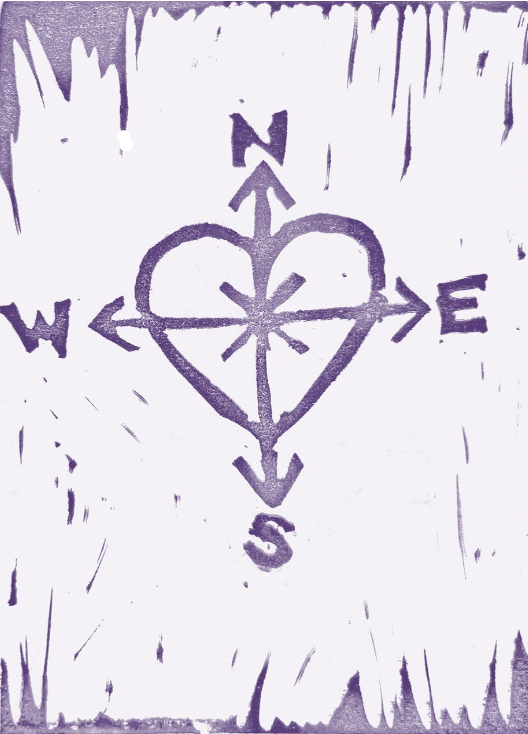
We can know a lot, believe a lot, have the best intentions and the loftiest goals, but our hearts are shaped by our habits.  Like a compass: our love is directed toward what we put our attention on, what we practice every day.  

Were someone to observe us from afar and describe who we are, they could not see inside us, read our thoughts or intentions, or deduce our motivations, they could only witness and describe what they see us doing with our lives, what direction we are moving. And the conclusions they draw about us would, in some ways, be more accurate than the conclusions we often draw about ourselves.

Generations before Christ, when the Israelites were delivered from bondage in Egypt, they were sent into the wilderness, for 40 years.  All the lifegiving liturgies and practices of their faith that sustained them behind closed doors as the people of God during their 400 years of slavery came with them. But other patterns and habits, the “liturgies” of the empire had been shaping them day after day, telling them their lives were worthless except for what they could produce. The way of fear dominated their waking hours, forming them in daily doses toward self-preservation, guarded competition and on-edge dread. 

But in the barrenness of the wilderness this liturgy was extinguished, and new patterns and practices took their place, shaping them toward a different way of being. Every single day, God, who claimed them as beloved children, miraculously provided them food and water, protection and care.  Little by little, day by day, through habits of trust and dependence on their Creator, they were remade from fear to trust, from degradation to dignity Instead of relentless, competitive striving, they were rooted and grounded in the belonging, generosity and rest of a loving God in whose image they were made for a life of giving and receiving ministry, to bear God’s love to the world. 

Today we read that Jesus’ own ministry begins when he is plunged under the waters of baptism, and hears God’s claim on him, You are my Son, my beloved, in whom I am well-pleased.  And then, immediately, Jesus is driven by the Spirit into the habit-disrupting, trust-teaching wilderness of his ancestors for 40 days of vulnerability to be cared for by God. 

Lent is the 40 days before the celebration of Jesus’ resurrection from the dead on Easter. It has always been seen as a kind of spiritual wilderness, a time of stripping away of our idols, isolation and captivity, and reorienting us back to God, who loves us and claims us for ministry. 

Lent turns the compass of our hearts back toward God, by first asking us, what is your compass pointing toward, that you may not realize? and then, like an initiation into recovery, disrupting our patterns of self-sufficiency and sin and recalibrating our loves.

Because when we see ourselves and our lives as they really are, and not just as we wish them to be: this is where God meets us, where transformation happens, where discipleship begins again, and again. In the wilderness of Lent, we too are tested by satan and waited on by angels, which is to say, we recognize how deeply seductive are the messages the world gives us about what a good life is, and how strongly they pull on us, but, there, in our most vulnerable and true selves, we are welcomed with ovation and open arms into the care of the one who calls us Beloved child in whom I delight.

My Lenten “liturgical inventory” began this week when I recognized how my waking up, (and for that matter, going to bed) rituals are mis-directing my heart. So I made the choice that I will not look at my phone for the first two hours of being awake. 

Each morning, I greeted the day in front of my eyes instead of on a screen. I was present to those around me instead of barking orders at them, and I felt myself inside my body, instead of racing through emails and giving my attention to whatever felt loudest or most urgent.  I managed to do this 5 of the 7 days. It is uncomfortable and hard.  But how hard it is shows me how necessary it is– like resting on sabbath Sundays reveals my dependance on doing. 

A week in, I’ve already discovered that when I come later in my day to the pressing news and to-do lists, first having awakened to God’s presence and been present myself with a different heart-orientation, it shapes my perspective, and I am noticeably less anxious the whole rest of my day.  

God is God, always here, always holding my life and this world in love, always moving both through and despite humans to bring redemption. I want to trust this, not just with my head, but with my heart, and so, then, also with my habits.  

May it be so. Amen. 

Sunday, January 21, 2024

Agents of another reality


Mark 1:14-20 

When a company is under investigation, nobody suggests it’s a great time to invest your money. Who decides to buy an apartment in a building that’s on fire? I’m just saying, cheerfully recruiting new talent when your public spokesperson has just been arrested seems an odd strategy.  

Even though John’s been thrown in jail, Jesus still blows into town saying, I’ve got great news! God’s way is unfolding right now! Change your whole way of seeing things and sign on with me!  At the least, John’s arrest is terrible PR for the movement; at most, shouldn’t it give you pause? And yet, Jesus seems worried not at all. And yet, a bunch of them actually join up.  

The NRSV version makes it sounds like they sign up for a job change – instead of fishing for fish they’re going to fish for people. OK, maybe not entirely the same skill set, but kind of an exciting, lateral move? Risky obviously, given John’s arrest, but a possible upgrade in adventure, at least. Think it over, talk it over with the family, find out the benefits package and maybe give Jesus an answer in a day or two?  But they don’t pause to mull it over, “Immediately” they leave their nets and follow Jesus. 


Being human in the world means with all of our choices and actions we are always asking, What is a good life and how do we live it? And these guys had it answered, at least for the time being. They were fishermen; fisherpeople. They had the skills, the training, the connections and the tools. It’s who they were, it’s how life worked, it’s what they knew, and how they were known in the world, they were fishermen. There was no questioning it, it was the order of things. But with one word from Jesus, and despite the bad news about John, they walk away from everything they know to follow him.


When our translation says, “I will make you fish for people,” it captures the true meaning, which is that it is for everyone, humankind, not just men.  But we lose something from the original poetic contrast. Listen: As Jesus passed along the Sea of Galilee, he saw Simon and his brother Andrew casting a net into the sea--for they were fishermen. And Jesus said to them, "Follow me and I will make you fishers of men.”  

But by changing “fishers” to “fish for” a noun was made into a verb.  


In that moment, Jesus isn’t just giving these people a different job, telling them to do something different. He’s not calling them to work for a new cause. He’s not changing their verb; he’s giving them a new identity.  Jesus isn’t calling us to do stuff for him. Jesus is calling us to follow him and then he points us toward other people.


Follow me, and I will make you a fisher of persons. He’s starting where they are, in terms they understand, but inviting them into something they can barely grasp, something that doesn’t even exist in their imagination, something only discoverable by following. 


Today we so often think our verb is our identity. We mix up who we are with the things we do.  We think the answer to what a good life is comes from our own efforts, or we let the voices around us tell us makes a person successful or right, and we cling vigilantly to those ideas.  We make it ok to despise those with opposing strategies for the same security and fulfillment as we’re chasing.  And we center ourselves and our well-being, because if we don’t who will?


These first disciples did not leave their nets to follow Jesus because he offered a better salary and benefits package, or a more exciting opportunity for advancement, or because he inspired them to fight for a cause, or guilted them to work for a change, or gave them a chance to prove how good they are, or promised a sure path to safety.  


I think they followed Jesus because Jesus came embodying a completely different reality altogether. One where the circumstances around you don’t dictate your identity and your security.  Where—even in the midst of frightening developments and unexpected losses—you still somehow trust, and even proclaim, that God’s up to something unstoppable.  Where the authority over your life is bigger than the powers of the age, and fear doesn’t determine what you’re willing to do or say, your connection to God and others does.


The time is fulfilled! Jesus declares. There are two words for time in the Greek, Chronos time means hours, minutes and days, and Kairos time, means the right, opportune time.  Jesus says there is no better time.  Eternity is breaking in nowRight now God’s reality is fully here.  God’s way is unfolding around and in and through and despite us, in no time like the present. 


Love that is eternal - unbreakable, unstoppable and neverending - has punctured our limited, ordinary, right now existence. Eternity is invading this chronos time where our bodies wear out, and our jobs disappear, where our capacities ebb and flow, and our friends move away or die, where we’re always facing unknown, and nothing ever stays constant, where we struggle to find our footing, and when we think we’ve figured life out, it’s not long before we have to start figuring it out all over again.  


But, as real as all that seems, as real is it all is, as all-encompassing as our verbing along in chronos time feels, none of that is what truly, deeply defines us. That is to say, being fisherpeople-or teachers or pastors or nurses or Democrats or Republicans or colleagues or volunteers--for however long, or however well, we do that, while those things we do are part of us, they are not who we are. 


When God-with-us calls us to be fishers of people, we are called to point our lives in love toward the world and its inhabitants because right now, this moment, God is here with us. Right now, we are here, alongside each other in this fleeting time-bound life. 


No matter how much or little we contribute at any given time, how ready or equipped we feel or don’t, right now we are loved, and we can love. We are seen and we can see one another.  

Amidst an ever-changing landscape of upheaval, we are part of something transcendent and called to something permanent. Within our chronos reality we are drawn into Kairos kind of living, the right-now-ness of God’s presence. So we are fishers of people while we teach, or nurse, or parent young children, and when those verbs disappear, we are still fishers of people; our lives still participate in the deeper reality of love. From the moment our hearts are awakened to this calling, to our last living breath and then beyond, with whatever we have to offer, in whatever ways that looks, we are here with and for each other, because we’re following the one who is with and for us.


Even though John had just been arrested, the Kingdom of God is near. Even though bad things continue to happen, even though injustice and unfairness persist in our world, suffering is real and people are frequently cruel and more often thoughtless– no amount of darkness can put out the light, nothing can stop where this is heading. 


That morning Jesus came strolling onto their beach joyfully declaring, God’s reality is available right now, right in the midst of what is. Turn in a new direction, and trust in this good news.’  

Follow me, Jesus said to them that day, And I will make you agents of this reality in the world. 

To each of us, he says the same.


Amen.

Sunday, September 3, 2023

Penguin Blessing for Back to School


LNPC Penguin Blessing for Students, Teachers (and Parents), 2023 


Anoint the students and teachers (and parents, if desired): Name, Child of God, you are known and loved.   

Penguin should be different voice than pastor.


Penguin: 

Instead of hollow bird bones, God made my bones heavy and solid so I can dive deep and swim strong. God gave my feathers muscles in the shafts, to lock them down tight and waterproof, and oil on top to block the arctic wind. God gave me a filter gland to take salt out of salt water, so I can be hydrated wherever I am. God gave me a fancy tuxedo to protect me from predators: From above I look like the dark water, from below, the bright sky. God gave me special feet: they’re my webbed rudders to steer my speeding through the water, they’re my grippy hiking boots to hold me up on slippery, slow walks, and when I slide fast through the icy world on my belly, they’re my propellers, steering wheel, and brakes. 

I’m adaptable and I’m resilient. I am slow and I am fast. I am silly and I am smart. I am a penguin, and God gives me just what I need to help me through the world.


Pastor: 

Beloved Ones: God gives you just what you need to help you through the world.

May you dive deep and travel strong, 

filter out what’s harmful and take in what is good. 

May God hold you steady when things get slippery,

give you brakes when things move fast, 

and protect you from harm.


All: 

I am adaptable and resilient, slow and fast, silly and smart. 

I am me, and God gives me what I need.

God bless you and me!


Penguin:

To stay waterproof, once a year I have a “catastrophic molt”: I lose all my feathers and grow new ones. Then I’m tufty and scruffy, and I feel kind of weak. I don’t know when this will happen; it’s inconvenient and annoying.  When my messy breakdown comes, I will pause my normal hunting and swimming and make sure to rest more. I have to trust that even though I’m uncomfortable, something new is growing in me. I will not always feel as rough and raggedy as I do in this moment. I must let go some of who I was so I can keep becoming who I am.


Pastor: 

Beloved Ones: God will transform you this year, and new things will grow in you. 

Sometimes it will be uncomfortable, messy and annoying, 

but you will not feel rough and raggedy forever.  

May you trust in God’s care, 

let go of what no longer serves you, 

and give your body, heart and mind the rest you need,

even when it’s inconvenient.


All: 

When I’m tufty and scruffy, something new is growing in me.

God bless you and me.


Penguin:

My voice is unique; no one sounds just like me.  I know my friends’ and family’s particular songs. I pick out special rocks for my friends. When I see someone I love, I dance with joy.  I wouldn’t survive alone. I belong to everyone else, and they belong to me. We guard each other from danger by sticking together.  When we huddle on land it’s called a waddle, and in the water, it’s called a raft.  I am an expert hugger; we keep each other warm by taking turns in the middle.  Each of us is different, and we’re also all the same: we all need each other, and we all take care of each other.  


Pastor: 

Beloved Ones: We wouldn’t survive alone.  You belong to God and you belong to all others.

We celebrate your unique song. 

Watching you be you makes us dance with joy.

May you find your voice,

and share your gifts.

When you take your turns in the middle,

may you feel God’s warmth and protection,

through the love and care of others.

And when other people need that warmth,

may you be their raft,

and we will be your waddle.


All: 

I will be me and you will be you. 

We all need each other, and we all take care of each other.

God bless you and me!


(Stuffed penguins may be distributed now, if not handed out earlier)


Sunday, May 3, 2020

Not our best selves

Daily Devotion - May 3

I will send a brief message each day (except Mondays)
while we are pausing gathering in person.
- Kara

John 21:1-19

You know what’s fun? What if games.  Let’s play one.
What if everything shut down and you were required to stay home for 50 days and counting? 
What would you do? Would you learn a new language? Finish that decade long work on a novel, (or scrapbook, as the case may be)?  Would you transform unhealthy eating habits and responsibly get 8 hours of sleep a night? Finally read the classics? Reorganize your basement? Learn to crochet or take up woodworking?  Our best selves in hypothetical circumstances are capable of so much!

But here we are actually living in the hypothetical What if game.  Now we are bumping up against the reality of our sorry selves, and most of us are nothing like we thought we’d be.  Maybe you couldn’t right now learn a new language if someone gave you a million dollars. Or you’re are watching old coping mechanisms you thought you’d outgrown roar up like they run the show.  Maybe that organization project makes you want to shriek laugh because it’s taking more than you have just to keep up this endless treadmill of feeding and homeschooling people who are never not around.  Maybe you’re more depressed, or angry, or lonely than you’re comfortable with and it’s scaring you.

And then there’s the internet. 
It shows us things like that 100-year-old guy who walked a marathon in his back yard and raised over $30 million pounds for charity, that woman who has sewn 5,000 masks for health care workers, and those guys running a pop-up take out soup kitchen, and none of those people are us. 

The big mirror of quarantine is revealing more than all the delayed self-maintenance of haircuts and beard trims, or the single pair of pants that lasts us the whole week and the shoes we can’t even find because shoe-wearing is such a minor part of our lives now. It’s showing too that maybe we’re not nearly as motivated, or disciplined, or positive and cheerful, or altruistic, self-sacrificial and kind as we thought we were.
The hypothetical turned real. 
And maybe we feel a little like we’re failing the test.

The last time Peter saw Jesus in person, Peter was standing at a charcoal fire and across a courtyard Jesus locked eyes with him, just after the rooster crowed three times. 
And the words Jesus said just a few hours earlier rang out in Peter’s head, “Before the cock crows this very night you will three times deny even knowing me.”
Jesus! I would never deny you!  had been his reply. 
And then the hypothetical turned real and Peter failed the test.

After Jesus died, eventually Peter went back to fishing.  What else could he do? It was simple and familiar, and didn’t feel like hypocrisy.
That night is a terrible night with not a single fish.  It’s a night that presses in on you with long, dark, empty hours, shouting inside, See? you can’t go back to how it was!  Who are you now? Not what you were, that’s for sure. What happens next? Who knows?  So catching nothing, they kept at it all. night. long. What else could they do?

And then Jesus appears to them, and once again nobody recognizes him until he does something so utterly impossible and unexpected and also familiar.  He tells them to put the nets to the other side of the boat and when they do, those nets come up busting with fish. 
And even though they are close to shore, dear, anxious, impetuous Peter pulls on all his heavy clothes and jumps from the boat to swim to Jesus, while the boat filled with his friends and the fish paddles calmly past him and lands on the beach ahead of him.

Jesus says, “Bring what you caught.” So Peter goes to the boat by himself and eagerly drags the heavy net holding all 153 fish right up to Jesus, who is standing at another charcoal fire, this one topped with warm bread and grilled fish.

And in the words of the grandma at the stove to pajamaed children, and the mom with a mug of hot coffee to her hungover teenager, and the husband to his exhausted wife just home from the night shift – Jesus says to them,
“Come and have breakfast.”

Come and be cared for. Come and receive. Come and let me bless you. Come and be nourished. Come and sit, warm yourself, fill your belly, rest a while, come and simply be.
Also bring what you have –your catch can be part of this meal.

Ripe with longing and dread, taut and pain-filled, Peter stands there, just beginning to dry, and Jesus walks up and locks eyes with him, like he had that night before his death, and asks, 

“Peter Do you love me more than these?”
  Yes, Jesus, I do love you.  
 “Then feed my lambs.”

Do you love me, Peter?
Yes, Lord, you know that I love you!
Then tend my sheep.

Peter, do you love me?
And now it hurts.  “Please Jesus! You know everything! You know that I love you!”
And Jesus looks at him right in the eye and says to him a third time, “Feed. My. Sheep.”

Resurrection is life out of death, and it only happens when the real Jesus meets us in our real lives – right in our places of death.  Peter is dead inside. It’s to that place that Jesus goes.

Right now there is a lot of pressure, from within and without, to be our best selves.  Peter has learned, and we are perhaps just now discovering, that our best self is unpredictable at best, foolish and unreliable. We say things we don’t mean; we seek safety over fidelity, and choose the approval of others over what’s right, and when push comes to shove and things heat up, it’s more often than not our worst self that comes out, and we hurt the ones we love the most.

We can’t really plan on or count on our best selves. And for comparison’s sake, there will always be those heroes and martyrs whose best selves are better than ours could ever hope to be. They’re the ones, we might think, who really should be entrusted with the sheep.  If God is looking for excellent representatives in the world, we are surely the wrong pick. Apparently, we can barely keep our own stuff together when all we are being asked to do is stay home and not spread a dangerous virus to others.

But that’s not God’s way of seeing, that’s ours.  God is not calling us to be our best selves, or perfect representatives, or model helpers or heroes.  Not us, not Peter.

God is calling to be the only you or me that has ever or will ever be, our real selves.  Even if what we are is our very worst selves.  Our denying, flailing, grumpy, hiding, self-serving, addicted, self-protecting, scared selves are who God loves and claims, and Jesus calls.  When “the night is long and full of terrors” – and we can’t go back to how it was, and we wonder who we are now,
Jesus says,
Come, my beloved, come and have breakfast. 
Come and rest beside me.  Let me feed you, nourish you, and care for you.  
Come, abide in my love, and also, bring what you have, what I have provided for you, bring that to the table too; you have things worth sharing.
Do you love me? Then care for one another – tend each other.
Feed my sheep. Not hypothetical ones, but the real people in front of you, the ones you’re connected to. 
Resurrection happened for Peter when Jesus’ love claims him at his worst and reminds him he is part of God loving others.

You and I are not called to be our best selves, not now, or ever.  We are called as our true selves into the tenacious love of God, to receive it, and to share it. That’s it. 
There is no test. Only love.  There’s no failing, only feeding and forgiveness -only being loved by God and joining in God’s love already and always happening.
Amen.

Here are the other's we've journeyed with this year:


(You can see their stories/sermons here: HannahMaryAnna & SimeonJohn the BaptistSamuel, David (we had a theater performance, here's an older sermon about David), The Samaritan Woman, Mary of Bethany (preached by Pastor Lisa), MarthaLazarusMary Magdalene, Thomas (preached by Pastor Lisa, follow up devotion hereCleopas)


CONNECTING RITUAL:

Perhaps tonight at bedtime, whenever that is in each of our homes, we might pray in this way and so join our hearts.

In this strange season, Holy One, reorient me to you,
in whom my life is found.
In this time apart, remind me whose I am.
Teach me to abide in your love and generosity,
grow gratitude within me, and compassion between us.

In this strange season, Holy One, renew me in you,
in whose image we are made.
In this time apart, remind me who I am.
Draw me again into full and joyful life,
call me into brave, enduring hope.

Let me now release what I have left undone,
the worries that plague me,
the fears that pressure me,
and the burdens I carry.

I lay down the anxiety that would prevent me from being free
in your presence, Oh God.
Rest me in your love.
Sleep me me in your arms,
and wake me to a new day.
Wake me tomorrow
to the gifts of a new day.
Amen.

(Prayer by Kara Root)
 

Sunday, November 6, 2016

This is the time to stop.


Oh friends. I am weary. My family is weary. A lot of people I know are weary. Our nation is weary. And we are carrying heavy burdens. And our stamina is wearing thin. And the noise around us and within us keeps shouting, Urgency! Vigilance! Fight, fight, fight!

Come to me, Jesus says, and I will give you rest.
OK, Jesus, that sounds nice, but get real. It will have to wait.

Rest is a luxury reserved for a less urgent time. 
But even if we were not nearing the pinnacle of a ghastly election season, when is this hypothetical “less urgent” time? When we are not in the largest refugee crisis since World War II? When there isn’t a standoff at Standing Rock? When black and brown bodies are no longer getting shot in the street? When scientists’ words about the polar ice caps and our changing global climate don’t feel as ominous as they do on this gorgeous, 70-degree Minnesota November day?  How about when things slow down in our lives, when we aren’t being pulled in a hundred directions a day? Maybe when Christmas shopping season isn’t encroaching and tax season isn’t around the corner and the bills slow down their pace and lighten up.  Perhaps we’ll have time to rest when there aren’t people relying on us, and jobs that need to be completed, and anxieties piling up. Seriously, Christ, nice sentiment, but what able-bodied, sharp-minded grown up person today can afford to rest?

Oh friends, rest is such a messed up, problematic concept for us. 
We believe rest is something you have to do when you absolutely cannot keep going, when you’re forced to stop and catch your breath so you can amp back up again.
We reserve rest for the sick and utterly depleted, for those recovering from surgery, or fighting illness. If you rest and are not sick, then clearly you are either lazy and undependable, or you are weak and needy.

Resting is so inconvenient. Like eating. Or using the bathroom. It halts our productivity and stops our momentum. We have to put down our work to do it.  If I can’t sneak it in between loads of laundry, or do it while I am driving, if I can’t accomplish something I’ve been meaning to complete, or listen to, or read, WHILE I rest, then how does it help me? It just sets me further behind!

Whom do we most esteem in our culture?  The tireless, the unstoppable, the fighters that just keep pushing themselves, those that get it done. 

Athlete, trainer and fitness writer, JonathanAngelilli, writes, “From a young age, we’re bombarded with the message that to be successful, we must work overtime, sacrifice our health, friends, even happiness and sanity to achieve what we want.
…Dr. Meyer Freidman, the doctor who first identified the type-A personality trait, calls this western disease "the hurry sickness."
We never say things like "I bet I can experience kidney failure before you!" But that’s how many of us behave.” “[E]xhaustion…is a status symbol in our culture.”

How are you? We ask each other.
“Busy!” we answer cheerfully, proudly, exhausted.
We might as well answer, “Distracted! Pulled in many directions. Unable to focus on or enjoy any one thing. Off the rails. Weary.”

I met a youth worker last week who has lupus. He rests. After a youth retreat or trip, he takes a day off. He said, “I am afraid my illness is seen as a legitimate excuse for rest. I don’t know how to invite other people to rest without them feeling like it doesn’t apply to them.”

He has an excuse. His rest is sanctioned. “Oh he HAS TO rest, or he would get sick.”  But we all would. If we did not rest, if we do not sleep, if we never stop, we will get sick, we will lose our minds, we will eventually die.
We are a restless nation, sick and losing our mind. 

Our text comes in the middle of a long rant of Jesus’ about how the people are missing the gift right in front of them.  And we began with the part where Jesus pauses in talking to the people, and raises his face to the heavens in one of those mid- argument prayers, like an exasperated mom, he blocks out the whining for a minute, heaves a dramatic sigh and intones, Oh, Thank you Father, Lord of heaven and earth, because you have hidden these things from the wise and the intelligent and have revealed them to infants…

So what do infants get, that the brilliant and learned don’t grasp?  
What is it about young children, that Jesus says we must become like them to enter the kingdom of heaven?

Well they don’t do a darn thing, really. 
They don’t contribute anything to the household economy or pitch in a single helpful thing to the community around them.  I don’t know if you’ve noticed, but babies don’t feel at all driven to accomplish anything, and they hardly ever compare themselves to each other, or to their developmental milestones, to gauge where they are lacking, or take pride in how they are advancing. Babies are completely unconcerned about persuading others to think like them, or judging those who don’t, and they rarely obsess about the future. And they are not especially known for their composure, poise, dignity, or stellar manners.

To be an infant is to be vulnerably and simply you.  
At the very most core –babies still seem completely connected to the truth that that we belong to God and we all belong to each other. What I mean is, infants are known and loved and cared for, simply because they are. And they are children of their parents; their identity is from the ones who gave them life. It would never occur to a baby to imagine you feel anything for them other than unconditional delight and devotion.  
They rest in their reality: My needs will be met.  
I can sleep when I am tired. 
I can eat when I am hungry.  
I can trust.  
I can close my eyes without fear.  
I am held.
I belong to these people. They belong to me.
The world is filled with beauty, wonder and love.

Jesus doesn’t say, Come to me you who are weary and carrying heavy burdens, and I will give you extra energy and the strength to power through.  I will give you an edge, a do-over or a bump up.   I will promote your agenda or satisfy your desires.  
Jesus isn’t offering a strategy to win, or to overcome our humanity and need.  
Jesus is inviting us to tell the truth with our lives, to live how we were made to live. To come back to the reality that babies still exist in, to return to the natural order of things. 
Rest is part of the cycle of creation itself, hibernation, germination, night, day, winter, spring.  It’s is initiated, (and in fact, commanded), by the creator of all, who rests, and the Old Testament often refers to the promise of salvation as “coming into the rest of God.” 
Admitting we need rest is an act of strength and honesty, not weakness. Rest is for the healthy and the sick; its for the real. It returns us to the truth – that we belong to God, every one of us, in this together.

Great!  So how do we do it?  
How do we actually put down what is weighing on our minds, pressing on our souls, clogging up our lives?

“Take my yoke upon you and learn from me” Jesus says. 
A yoke is a wooden crosspiece that is fastened over the necks of two animals and attached to the plow or cart that they are to pull.
“Take my yoke upon you.” This is a straight up trade. Jesus says, I will release you from your work and give you a different job altogether.  I will unhook you from all the you are dragging around, and connect you up to me, and what I carry into the world instead.

What are you weary of? 
What heavy burdens are you carrying around?  
These are what he will ask you to lay down.  
But these are also the things we sometimes think define us, or think can’t happen without us. These are the things that scream at us: Vigilance! Urgency! Now is NOT the time to stop!

Let’s just remember for a moment, what is the choice before us, when Jesus is offering a different way.

One way, the way of fear, says life is about self-sufficiency and success, and those around us are competition, threat and obstacle. It says the powerful matter and the weak don’t, that having more makes you better, and that all human worth is earned.  There is not enough to go around and someone is always trying to take what’s rightfully yours. You can’t really trust anyone but yourself, and the goal of life is security and self-preservation at all costs, so never slow down, never give up, never let go. That’s the yoke we are most often strapped into, the cart we are most often pulling behind us.  Regardless of how we each specifically fill it – this is the gyst of it for us all.

But the other way, the way of God, says life begins in abundance and gift.  Our God comes into this life with us in weakness and impossibility, and stands with the poor, the stranger, the abandoned and the overlooked.  You are loved already, just as you are, and you are not meant to be “perfect,” you are meant to be the only you God ever made, in all your glorious difference, alongside all these others who are different from you, but also who in it together with you as, sister, brother, friend.  Life is for sharing, there is enough to go around, and no matter what it looks like at any given moment, it’s all heading toward connection and wholeness, because God is the one who decides the end, and it’s already been decided.  This is what Jesus carries, bearing this is the work that Jesus is inviting us to join him in.

I had an awakening this week.  It went like this. On Friday morning, I woke up and I put on my yoke.  I strapped myself into the job of fixing, convincing, worrying – which,as we know, is simply rehearsing fear over and over.
The yoke I was carrying said We are divided! Hatred is rampant! Lies are the loudest thing! What if!  It screamed those words of worry, that we heard last week, What if! The worst thing happens! What if! pain and suffering…What if, separation and helplessness… The pressure sat in my stomach like a lead ball.  I couldn’t escape the near panic of it. 

And it brought me to my knees.
 I wanted to take off that yoke, to be free.  
I wanted to step out of that way of being in the world and pick up a different way of being in the world, I wanted a different way of participating in life.

I longed for the yoke of trust, that says, Even if…, even ifall the things I fear happen, and more, 
Still. 
Still God is God. 
Still, abundance and gift. 
Still, enough to go around. 
Still, all meant to be shared. 
Still, love is the truest, biggest thing. 
Still… all heading toward wholeness and connection, even when I can’t see it. 
Still, I belong to them and they belong to me.

“Coming to Jesus” isn’t a hypothetical thing.

So this is what I did:
When it feels like I can't take a deep breath past the pit in my stomach,
when logic and reason screams Argue! Beg! Make them see!
I sit very still.
I hold the ones I love before me in my mind. Love mixed with despair. Love mixed with disappointment. Love mixed with pity.
And I hold them there.
And I'm still.
Still. 

Until the despair loosens its grip. 

And the disappointment diminishes. 

And the pity turns to compassion. 

And it's mostly just love remaining.
I really do trust, when I let myself trust (i.e., rest) that we all belong to God and we all belong to each other. And this ancient and eternal truth is what I long most to live from, live in, live towards.
So I see their faces before me, those I mostly only love,
and I grieve. And I forgive. And I seek to understand. And I let go.
And the stillness holds me here in love.
And now I can begin my day again.

My yoke is easy and my burden is light!  Jesus says, Come to me.  I will give you rest.
Why am I so hesitant to come when rest is what I need most of all?  Why do I cling to my tormenting, heavy yoke, when I could trade it at any moment for one that is easy and light?  Why do I choose the way of fear instead of stepping into the way of God, right here waiting for me in every moment?

When we say we are a Church that practices Sabbath, that doesn’t just mean we sometimes worship on Saturday nights instead of Sundays. 

Resting shows us the world keeps going without me at the helm, the fears I’ve been dodging wont consume me if I stand still… God is still God. Rest is central to our calling and identity as human beings.

Being a congregation that practices Sabbath means when Jesus says Come to me, we answer, Yes. OK. We will come.  We will lay down our burdens and our pride; we will admit our weariness, and we will welcome your rest. We won’t wait until we are sick or dying or out of our mind. We wont let rest become a last resort, a contingency plan, a life-saving measure. We will come now. We will begin here. Yours is the way and work we choose.

I love that in the Jewish understanding of Sabbath, the day begins at sundown. That means that rather than rest being a reward for a job well done or a last ditch attempt to recover from long, hard labor, rest is where it all starts. Rest is where your being and your belonging begin.  In the honesty of rest, my needs will be met.  
I can sleep when I am tired. 
I can eat when I am hungry.  
I can trust.  
I can close my eyes without fear.  
I am held.
I belong to these people. They belong to me.
The world is filled with beauty and wonder and love.
And when you wake, all your work and efforts and living flows from this place.  
The rest of God: Salvation.

When things feel most urgent, most pressing, most despairing, this is not the time to panic, talk faster, run harder. Strive further.
On the contrary, this is the time to stop. To be still.  To rest.
To “reorient your being to the one who loves us.”  This is what Sabbath is for.
God’s way is not our way. All true transformation, healing and newness comes through weakness, futility and impossibility.  Brothers and sisters, lest we forget: we don’t have a triumph and might faith, we have a death and resurrection faith. 
It’s our job to remind each other of that.

I invite you now to close your eyes, and hear the words of Jesus’ invitation to you:
“Are you tired? Worn out? Weighed down by heaviness? Come to me. Get away with me and you will recover your life. I will show you how to take a real rest. Walk with me and work with me—watch how I do it. Learn the unforced rhythms of grace. I won’t lay anything heavy or ill-fitting on you. Keep company with me and you will learn to live freely and lightly.”
(Mt. 11:28-30 adapted from The Message)

We are learning, beloved, we are learning.

Amen.

Back to School Blessing: Giraffe

 Every year my congregation blesses the students and teachers returning to school.  They receive a blessing buddy to carry with them (or dis...