Showing posts with label prophets. Show all posts

Sunday, May 4, 2025

Defiant Hope that Doesn't Come From Us


Jeremiah 29, 31

Ezekiel 37:1-14


Some of you will remember the Lent we hid Alleluias and then didn’t find them again for two years. I don’t mean a few of them that got mixed up with the next year’s messages. I mean, we didn’t even look for them.  

The theme that year for Lent was Hope. We wore it on bracelets and hung a banner in our hallway that read:

Fear says “what if…?”

Hope answers, “even if…!”

And then, all of a sudden, a what if worse than our fears gripped the entire world and life as we knew it screeched to a terrible and terrifying halt. And what ifs were suddenly the reality we were living in –What if nobody can go to work or school or restaurants or to church or get haircuts or ? What if all the things everybody has been working on suddenly don’t matter –the school plays and tournaments, final projects and work trips, and community gatherings, the goals and plans just disappear, unfinished? What if tons of people are sick and dying and the threat of sickness and death overshadows everything we do? 

Throughout it all, we gathered on zoom – seeing each other’s face and each other’s pets, sharing show-n-tell videos, and delivering advent bags and making mix cds. We prayed every morning and night with a family while mom was dying of cancer, and even had a masked, open windows retreat following directions from her oncologist, and day after day, week after week, we showed up for each other in a thousand tiny ways we’d never thought of before. And behind our backs, while our Fear and Hope banners hung in the empty hallway, and the hallelujahs stayed hidden in corners and under cushions in the abandoned sanctuary, the basement was buzzing with life, transforming into a space for a school to move in to one day even if

Through it all, God met us again and again and again, and we felt the presence of the risen Jesus who came into this life to be with and for us when we were with and for each other. Even though we couldn’t often bephysically with each other, nevertheless God kept taking care of us and helping us take care of each other, and redemption and hope were tangible.  

And then came Good Friday, and we came back together into the darkness to tell poignantly the story of Jesus coming into our death. And on Easter Sunday we celebrated the resurrection and found those two-year-old hidden hallelujahs, and Hope’s Even if never rang truer, because we had lived it

Even though we were weary and worn out, our trust and the confidence of our faith was unshakable: the God who made and loved this world is redeeming it. And despite all the suffering and loss and death – and many of our people died in those two years –  we trusted that God is still God, life is for love, redemption is afoot, we participate in joy, and share in healing, and Jesus meets us right here when we come alongside one another in suffering. God is holding the world and moving everything toward wholeness, relentlessly and unceasingly. And God is trustworthy.

In our scriptures today the people of God are still in exile. The feeling of abandonment and hopelessness, ripped from home and all that made up their daily lives, the loss of all the structures that gave them stability as a nation and identity as a people had become their new normal. This desolation has gone on and on, for decades, with no end in sight.  

It is into this hopelessness that the prophets speak the promises of God. Promises of hope for a future. I know the plans I have for you – God says – plans for goodness and not harm. When you seek me, you will find me. I will turn your sadness into joy, your grief into gladness.

Hope isn’t when we feel great about how great things are going and project that they’ll keep being great. That’s optimism and positive thinking. That’s not hope.


Hope comes to us in hopelessness. But hope is also not just uplifting platitudes chucked like water balloons at a house fire. Hope does not deny the suffering and pain of the moment. It begins in what is. It starts in our place of need. Hope is always about wrongs made right, always about redemption and new life, so hope starts in what is broken and dead. 


One of my favorite explanations of hope comes from David Steindl-Rast: “ Some people imagine that hope is the highest degree of optimism, a kind of super-optimism.... A far more accurate picture would be the hope happens when the bottom drops out of pessimism.  We have nowhere to fall but into the ultimate reality of God's motherly caring.
And since patience is as contagious as impatience, it will also be our way of strengthening each other's hope.


In order for hope to awaken in a hopeless people, their imaginations must be awakened for the impossible made possible. It’s one thing for the prophets to say that God brings life out of death. It’s another to show it.  Ezekiel paints the vision of a valley littered with forgotten dried-out bones, the most over and done with, past tense, lifeless of things. Is there anything more bleak than sun-bleached bones scattered in the dust?  As the coroner of Munchkin Land famously said, They’re not only merely dead, they’re really most sincerely dead.  


But then, at the word of God the dry bones clack and rattle together, and bodies form, and finally,  the breath of God—the same breath that hovered over the waters at creation bringing life from utter nothingness, the same breath that breathed life into clay of the newly formed human in the hands of God, the same breath the dead and alive again Jesus will, on resurrection day, breathe on the disciples, when he gives them the Holy Spirit and says receive my peace—this breath arrives on the wind from every direction and fills these reassembled bodies into living, breathing, moving, vibrant newness, remade people, standing and dancing and laughing and walking freely about, as far as the eye could see.


This, the prophet says, is what God does. What God will do.  Wait and Watch.


The prophets awaken our ‘eschatological imagination,’ which means, they invite us to let our vision of a good life be shaped not by what we can see in front of us, but by God’s promised future. Eschatology means the finale of everything, so eschatological imagination means that the coming fullness so fills and animates us that we can live right now into God’s final destiny for humanity. 


Love. Restoration. Forgiveness. Peace. Joy. Connection. Belonging for all. No more sin – which is just a fancy word for being separated from God and each other. God will wipe away every tear and bring wholeness to all that is broken. And when death ends, all that remains is life and love. That’s what’s coming.


A couple days ago I saw an interview with Trey Parker and Matt Stone, the writers of South Park. They said that two important words when writing a good story are ‘because’ and ‘therefore’. A story that of ‘ands’ – and then this happens and then this happens, is just a boring list of events. A good says this happens, therefore this happens, or this happens because this happens. 


The story of life on earth is written with another key word, one we can hear when we live with awakened eschatological imaginations. That word is nevertheless. Every circumstance, experience and situation pulses underneath with this insistent and defiant, nevertheless, moving everything unceasingly toward God’s promised future. 


Nevertheless, even if, despite, anyway, and always. This means that into every single This is not ok comes the prophets’ confident response of hope, so this is not the end


So how do we 'get hopeful?' How do we feel hope and trust it? 

Like everything else real and permanent, we can’t force hope to happen to us or make other people feel hopeful. And striving for it will surely wear you out.  "Let the bottom drop out of your pessimism" and fall into the motherly care of God. Dry bones don't make themselves alive.


So maybe the question of those languishing in exile is, instead, how do we cultivate eschatological imagination? How do we live in contagious patience? Can we make ourselves available to the hope that only God can give? 


Last week I talked with several people about how they are living open to hope, who used the words ‘disciplines.’ “The disciplines are sustaining me,” one said. 

This sounds like drudgery, but ‘the disciplines’ are simply the things we do on purpose that practice living in the way of God instead of the way of fear. That is, whether or not we are feeling it, we practice trust and availability to God.  So how are the disciplines sustaining you? Another way of saying this is, how are you praying these days?

One person I know has started praying by baking bread. Surrendering to the patient attentiveness and gentle miracle of mixing ingredients and letting what happens happen– with all the textures and smells and tastes this involves, creating and feeding, connecting to others in the presence this practice demands is something sustaining her and helping her to be available to God’s hope. So, she’s showing up to regularly do it.

Another person told me the discipline of lament is sustaining her. That when yet another story of injustice or horror came across her newsfeed, she felt like wearing all black in mourning. This was a bit out there, so instead she’s begun putting on what she calls her ‘lament bracelets’ – a series of braided black cords on her wrist, her symbolic sackcloth and ashes. She joins the prophets of old in enacting her holy lament. Her dialogue with God reignites every time she catches sight of the bracelets on her wrist, bearing on her body in the world a marker that this is not ok. And so also, this is not the end.

The disciplines don’t have to be the ways of praying that you first think of, or that you’ve always done. Where in your life are you being invited to turn something ordinary into prayer? 

A lifelong non-gardener told me last week that suddenly she is attending to the ground beneath her feet, hands in the soil, turning her back yard into a butterfly sanctuary and discovering that the earth knows the great nevertheless better than we do and will tell us if we listen.

For me, a new discipline has emerged walking the dog in the morning.  It’s the task I often dread, and frequently try to put off, but I can only delay Bertie’s demands until about 7 am before I am begrudgingly out there on the sidewalk wrangling 75 lbs of curious energy through the neighborhood. But after these conversations about the disciplines, I saw the invitation to for this daily chore to become, instead, a discipline, a practice of prayer.

 By walking alongside Bertie day after day, I am attuning her to my presence and my voice, I am teaching my dog to know and trust me, to listen to me, and respond to my commands. Perhaps her need for this with me could meet my need for this with God.  So, I put my phone on do not disturb, and step into the morning air with this dog, to walk alongside God, so the Holy Spirit can attune me to God’s presence and voice, teach me to know and trust God, help me to listen to God and respond to God’s commands.

Talking to God while loading the dishwasher. Singing hymns in the shower. Memorizing a bible verse and reciting it to yourself in the car. Praying blessings on each little person who climbs into your carpool. What ordinary activity or ritual might become for you a discipline?  Or what disciplines might attune you to God’s presence and voice?

Last week I preached at Boulevard Baptist Church in Anderson, South Carolina about blessing. I said blessing something or someone acknowledges their belonging to God and names God’s sovereignty over them. The act of walking around blessing the world and the people in it resists evil and counters fear by refusing to treat the world, or any person in it, as beyond hope. Instead, it places each person or thing squarely back in the arms of God and awaits with anticipation what God will do with it. In other words, blessing is a way of exercising our eschatological imagination, and cultivating a waiting readiness to join in God’s work of healing whenever and however it might arise.  

Living like this is not a solo gig. This is why we are church. We pray for each other, and we pray for the world together.  We tell each other the stories of how God met us and where we saw life come out of death.  We stay rooted in the ancient story of God’s faithfulness to generations gone by, and remember how God sustained us in our own crises gone by.


 We tell each other again and again how God was with us then, and help each other notice what God is doing now.  We recognize struggle as longing for wrongs to be made right, and see despair as the very place where hope is needed, so that’s where we go to await and anticipate hope. Together we stand in the pain and of what is, and practice living from what will be, knowing that the God who arrives will arrive among us again. 


With a patience that is contagious we wait and watch, because always and neverthelessGod is still God, life is for love, redemption is afoot, we can participate in joy and share in healing, and the risen Jesus will meet us right here when we come alongside one another in suffering. Relentlessly and unceasingly, God is holding the world and moving everything toward wholeness. And God is trustworthy.

Amen.
Sunday, December 18, 2022

Advent in 300 Words: The Prophets, Joseph, Mary, The Angels

 ADVENT 300 WORD REFLECTIONS


THE PROPHETS (11/26) - by Kara K Root

The prophets, with their vivid eschatological imaginations, lead us into Advent.  Off the grid, out of the empire folks with fantastic stories, absurd confrontations and wild encounters, the prophets criticize and energize. They shake the façade keeping everyone content and accepting the unacceptable. God uses prophets to hold before God’s people a vision of who they really are and who God really is, because they keep forgetting. 
 
The prophets reveal God’s future breaking in now. They anticipate God’s coming, teach us how to watch for it, and show us how to live now from what will be.  In their own lives, they didn’t get to taste the fulfillment they spent their lives promising.  But their holy imagination, ruthless honesty and deep trust shaped our ancestors, our faith, and continue to stir us today.  
 
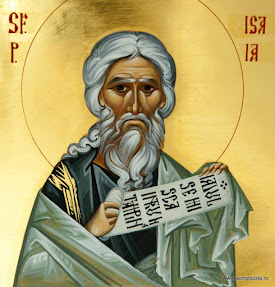
The prophet Isaiah speaks to a people living in exile, whose imaginations have shrunk to their captivity. Terrible things have happened to them, and they’ve made terrible choices. They’re stuck. Their life is small, their hope is dead. The end.
 
But if it’s not ok, then it’s not the end.  
 
Isaiah paints a poetic image of a new beginning, tender green shoot from the dead ground. Like a whisper, a stirring, a savior comes. Instead of division and striving, self-protection and fear, the savior ushers in a new reality: In the reign of God, all people, all creatures in all the world will live freely, fully, unafraid, connected in peace. Hope is the energy of peace, the anticipation of what is coming, the fuel of our faithful living now.  

May hope grow our eschatological imaginations. With holy imagination, ruthless honesty, and deep trust we wait, with and for each other and for the world, for the coming of Christ.  

We hope with the anticipation of the prophets.

Sunday, November 15, 2015

The Holy Work of those who don't turn away from Love


This weekend I was remembering when, a few years ago, I traveled to Kansas City to visit my sister’s family.  I stayed in the bedroom of my then 8-year-old nephew, Vincent, amongst legos and bugs pinned to velvet plaques, stars glued to the ceiling and collections of books about dogs.  After he’d oriented me to the important things in his room and left me alone, I realized there was music playing softly. It was a cd with the Sunday school songs I had grown up with: Jesus loves me, I’ve got the joy down in my heart, Jesus loves the little children, Oh, how I love Jesus, and others, on a mellow cd where they were paced, I discovered, to match the beating of a heart.  The cd was set on repeat.

When he came back in I said, “Vincent, that music is so relaxing.”
He said, “Yeah, I think so too.  I like to sleep with it on. Hey! maybe you could too!” 
So when I went to bed that night I did not turn it off.  Throughout the night when I would stir I would catch morsels of music, words that I had grown up hearing, comfortable, familiar, somehow part of me.  They wove themselves in and out of my dreams.  When I awoke, the songs of my childhood and my faith gently called me back to day.

“Keep these words that I am giving you. Recite them to your children.  Talk about them when you are at home and away, when you lie down and when you rise..."

You are my children who I delivered from the land of Egypt. I am your God.  You shall love Yahweh your God. 

It’s all God has ever wanted.  Back and forth this tumultuous relationship goes throughout time – from the beginning when God breathed it all into being and placed the tree of God’s vulnerability among them, Choose me, choose life, I will show you the way to live fully, wholly. And instead they choose not to trust the God who loved them, and to look after themselves and turn against one another. And on and on it goes, rolling through centuries and millennia, God’s relentless love and humanity’s turning away, and God’s absolute refusal to let them go.

There are lots of reasons, I suppose, why people turn away from love.  In this story, they don’t even know yet that they have. 
What is it like to have lost your memory? To have forgotten who you are, what shaped you, where you come from, where you’re going? What is it to be not just one, but a whole people like this? Yesterday disregarded, tomorrow uncertain.  Trapped in eternal present, and unpleasant present, at that.

So what, then, was it like for them when those scrolls were opened?  What was it like to hear a story that was true about you and you never knew it? What was it like, after more than a lifetime of ruthless, unpredictable and oppressive authority, lawless self-preservation, fear and corruption, to being gathered one day in the square, by your young king and told that when cleaning out and repairing the temple this was found:  the law, the ten commandments, the history. The word of God. 

What was it like to hear the words aloud that your ancestors wrote, a message from God in their voice, guiding their lives and it was supposed to guide yours too, but you’ve never even heard of it before?  Like learning your own middle name for the first time.  Discovering you’re adopted, or that you’ve got a whole family of people you never knew, or that you’re incognito royalty.  It’s the Aboriginal lost children of Australia stolen from their people and raised in white homes hearing their language for the first time. It’s a dug up time capsule not only introducing your ancestors but blowing misconceptions about your own identity out of the water.  It’s an opening of your own past that completely alters the present and rewrites the future.

I picture stillness over the crowd, barely a breeze, rapt attention and dead silence, not a throat-clear among them, as the words are read:

My people, here is who you are! And here is how I designed life to work best, together and not just alone, for others and not just yourself, giving and not just taking, sharing and not hoarding, resting and not just toil. Each one treasured, all together belonging.  Forgiven, free.  Here’s the relationship you were meant for – with me, with each other.  You belong to me. I have chosen you for a special purpose in the world – I will care for you and you will live within my care so that you can care for others.
And the crowd holds its collective breath as these words sink deep into their souls.

And the most painful and poignant part of all of it, I imagine, is standing there listening when the words are read, Whatever happens, my children, Do not forget this!
 In fact, rehearse it, Teach it to your children, talk about it when you’re awake and dream it when you’re asleep, Discuss it over dinner, leave post-its lying around, tuck it in your purse and have it in your pocket and Literally stick it to your own forehead so you don’t forget.  It’s that important.

And you’re standing there hearing this as the third generation of people who’ve completely forgotten.  You’ve never told it to your children and you never heard it from your parents.  You’ve never discussed it over dinner let alone carried it with you in your pocket or plastered it to your forehead. You’re hearing it for the very first time. 
All the ways it could have been. 
All you’ve done that you can’t undo.  All you would’ve done differently had you known. Hope and shame comingled. 
Joy and sorrow welling up and spilling over.
All together you stand there remembering what you never knew.

Huldah the prophetess knew.
She recognized the scriptures when they brought it to her.  She told them what these words were and she told them what God was waiting to say when they finally looked up and noticed God again. 
How did she know?  How could she be the one-  she, and not even the priest - who could speak with confidence when the people were finally ready to hear again the truth of their situation?  How did she alone remember?

She was not alone. The prophets, who pointed out all the heartbreaking ways things were not as should be, and who energized the people with the promise of a future different than the pain of the present, these prophets did not exist in a vacuum.

 They came from communities, tiny remnants of people who remembered the story, who were raised with it as part of their lives when everyone else forgot.  They listened to the songs as they fell asleep; they heard the tales over dinner and rehearsed the lessons in the fields or the streets.  They prayed to Yahweh, and shared life with the living God when everyone else had left God long before for lifeless idols of their own making.

Even when the whole people had forgotten, even when perhaps nearly all the copies of the book of the law had been lost or destroyed, even when the kings of Judah was behaving worse than the worst of their enemies, and the cruelty and suffering was unending, there were some who remembered. Some who kept the memory alive for the rest of them.

It is said Huldah, and her relative Jeremiah the prophet, were decedents of Rahab and Joshua – Rahab, the prostitute who helped the Israelite spies into the Promised Land, and Joshua, who fought the battle of Jericho, Rahab who is mentioned in the geneology of Jesus, and Joshua who stood shoulder to shoulder with the other children of God on the verge of the promised land, as these children now stood, all together, listening to the words of God spoken out to them, never forget.
 And they didn’t. For centuries the offspring of Rahab and Joshua nurtured the message, passed it on in the milk to their children, whispered it in prayers, breathing it in at their waking to the sun and exhaling it every night as they scrambled into bed – Yahweh is our God. Love him only.  Yahweh who delivered our grandparents out of slavery – calls to us still. Each and every day. This is whose we are. This is who we are. We are children of the living God.  Never forget.

And so this they become keepers of the truth that the rest of the world has forgotten. They let it fill their bones, their dreams, their blood and heartbeat.  They live their lives, and teach their children to live, awake, and from them come prophets, who can answer the questions when they are finally raised again.

All around us is a world that has forgotten. Even when we momentarily remember, every single day we ourselves keep forgetting.  Whose we are. Who we are. 

There are those who would like us all to be ruled by fear.  Unspeakable violence and total disregard for human life and dignity, is their weapon of choice. 
And there are also those who use subtle lies to prey on biases that make us mistrust each other and close ourselves off into camps of us and them. And so we perpetuate stereotpyes, and swallow falsehoods, and believe that we ourselves are never, ever good enough, but we are so much better than them, whichever them we chose to despise most at the moment.

And the forgetting continues. Because hate makes us feel powerful, and security is an irresistible attraction, and strength is so much more enticing than weakness. 
There are lots of reasons people turn away from love.

But now, I am going to tell you something true about yourself and about us, and I want you to receive it, to take it in: 
You are part of those who don’t turn away from love.  
One day all the world will know again the love of God, will live in love, and peace, and justice, forgiveness and generosity, and for now, and we are part of the people who keep that reality alive, who live and breathe and have our being the One who is love.

We help each other watch for God, and follow God, and see the world as belonging to God. We rehearse the real reality by remembering the faithfulness of God in the past, and telling the stories that have shaped our journey as individuals, as communities, as the church, as God’s people, in scripture, in our lives.  We hold that memory together, on behalf if the world. It is our holy work.

In fact, prophets are grown here.  
Look around the room, together, we are prophet.

So that means that we must grieve together that things are not as they should be. 
We must lament in honesty together; talk about what separates people from each other.  We look open-eyed and open-hearted at injustice and brokenness and suffering and horror. 
Because here is the kingdom of God-  we grieve when someone else is grieving. We stand in solidarity with someone else’s suffering. It is what makes us who we are.  Instead of denial or anxiety or avoidance, we openly name death in all its forms and we mourn it.  And not because we’re somehow exempt from it, but because we participate; even in our own lives we’re part of what shouldn’t be.  
So grieving together, on behalf of the world, is our holy work.

But we also practice hope. 
We live out of promises yet to be kept, we find strength from God’s future to treat each other as God sees us, we find courage to live unafraid to reach out to others, to see and be seen, to listen and be heard.  We recognize all people as children of God and treat them that way, because one day these glimpses we see will be realized in all fullness.
We are resurrection people that understand that death is not the end, that hatred and violence and despair may seem so strong and so eternal, but there is a greater reality still, and love has the final word.  
And so hoping together, on behalf of the whole, beautiful and broken world, is also our holy work.

And to do this we need language and imagery that we share, words and metaphors that defines us and describes reality for us.  So we wrestle through difficult things and we welcome stories and perspectives and insights and questions, because they help us practice the real reality. And we use song and art and prayer and laughter and beauty and broken bread and spilled wine and cooked meals and long conversations and quiet moments and all different learning styles and all different gifts gathered in this quirky, beloved community.  We gather together in order to become fluent in our ability to communicate the deep and important things God is stirring up all around us.  
Because this kind of dialogue together, on behalf of the famished and word-weary world, is our holy work as well.

Because the world has forgotten; its memory is short.
And we are here in our own weakness and brokenness, not afraid to feel the pain of love, to remind the world who it really is:  Created by God, each one loved by her creator. All together made for life and love.  In astonishing diversity made for harmony and wholeness.  We live out this Kingdom of God reality in defiance of despair, and on behalf of a world that has forgotten, but we also live it out in sure anticipation. 
We wait. Like the prophets of old.  Because we know it’s coming.

It’s not happily ever after for the children of God in our story today.  
In just 40 or so years, Babylon will take over the land and destroy the temple that Josiah is working so hard to restore.  The children of God will be scattered.  Hard things are coming.
But right now, the people are suddenly remembering who they are.  They are back in the arms of their God – reconnected to their source.  They have turned back toward love, and all over again, they are being set free.  
And when they wake up to who they are, to whose they are, it changes how they experience everything: all that they’ve been through and all that they are in now, and everything that is to come.  
They will need this change to see them through the days to come.

Advent is coming. 
The time of darkness where we wait for the light of Jesus that comes into the world. 
The time of longing and honesty, where we hold grief and hope on behalf of us all.  
Advent is holy work, brothers and sisters.  
And in these coming weeks the world will make it seem like sorrow can be quenched with shiny wrapping paper and cheap gifts, like distraction is the same as hope. 
But there is a truth that goes deeper and reaches back further, through struggle and pain, past amnesia and unknowing, a love beyond all denying and turning away and forgetting, that plunges into death and roars joyfully back into life again, that stretches strong from the beginning of everything out past all eternity, that comes in the form of weakness and simplicity as a tiny infant, seemingly helpless in a great big world.
And even in this moment, this love holds you.
I am the Lord your God. 
Be open. 
Remember.
Grieve.
Hope.
And share it, however you are able, with each other.
Now, let it pulse through you with each beat of your heart.
Put it on repeat, you precious ones, and in the darkness we will never stop listening.
Amen. 


Saturday, May 26, 2012

Hindsight, Love's Timelessness, and the Will of God


I once had a lovely and very wise professor (the incomparable Ray Anderson) say in class, “You can only know God’s will in hindsight.”  He was speaking, of course, of that desire to figure it out right now, to deduce by prayer and spiritual guesswork what God wants you to do in a certain situation, so that you don’t make the “wrong” choice and screw up whatever it was God had planned for you. But when he said it, “You can only know God’s will in hindsight”, I realized with a start that was quite true in my life. 

How those Spanish language classes in high school and college that went nowhere were suddenly useful for the three months I spent in the Canary Islands, how a painful falling out with a friend revealed dark and shameful things in myself and ultimately made me a better friend to another down the road.  How that experience I had in long-distance email conversation with someone my senior year of college led me to the little bitty paragraph in the seminary catalog that felt like it was written for me and into the concentration that I hadn’t known existed, and a sense that I had found what I was meant to do. How being thrown together with a random roommate opened me up to an enduring group of friends.
That kind of thing. 
That when you look back, you can see how things were connected, how one thing led to another, how God was involved, what God was intending.  You can only know God’s will in hindsight.

At the time I imagined that you could also look back and decide you had missed God’s will, seeing how your bad choices had led to other choices and so on.  And in hindsight you could now see that God had clearly been leading you in a particular direction and you had disobeyed, gone a different way, missed the will of God. 

How often could Israel have looked back and seen they should’ve gone a different way? That God was leading them and they were not following? How often could they have had that recognition of God’s will in hindsight – oh! God wanted us to stay free and not to be slaves again!  Oh! God wanted us to stay in relationship and not worship idols and ignore God after all!  Oh! God was up to something and we missed it…
And this is part of the prophets’ grief.

At this point in the prophets I am tired. I am weary of Israel’s turning away and of the cries to return. I am worn out from the loss and punishment and I am skeptical of the hope that is promised. At this point in the prophets I am not sure why God is still hanging on, why God hasn’t given up. The people clearly have, many times.
But God doesn’t, and I don’t get that.

If there was ever a question about God’s fidelity, let it now be put to rest – God simply wont let them go.  But in Malachi, the people question even that. It opens with the words of God, “I have loved you.” and the immediate response, “How have you loved us?”

Malachi means My messenger… We know almost nothing about who this prophet was, and whether Malachi was even a name, or a stage name, short for “Messenger of God…” “Malach-Yahweh”, We suspect he probably prophesied sometime in the early 5th century BC, but beyond that, kind of a mystery. The book itself is constructed in a very argumentative fashion, asking lots of questions back to God after the statements God makes through the prophet.
I have loved you. How have you loved us?  Where is the respect due to me, O priests who despise my name?  How have we despised your name?  By offering polluted food at my alter. How have we polluted it, in what way? What!? What is it?!? What did we DO!?!
You get the picture.

So if there every was a point where it seems like you’ve perhaps not only missed the will of God but blatantly disregarded it, and even maybe chosen so far away from the will of God as to leave it completely, it seems likely that they’ve reached that point. 

Since the very beginning, God has wanted to be in relationship with these beings, these persons made in the image of God, to share God’s self with them and have them be open and share themselves with God. To collaborate, together to care for the earth and each other; and for all of it to function in the intricate, delicate but strong balance and harmony of life interdependent and free.
But all along, this plan of God keeps getting foiled, in one way or another the people keep turning on God and each other, keep cutting themselves off from the greater whole, keep meeting their own needs at the expense of their neighbors, and in hindsight they could know quite clearly that this was not God’s will, not God’s will at all.

But here’s the thing, even so, that doesn’t actually stop God. Their choice against God’s will doesn’t actually stop God’s will, though it delays it from time to time.  God wills that we live in God’s love and share in God’s creativity and enjoy the world God has made and one another within it; God wills that we be fully who God made us, whole and free and connected.  God’s will never changes.  And as far as we may wander away from God’s desires for us, God never gives up. 

So since September we’ve watched God’s strategy unfold – first by breathing it all into life, and choosing one to bless the many, and when that fails, a family to care for the world, and when that is short-lived, then God delivers them from slavery and gives them a whole new way to live, making them into a nation that will bless the world, and when they start to forget and demand a king, God gives them one and works through the king, and when the king builds God a house God moves in, and when the king is evil and the people are basically enslaved again, God sends prophets, truth-tellers and corporate grievers, holders of hope and keepers of memory, and when the people continue to ignore the prophets and continue to forget who God is, and get invaded and attacked and the temple is torn down, God sends more prophets and promises, and when the whole nation is broken in two then dwindled to one and then that one is wiped out and the people are scattered and no hope remains for them and everything is over, God continues to draw them back to God, again and again and again and through any means.

God’s will, God’s plan, unfolds along with, and sometimes in spite of, our plans.  “You can only see God’s will in hindsight” doesn’t mean you might see that you hit it or missed it.  It means you could simultaneously look back and recognize where you went wrong and where you should’ve gone a different way, but at the same time see where God worked in and through what did happen, so that you wouldn’t be who or where you are now if it hadn’t gone exactly that way.

Is there room for regret? Sure. Tons. But there is no room to ever say you’ve left the will of God, because no matter where you go, what direction, God will be there, working in and through, and seeking forever and always to bring you to Godself, to God’s love.  And God doesn’t give up.

I was once at a wedding where it was the groom’s second marriage and the bride was quite young and they were standing there kind of against the odds or expectations.  And as the boat we sat on pulled away from the pier and the motor chugged to life beneath our feet, the pastor began talking to them about love.  And while most other people couldn’t make out clearly what he said to the two of them over the sound of the engine, catching only the word “love” here and there, I was close enough to hear it.

He said that something timeless and redemptive happens in love – that in this moment, in the timeless power of God’s love, all other loves are redeemed.  All other experiences of love become part of this very love before you – it is now as thought you were always meant to be, as though you have never not loved this other you now pledge your life to, and even in loving others you were loving this very one as well, already, preemptively.

And in love it is now as though I have never not known you – because now you are a part of me, timeless and true, and I can’t imagine I was a baby, a child, a teenager, somewhere other than, and apart from, you.  It simply cannot be, for I am only me as I am now, with you.  Through my relationship with you I find my self, and all that went before is part of how we see, and love, one another. 

And if love works this way, then even the “mistakes” of our pasts become the material that makes us who we are, and there is no us without these experiences we bear inside ourselves, and the will of God weaves in and through and underneath it all, bringing us always to love. 

And so, When God comes into this world, a brand new squalling infant in a smelly stable, a flesh and blood person like you and me, it is as though God has always been here in this way, with us, among us, as though it was never any different. 
And from the very beginning then every uttered prophesy, every sung psalm of joy or cry of longing, every birth and battle and barren womb was waiting for, anticipating, foreshadowing the day when God would arrive.
 And the angels in heaven knew it would be because it had been decided this way all along, even though the very moment before they couldn’t have conceived of it.
 And for God it was as though this had been the point all along, this had been the intention, the will of God, and God would never NOT have come to share this life in the flesh with those God made in God’s own image. 

Return to me, God says. But how shall we return? We ask.

You can’t, my love, my heart, joy of my being. You’ve made that abundantly clear. You are incapable of returning. Through kings and prophets, children and warriors, devastating loss and breathless success, by temple and triumph, wreckage and ruin, famine, flood, faith, wandering and wondering you’ve shown me – you cannot return.
You try, from time to time you do try, you long to, you have even taken a few steps forward but always you fall back, always you turn away.  How shall you return? Oh, my love, you cannot.
But I can come to you.

So God does.

And when the world had all but forgotten, and the pleading of the prophets had given way to a long stretch of silence and it seemed things would remain this way always, love breaks in.
And now for all the prophets’ struggle and honesty and hope and grief they dispense on the people in their time, they also, unknowingly anticipate the arrival of God on the scene, Jesus, God-with-us. And when people look back they see it all over the prophets, who were saying what was to come.  This timeless love of God breaks in and infuses all loves, redeeming the story –every part – as the will of God unfolds towards love and redemption, healing and wholeness for all creation. And the sun of righteousness shall rise, with healing in its wings.

And so tonight you and I, sitting here together in our pews of hindsight, on the threshold of Pentecost (we'll celebrate that next week!), and seeing the story from the end of the Easter season, we know too that love has broken in.  
We look back as resurrection people, people who know that God brings life from death and hope from despair, people who can hold for all of those gone by, and for the weary world around us, the promises of the future, we are the prophetic people. 
We’re the people who can grieve how far we have fallen away from the people God wants us to be- where the hungry and poor and outcast are seated at the table and all have a place in the love of God. And by grieving the brokenness in which we find ourselves, we hold open the space for the alternative: the kingdom of God’s love, here and now, one day, and forever.

 How shall we return to you?  we ask. 
I will come to you, God answers.  
And then God does.

The will of God is unflappable and unfolding; we can recognize it in hindsight and share in it now, and anticipate it to come.  The grace of God’s judgment keeps cleansing, refining, burning away all that bogs down and clogs up and holds back love. 

And the story, every story, your story, is all part of love’s story, every part of it, and every moment in love’s path is claimed, and will one day be redeemed in love.  
This is the will of God.
Amen.


Back to School Blessing: Giraffe

 Every year my congregation blesses the students and teachers returning to school.  They receive a blessing buddy to carry with them (or dis...