Showing posts with label peace. Show all posts

Sunday, July 21, 2024

Belonging In Turbulent Times


the puppy consuming our days: Bertie


Ephesians 2:11-22

Americans are living in an intense time, or at least, anticipating one. After half a century of political peace in this nation, there is brewing a kind of turbulence we’ve had in our past and other nations have experienced more recently or frequently.  And we kind of don’t know what to do with that. Let’s just say, it’s nicer to feel invincible as a country, to assume that what happens other places won’t or can’t happen here. It’s preferable to at least pretend that things will always remain stable no matter what. 

When things get intense, we humans amp up a favorite sin, which is to other each other. To hunker down into our silos of shared ideology and use shorthand labels to sort who’s in and out, who’s an ally we can count on and who’s an enemy we can despise or ignore. We can sum up a whole person in a single word, words like MAGA, woke, immigrant, anti-vaxxer, lawyer, widow, trans, white, sick, retired, Evangelical. We can boil down an entire human being into a simplistic stereotype. And once the label defines who we are, we’d better stick with our own group, because how else will we belong?

Which brings us to this letter, written several decades after Jesus died, to people who are doing what people do – they are othering each other. The recipient community is made up of both Gentile and Jewish Christians.  And according to this letter, shorthand labels have been slapped on the groups: “the circumcision” and “the uncircumcision.” 

Why those words? The offspring of Abraham were chosen by God to particularly, knowingly, intentionally, participate with God in caring for the world. This covenant identity and role was marked by circumcision. Called to be the people of God for the sake of all the other nations, they were agents of belonging in and for the world.

And so, this ancient symbol of belonging to God to care for the world is now being used inside a community of Christ-followers to separate and alienate, the very opposite of its original meaning.

Fourteen generations after Abraham, a young, Jewish woman was invited by a messenger of the Divine to be what some ancient Greek icons call, “the container of the uncontainable.” Through her body, God came into this fragile human life of living and dying to reconcile all things to Godself. Born a helpless infant needing to be cared for by those he came to save, Jesus came to break down all divisions and bring all people into the family of God.  

The Magi from afar, kneeling before this impossible child, were the first to worship a Messiah they did not grow up anticipating, (I suppose making them the original “the uncircumcised.”) Then thirty years later, after Jesus died and was resurrected, the party burst the seams and spread everywhere, and people of all languages and cultures were drawn by the Holy Spirit into the covenant family of God and transformed into agents of belonging for the whole world.

We’re now 81 generations after God came in Christ reconciling all people to Godself. But the malicious custom of othering others is alive and well in us. Every culture and people is adept at dividing, blaming and condemning, with their own short-hand labels and dismissive ways to signal who’s in and who’s out, and we are certainly no exception. Nor do we hesitate to use the language and symbols of our faith to do so. Why do we do this?

All human beings share the longing to feel safe and seen, to matter, to contribute. All people feel pain and joy, welcome new life, and experience aging and death. All people suffer. All people long to belong. But with our limited imaginations and seemingly unlimited susceptibility to fear and insecurity, we mostly can’t fathom that the belonging of God includes us all, or that there is no limit on love, no quota on forgiveness, no ranking of human value, no lifetime maximum belonging a person experiences or offers to others before it's all used up. 

Remembering our shared humanity feels easier when life is going along smoothly and we have spare reserves of equanimity and Zen. And perhaps some of us here now do, thanks be to God if that is you today. 

But many of us are a bit worried and raw, a tad edgy and tired, and collectively there’s a looming sense that things are just beginning, whatever that means, whatever those things turn out to be. So, it’s safe to say, even without a lot going on on the health front, or job front, or kid front, or parent front, most of us are already not operating at full capacity. 

For my part, 11 days ago, our jet-lagged family welcomed a new, wildly disruptive puppy who we are already in love with, but the sleep deprivation and vigilant attentiveness is no joke.  My kids keep telling me I’m mean. I don’t feel mean, just tired. But I’m told I walk around all the time sounding mean. 

So, if the message of this text today was: Go be kind and love all people, it would be impossible for me. Because right now, I can barely be kind to the people I already love. 

Add to the fatigue and caffeine a steady flow of news and commentary about political conventions and the horrors in Ukraine and Gaza, and fretting about the future of the planet, and there is no way I’m an agent of love and belonging in the world.  

The way of fear is loud, and I listen to it. And Paul seemed to know his readers did too. So the answer to our petty division and deep anxiety isn’t just to tell us Quit it and be nice!

We are simply, clearly, not capable of that. 

Thank God Paul wrote this letter and not I. Because here’s what he has to say, (aka, hear the good news of the gospel): 

First, the peace, goodness and wholeness we long for so deeply? It is not of our making. Christ does this, is doing this, has done this, will do this. Jesus Christ “proclaimed peace to those far off and peace to those near,” giving us all access to the very heart of God. Well-being within, well-being between, well-being everlasting.  We don’t do this, Christ does.

Second, Paul writes earlier in this letter that it is God’s “plan for the fullness of time, to gather up all things in him, things in heaven and things on earth.”  Meaning, this world, and everything in it, belongs to God. We are held in a greater love and a deeper story that outlasts time itself.  So, we can with confidence answer the “what if?” of fear with the “even if!” of hope. This is a lesson we learned during the pandemic when we left the building in Lent and returned two years later having learned the Lenten lesson still hanging on the wall, “Fear asks, What if? Hope answers, Even if!” Even if the worst thing we can imagine happens (like the whole world shuts down in a pandemic!), God is still God. Love is still love. This is all heading somewhere unstoppable. Even if. Always.

So we can look at the world truthfully, without hiding or covering over evil, upheaval, suffering or general disappointment. We will name the reality, “This is part of the story.” But then we’ll keep going, naming also the deeper reality, “This is not the whole story. The world belongs to God.” 

Third, Paul says the divisions we think exist - Christ has shattered them. Christ abolishes hostility and alienation between us and makes out of the fractured bits one human race. We don’t choose this, or create this, and we can’t make it not true (even when we try). In Christ, God reconciled us all to God and each other, and complete wholeness and connection is where this whole story is heading. We can deny it or defy it. Or we can join it, by taking up our calling to participate with God in caring for this world. 

This is not done through our stellar intentions or superhuman efforts, but by our honesty, our humility, our presence alongside, with and for one another. We live the belonging by our vulnerability. By seeking to see others and be truly seen. By asking for, and offering forgiveness. Pursuing invincibility and chasing safety won’t bring us well-being. We live into fullness of life, this peace Christ offers, by opening up and welcoming our shared humanity with those who – no matter how different than us- are also just like us. 

Finally, Paul tells us we are “no longer strangers and aliens, but citizens with the saints and members of the household of God, built upon the foundation of the apostles and prophets, with Christ Jesus himself as the cornerstone. In him the whole structure is joined together and grows into a holy temple in the Lord; in whom you also are built together spiritually into a dwelling-place for God.” 

We, the Church - that is, you and me and all those everywhere formed by the death and resurrection of Christ and drawn by the Holy Spirit into the covenant family of God - we are transformed into agents of belonging for the whole world. And we are marked for this covenant identity and role by our baptism. 

When we live in the actual, particular, singular life we’ve each been given, committed to be in this place with these people, today, no matter what tomorrow brings or the day after that, something happens to us and through us that we can’t control. The Holy Spirit makes the hodge-podge, imperfect collection of ordinary people a holy dwelling place of the Divine. We become “the container of the uncontainable.” Jesus Christ is actually here, among and between us, drawing us into the beloved world where he continues to break down all divisions, and bring all people into the family of God.  

So take a breath and let it out. Settle into the love that holds us all. 

May we trust God, care for others, and live the gift and calling of our shared belonging. Come what may, even if, and always.

Amen.

Sunday, December 17, 2023

Song of Joy (Advent 3)

December 17 - Advent 3

1 Thessalonians 5:16-24

This is the week of Advent dedicated to joy. Joy is when our very innermost selves reverberate with God’s touch.  Last week we said “peace” means wholeness and fullness – life as God intends it to be. Joy is when that wholeness, that absolute connection to God and each other, is felt with a jolt.  It’s a momentary taste of life as it was meant to be. Anne Lamott says, “Peace is joy at rest. Joy is peace on its feet.” In the past we’ve called Joy “pre-membering” God’s future breaking in now, momentarily tasting what Hope, our theme the first week of Advent, articulates. 

But letting down your guard to be open to joy is extremely vulnerable. To take deep pleasure in a moment of true connection touches us in our very core. It can be scary to be this real, this alive.  We’re exposed as simply human, when so often we protect ourselves from this reality. 


Not to mention that these days, joyfulness might seem naive or out of touch.  With so much suffering and violence in the world, perhaps we think that if we’re seeking joy, we must not be paying attention. But scripture suggests it’s actually the other way around: When we are really paying attention, joy finds us.


“Rejoice always,” Paul says, but we tend to separate that from the next instruction, to “pray without ceasing.” This has been interpreted and attempted countless of ways over time. From the extreme, like the group that demands people turn away from an ordinary life to keep a 24-hour prayer and worship service going for decades, to the ancient practice of personal breath prayers, trying to match your breathing to scripture of repentance to God, so that it eventually constant prayer becomes an unthought practice, Christians have been trying to understand and practice this praying without ceasing business for millennia. 


We most often think of prayer as stepping out of the world momentarily to turn toward God, but Bonhoeffer says prayer is inextricable from our life in the world, merged with our concrete activity and relationships with others.  Christ comes into this world to share life with us, so we meet Christ as we share life with each other.  Prayer – or listening to God, attentiveness, availability -  happens in our concrete life, our daily work and activities. When Paul admonishes us to pray without ceasing is, Bonhoeffer describes this as “finding the You of God behind the It of the day’s work.” 


Our prayer reaches beyond the deliberate times of pausing and addressing God, into all parts of every day, infusing meaning, into ordinary life, opening us to joy. So, to pray without ceasing actually means tuning into our belonging to both God and our neighbors, practicing awareness of our connection both to the One from whom our life comes and to those to whom our life flows.  When everything we do becomes a prayer in this way, Bonhoeffer describes it as, “a breaking through from the hard It to the gracious You.”


The “hard It” of the day can be horrifying. Right now, we dare not turn our gaze away from Gaza and the terror unfolding minute by minute there. But that’s today’s hard It. Yesterday we were looking at Ukraine – which is still a living nightmare, but our limited attention spans can’t hold everything at once, so we pick and choose which It disasters and crises to highlight. Mass shootings are stacking up multiple per day, people seeking a safe place to live are dying on the seas, and the week before Christmas we keep toying with 50 degrees above zero—our planet is in crisis. 

That’s to say nothing of the more personal realities we carry with us like a heavy cloak around our shoulders – the heartbreaking struggle of someone we love, our own private rage or sorrow, the burdens of addiction or separation – it’s all the It – the ground on which our lives unfold, the stuff of working and relating we do every day as human beings.  

Mix all that intense stuff up with the mundane list-making, germ-fighting, money-counting, deadline-meeting, chore-completing, gift-buying, worry-piling, traffic-fighting pressures of modern day-to-day life in a noisy and busy holiday season, and joy can feel remote and inaccessible, if not superfluous or shallow, pumped through tinny speakers in big box stores, or flashed before our eyes in sappy advertisements interrupting our binge-watching, and gradually the yous around us blend into the hard It that serves as the backdrop of our joyless lives.


But this is to mistake mindless cheer or self-satisfying distraction for joy, keeping us focused fully on the It, as though It is all there is. Joy, as the prophets foretell, joy that Advent invites us to hush still and listen for, is a deep, timeless, nevertheless reality that breaks into time. The You who is underneath and behind the It - all the its that have ever been, as dark as they have ever been - the You who sang the world into being, is here now, is coming, is never absent the darkness, but bringing, always, light, in fact, IS the light the darkness cannot put out.  Joy tunes us into the powerful song underneath.


Mike Woods, who preached here the first Sunday in Advent, reminded me of a scene near the end of Madeleine L’Engle’s book, A Swiftly Tilting Planet, when Charles Wallace and the unicorn, Gaudior (which is Latin for joy), are on a difficult mission. As they gallop through a starry galaxy, Charles Wallace struggles to stay awake and Gaudior cautions him, “Do not go to sleep.” An exhausted Charles Wallace replies, “I’m not sure if I can help it.”


“‘Sing, then,’ Gaudior commanded. ‘Sing to keep yourself awake.’” And with that, “the unicorn opened his powerful jaws and began to sing WITH the stars.” (and heaven and nature sing…)


Singing in harmony, the boy and the unicorn “moved through the time-spinning reaches of a far galaxy, and he realized that the galaxy itself was part of a mighty orchestra, and each star and planet within the galaxy added its own instrument to the music of the spheres. As long as the ancient harmonies were sung, the universe would not entirely lose its joy.”


There is the terrible and understandable temptation to ignore the deeper song, forget the bigger picture, overlook the longer story. To let the hard It of the moment fill our whole horizon, blocking us from the You of God, the yous of each other, drowning out the song of the stars and the universe. We forego joy for foreboding, trade trust for fear, let ourselves be overwhelmed by the darkness, and cease praying instead of praying without ceasing.


But every day, the God who breaks in, is breaking in. Jesus came that we might have his joy, joy complete, anyway joy, the gift of awareness of our aliveness, moments of awakened resonance between the ourselves and all else. 


When the podcast in your headphones makes you stop and double over on the sidewalk gasping in laughter, and when your child steps out of the airport’s sliding doors and makes his way to you.  When you ask, and ask and ask, What would make my heart sing? And seek to live that. When, in the midst of your dad’s funeral, the congregation sings the line, “though Satan should buffet” and your teary sister beside you bursts into loud giggles and drags you down with her, and when the spectacular pinks and oranges of the early morning sun stops you still at your window, you’re hearing the eternal song of joy breaking into time. 


You’re sensing the God whose love is our origin and destination, puncturing the hard It to reach our soft and tender yous, that raw and vulnerable place inside, all wrinkled and unshaven and without make-up, where our childlike wonder still nests.   


We join that song when we listen to another person, unhurried and available. We are praying without ceasing when we make eye contact, human to human with a stranger, or hold onto the humanity of those we oppose, keeping them a you instead of making them It. Receiving the moments of transformative laughter and quiet awe, is praying without ceasing. And in all of these ways we make ourselves available to joy, which the universe has not yet lost.


Paul is saying that the will of God in Jesus Christ is for us to live tapped into the deeper aliveness with which the whole universe reverberates. To rejoice always, to live in joy.  And to seek out this reality by praying continually, by embracing and not resisting the Holy Spirit nudging us toward others, toward hope, toward healing, toward wholeness. To not resist being corrected and harmonized again with our true identity as beloved, and our true purpose of calling the world back to its belovedness. To recognize evil and oppose it, to seek out good and grasp onto it. And through it all, to trust that the One who is faithful will keep being so.


God’s future that is even now breaking in. Beloved, tune into the mighty orchestra, in which each life is an instrument. Stay unarmed and open to being seized by defiant, nevertheless joy. Practice trusting in our belonging to the You who holds us all and all the yous that pass before us each day. And on behalf of a broken and weary world—a beautiful and beloved world—let down your guard and join in the song: rejoice.


Amen. 

Song of Peace - Advent 2


DECEMBER 9, 2023 - Reflection for Contemplative Prayer, Advent Week 2

Isaiah 40:1-5

Here comes Advent, right out in front of Christmas, bringing its on-purpose darkness like a blanket, gently laying it over us no matter what else is going on around us or within us.  Advent is the whisper in the darkness, showing and telling us something that is real but hard to see or hear in the glare of LED light and the non-stop noise of our televisions and smart phones, breaking news, speeding traffic, neon geopolitics, florescent distractions, and 24-7 insistent commentary.

The darkness of Advent is a gift. A desperately needed pause.  To wait on purpose for Jesus to come.  Advent speaks tenderly and offers Comfort. Truth. Honesty. Hope. Peace.


It’s a hiatus that takes in reality as we know it, but turns our gaze to another reality too, a deeper one, a realer one, the one that lasts from the beginning to the end and holds us in between, even when we are not seeing it. Advent immerses us in this reality, prompting us to seek the God who comes in.


Advent is the night shift nurse after the painful surgery, the quiet, turned-down sheets of healing sleep.  There is nothing here in the darkness that isn’t out there in the light – the wounds remain and the recovery continues.  But here, in the shelter of Advent, waiting for God, we can talk about the hard things and the sad things and the confusing and frustrating things, where they don’t get to make us afraid.  


And where fear is banished, hope is born. And peace grows stronger, and joy is tangible. When Love casts out fear, we are brought back to God’s reality, which looks so different from the red-faced blustering and flippant annihilation of the world.


Advent slows the pulse, pulls down the shades, and gently shushes us still.  It readies us for a God who comes in in a ridiculously weak and vulnerable way – a senseless and undermining and eternal way. Not to rescue us out, but to share this life with us, to weave redemption right in the midst of it all and keep it all moving toward love.  


Comfort my defeated people, God says. Tell them I see them.  And they’ve paid way more in suffering than they ever deserved for whatever they’ve done. Speak tenderly, though, they’ve been through a lot.  And they’re pretty hard on themselves. Gently, let them know they are free. Lead them into the way of peace.


This is the week of Advent that we orient toward peace. Peace is wholeness, fullness, true relationship with God and one another. Peace is life as God intended.  It is the quality of everyone belonging to God and belonging to each other.


Last week, Mike Woods preached about Hope, and invited us into Advent through lullabies.

He said, 


“Lullaby power is about being so grounded in what we believe in, what we love and live for, that we cannot be dragged down into meanness or despair. It holds our hope intact. Let’s think of lullabies as containers of hope.

Singing lullabies in the dark makes us ready to bring to bear in an instant, everything we stand for, everything we love, the principles we live by, the way we wish the whole world could work. This comes from a lifetime of singing, which is THE subversive thing we do in churches: singing with joy, singing in the face of death - singing to build our courage – singing hope into the shadows – singing of a world about to turn -  singing to remember the kind of world we want to live in and hand on, and be the kind of people we God made us to be.  So, the question isn’t whether or not we’re singing a song, the question is, “Are we in tune?”

Tonight we quiet the noise around us to hear the song. And we prepare our hearts to hear the song of peace all week long. 
Then the glory of the Lord shall be revealed, and all people shall see it together. This is the promise. Tonight we listen to the promise of peace.

Sunday, December 18, 2022

Advent in 300 Words: The Prophets, Joseph, Mary, The Angels

 ADVENT 300 WORD REFLECTIONS


THE PROPHETS (11/26) - by Kara K Root

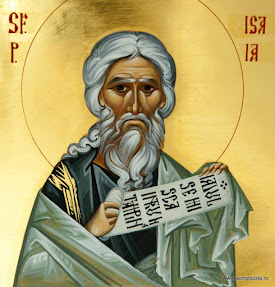
The prophets, with their vivid eschatological imaginations, lead us into Advent.  Off the grid, out of the empire folks with fantastic stories, absurd confrontations and wild encounters, the prophets criticize and energize. They shake the façade keeping everyone content and accepting the unacceptable. God uses prophets to hold before God’s people a vision of who they really are and who God really is, because they keep forgetting. 
 
The prophets reveal God’s future breaking in now. They anticipate God’s coming, teach us how to watch for it, and show us how to live now from what will be.  In their own lives, they didn’t get to taste the fulfillment they spent their lives promising.  But their holy imagination, ruthless honesty and deep trust shaped our ancestors, our faith, and continue to stir us today.  
 
The prophet Isaiah speaks to a people living in exile, whose imaginations have shrunk to their captivity. Terrible things have happened to them, and they’ve made terrible choices. They’re stuck. Their life is small, their hope is dead. The end.
 
But if it’s not ok, then it’s not the end.  
 
Isaiah paints a poetic image of a new beginning, tender green shoot from the dead ground. Like a whisper, a stirring, a savior comes. Instead of division and striving, self-protection and fear, the savior ushers in a new reality: In the reign of God, all people, all creatures in all the world will live freely, fully, unafraid, connected in peace. Hope is the energy of peace, the anticipation of what is coming, the fuel of our faithful living now.  

May hope grow our eschatological imaginations. With holy imagination, ruthless honesty, and deep trust we wait, with and for each other and for the world, for the coming of Christ.  

We hope with the anticipation of the prophets.

Sunday, December 4, 2022

The kind of people who participate

Jean-Marie Pirot (aka Arcabas) The angel of the Lord speaks to Joseph in a Dream


 Matthew 1:18-25

His fiancé is pregnant with someone else’s baby. Joseph’s been made to look a fool. A righteous man, we’re told, with an impressive pedigree, Joseph seems a worthy candidate to parent the Messiah. And let’s be clear. God could’ve easily waited a few months until Mary and Joseph were properly married and saved everyone a lot of trouble.
 
Instead, God puts Joseph in a moral quandary. Heartbroken and betrayed, good guy Joseph will do the right thing – he’ll dismiss Mary quietly, cause as little embarrassment for her as possible, while preserving his own dignity and honor. 
 
Have you noticed how none of our ancestors in faith are ideal applicants for the job descriptions they end up filling?  And the ones who start out looking promising, like Joseph, end up losing something, or everything, for their role.
 
But if our biblical siblings appeared beyond reproach, we might think it was their inherent goodness that qualified them to participate in God’s plans. We might believe God prefers exemplary, upright, heroic types that make God look good.  
And if that were true, then we might presume that humanity is a graded on a scale, and one’s place in God’s good graces can be earned or lost. We might strive instead of rest, compare instead of cooperate, worry more about the virtue of our own souls than the well-being of others, and be tempted to take on God’s role by assuming it’s our job to fix what’s broken in the world. 
 
So, because the way of God is not about us and what we do but about who God is and what God is up to, the cast of characters that populate our scriptures and the great cloud of witnesses watching over us is necessarily comprised mostly of misfits, screw-ups, and the impossibly unqualified – like overlooked youngest sons and ignored foreign women and those with barren, ancient or virgin wombs, incapacitating stutters and colorful rap sheets, all of whom find in their brokenness a new identity as participants with God in healing and redeeming the world. 
 
Gone is Joseph the upstanding, competent, ethical exemplar who holds the reins of his life. This little crisis has ended that guy.  His good-person-ness torn away, Joseph will receive instead the grace of God who claims us nevertheless. When he awakens from his dream, he will be Joseph, misunderstood and misjudged, unable to control his own life or narrative, but claimed by grace, guided by love, brave to trust, and faithful—right up against his doubt, close to his fears, ready to accept what God is giving him and follow where God is leading him.  Joseph will agree to appear to be something that he is not – this child’s father, but he will claim him nevertheless, and in so doing, he will become his father after all.  
 
And so Joseph trades what was for what will be; he will anticipate the future of God by accepting his role in it now.  And Joseph will live a life characterized by grace unearned and forgiveness unmerited, where everybody belongs and nobody is dismissed, quietly or otherwise. 
 
The savior of the world belongs to us all, and first, Joseph, he will belong to you. The angel whispers in his dream. So do not be afraid to take Mary as your wife. Love her. Name the child Jesus. Love him.  
 
And the child Joseph will raise will not become an upstanding, good citizen, respected in society and honored in the community, upholding his father’s good name and bolstering the commendable, but a vagabond and a subversive, who dines with sinners, prostitutes and outcasts, confronts corruption and evil, and refuses to totalize or dismiss anyone.  He will be a Savior who rests, and trusts, and lives fully connected to God and to every other human.  And Jesus will open up to us all a reality of redemption, forgiveness and freedom, everlasting belonging that will set the world free.
 
Dear little Lake Nokomis Presbyterian Church: for 100 years now, people have been gathering on this spot in the name and presence of Christ, to worship God together, to seek the way of Jesus and be guided by the Holy Spirit, to pray and sing, and listen and respond. To grieve and to celebrate. To raise each other’s kids in love, and bury each other’s loved ones with gentleness. To pour love into the community and welcome in the world’s pain and joy. To learn and to change alongside one another, to mess up and practicing forgiving, to reach out and practice receiving, to take the baton from those gone before and pass it on to those who come next. 

And so for 100 years this little congregation has had our own rotating cast of unlikely characters, misfits and oddballs, flawed people living broken, honest and real lives, trusting right up against our doubt, watching for the in-breaking of God around us, sharing the presence of Christ by being with and for others, faithfully accepting what God is giving us and following where God is leading us.  
That is something to celebrate.
 
Today we lit an Advent Candle for Peace. So this week, we will be watching for, praying for, and living toward peace. The Hebrew word for Peace, Shalom, means “fullness” or “completion.”  So when people greet one another or say goodbye, with Shalom, what they are really saying is, “May you be completed.”  Whenever we join in God’s bringing wholeness and fullness for others, whenever our words or actions say, “May you be completed,” we are making peace. We can literally share in the substance of God’s life, here and now.  We can contribute to others’ fullness, fullness in the world around us, and fullness between us.  
We can trade what is for what will be. 

But only if we have our ideas about what it means to live a good life torn away, and receive instead the grace of God who claims us nevertheless.  

God’s love comes to and through imperfect people in ordinary ways, and we are drawn in by God’s mercy and grace, to receive the love of God without qualifications or preconditions. God plunges into this world in the person of Christ Jesus, and by the Spirit pours grace and love through us that feels like courage to forgive, and willingness to listen, and an inclination toward wonder, joy, gratitude and generosity.

 This savior ruins people for respectable, mind-your-own-business living, and pulls us head over heels into a life of trusting, and resting, and hoping, that practices our unbreakable belonging to God and each other, and join in the healing and shalom that God is always bringing into the world. So, like those gone before us, both our predecessors here, and all the faithful from every place and time, we too anticipate the future of God by accepting our role in it now.  
Amen.
 

Sunday, August 7, 2022

You can relax now


Luke 12:13-21

I don’t know about you, but I am so completely sick of everything always being up in the air. Of having to react and respond all the time. Of not being able to make plans and set those plans in place and count on those plans happening.  If not actual control, I would like to have back the illusion of control. Please.   

The rich man in Jesus’ parable has the illusion of control. He is blessed with an abundance of crops and decides to tear down his barns and build bigger ones to store them all and then finally he will have enough, and then, “I will say to my soul, Soul, You can relax now…”


And oh my goodness does this grab me. What would it take to be able to say, Soul, you can relax now? Would you say it when you finally have “enough” money saved? When you have reached a high enough level of education? Progressed far enough in your job? When kids are finally settled and successful? 


When you’ve achieved all your goals for self-improvement and enlightenment, then you can say, Soul, you can relax now?  How about, the mortgage and student loans are all completely paid off, the dream job has been achieved, you’re contributing to real and lasting change in the world as a force for goodness, everybody thinks good things about you and nobody dislikes or distrusts you, your body is a specimen of good health and guaranteed longevity, and your impact, memory and legacy is cemented for several generations. Now you can relax, soul.  Now you can finally live and just enjoy your life! 


Oh wait, let’s add some more, Democracy is secure, racism is vanquished, the climate crisis is remedied, now can our souls relax?


How about when we do have times we’ve accomplished a goal or reached a milestone, and we feel some sense of inner peace because the hard work we’ve invested has paid off, or friends and family are generally doing well and life seems to be on a good track.  Not perfect, but humming along fair enough.  It feels good to feel this way. Not unlike the man in Jesus’ parable, (who then illustrates that even that doesn’t feel like enough). And as Jesus reminds us, any and all of that can disappear at any moment. Anything can happen to anyone. Like, a global pandemic from the movies could engulf the entire globe for years, or something.  And then the illusion that we have any control over anything is short-lived.


This is one of those moments when the lectionary fails us. Because it separates out scripture that make more sense if kept together.


This rich man in Jesus’ parable is so often held up as a foil, a ridiculous, greedy fool. (My bible subtitles this pericope "The Parable of the Rich Fool").  We like to use him to remind ourselves not to get greedy and then move on.  But the story doesn’t stop right here. Jesus turns to the disciples and points underneath the pretend rich man’s striving, to the core of him, because it’s the core of all of us. Just like this man, we are all trying to quell that inner terror that things might not be ok. We all worry for our future, our safety, our loved ones, all the time, and our ability to live our lives with a sense of peace is so often dependent on how all these things and people are doing at the moment.  The rich man is seeking a feeling of security. An escape from the worry. The ability to enjoy life and not live in fear. Aren’t we all?


The passage continues with these words,
He said to his disciples, ‘Therefore I tell you, do not worry about your life, what you will eat, or about your body, what you will wear. For life is more than food, and the body more than clothing. Consider the ravens: they neither sow nor reap, they have neither storehouse nor barn, and yet God feeds them. Of how much more value are you than the birds! 

And can any of you by worrying add a single hour to your span of life? If then you are not able to do so small a thing as that, why do you worry about the rest? Consider the lilies, how they grow: they neither toil nor spin; yet I tell you, even Solomon in all his glory was not clothed like one of these.

 But if God so clothes the grass of the field, which is alive today and tomorrow is thrown into the oven, how much more will he clothe you—you of little faith! 

And do not keep striving for what you are to eat and what you are to drink, and do not keep worrying. 

For it is the nations of the world that strive after all these things, and your Father knows that you need them. Instead, strive for his kingdom, and these things will be given to you as well.


Around here we remind each other that worrying is practicing fear, and resting is practicing trust.  We let go of worry not by talking ourselves out of it with logic, or by somehow controlling all the external factors around us so that we can finally be at rest inside.  


Into our worry, Jesus gives us a very concrete invitation –Look at the birds. Consider the lilies. Notice the beauty permeating it all. Right here in the world around us is evidence of God’s care. God who made and cares for this earth and its creatures values and treasures you, loves you.  

Instead of striving for your own security and wellbeing, Jesus says, point your being toward God’s reality, where we all belong inextricably to each other and to God, and we are here to care for one another and for this world. 

When you let go your attempting to make your own life secure, and return to this reality that the source of all life is holding your live in love, then the inner peace, the sense of deeper grounding, will come to you as a gift from God.  


James Finley talks about this in his podcast, Turning to the Mystics. He says our inner peace is so often dependent on conditions being conducive to peace. So when our family is healthy and things are going well in our lives we have peace. But when the condition are not conducive to peace, there is conflict, suffering, war, racism, then we do not have peace. So we try to change the conditions that are not conducive to peace, so that we can have inner peace. And we should do those things- we should address what is wrong in the world and in our lives. But the peace we are offered in Christ is not peace that is dependent on the conditions being conducive to peace. It’s God’s peace, given to us, regardless of the circumstances. And we can experience it even in the midst of great darkness and suffering, because it does not depend on the conditions being a certain way, it's deeper than that. And this peace actually allows us to be able to be present to the circumstances in a different way, in fact, to be with people in suffering and struggle more intentionally, and to bear those things ourselves, because the peace we have is not our own peace, it is God's. And it is not dictated by fluctuating circumstances.


From time to time the veil is pulled back, and, no matter the circumstances, we feel a sense of oneness with the universe. Maybe it happens when we’re laughing at a table filled with friends, or alone in the cacophonous silence of a still and busy forest, or suffering a terrible, life-severing loss, or simply catching eyes with a baby in a grocery store. We are occasionally, suddenly grabbed hold of by this love that is deeper and wider, more sure and more steady than everything else that exists. And we sense that not are apart from it, but in it, claimed by it. And for a moment we feel righted inside, and we wonder why it is we ever worry at all. And then, just as quickly as it comes, the fleeting glimpse of Reality fades. But these tastes give us hope, and feed our trust, and invite us to live differently.


We can’t make these experiences happen, but we can, “assume the inner stance of least resistance” to being overtaken by this love.  We can seek to be open – to, as Jesus invites us, notice the world around with wonder and gratitude, to be present in our own skin, our own lives, this one moment, unlike any other, and receive it. 


Instead of striving for the ideal someday version of our lives or this world that we can finally one day enjoy, we can welcome and appreciate our lives and this world right now, as they are, and be right here with God and each other. And this, perhaps, is what it means in the parable of Jesus, to be “rich toward God,” being ready to receive our lives as the generosity of God, abundantly poured into the world at every moment. 


I don’t think we are ever going back to a time when things can be planned and then carried out smoothly.  Life now is harder than it was three years ago, and all signs point to it continuing to get more complicated on nearly every front. There have never not been, and will never not be things to worry about, and there is not coming, in our lifetimes, the “finally” moment, when the barns are full, all the wrongs are put right, all the conditions conducive to peace are met, and we’ll heave a great collective sigh and say to our souls, Soul, you can relax now

And even if there were, it could all end in a second anyway.


But through all of it, whatever the conditions, the steady, never-ending, powerful, deeper love of God that claims the universe and is moving it all toward redemption, will continue to hold us fast. And we will be ok. No matter what.  


So beloved, let’s allow our lives to flow from God’s generosity and our souls to find rest in God’s peace.

Amen.

Sunday, December 5, 2021

The holy work of Advent


Luke 1:26-56

 This past week has been a hard week for hope, for me, and I anticipate this coming week, peace will feel like a challenge.  Which is why Advent is such a gift.  If I had to look at the circumstances in the world, in the lives around me, and feel hopeful, or say they speak of peace, I feel hard-pressed to do this.  

My kids’ school has been torn apart by incidents of racist and homophobic hate speech, with two students suspended and whole grades rising up in student-led protests decrying hate and demanding further action.  But through the week, the rhetoric and tone of the students began to change and escalate into a mob mentality of punishing, vigilante justice. It’s become a tangled mess of sin, which is to say, of people forgetting that we belong to each other – at every level –hate being met with hate, fear amping up fear. Revved up teens and exhausted, tense adults are facing off with no clear way forward, certainly not one provided by our culture, which offers nothing resembling mercy, practices vengeance in the name of justice, and persists until lives are destroyed, or until our attention gets grabbed by the next commotion.  

Our kids are doing what we’ve taught them to do, and they’re doing it to a couple of their own.  And that has been breaking my heart this week. Then the drama culminated with the announcement early Friday morning that restroom graffiti was discovered warning of a school shooting on Monday, which means hardly anybody showed up to school on Friday and school will be closed tomorrow, and now we are all suspended, in this state of tension and division. 


This, in the shadow of the school shooting in Michigan – the 28th school shooting in America this year. We are averaging more than two a month, you guys, so all the administrators closing schools in an abundance of caution are not wrong to do so.  And yet another community is suffering unimaginable loss and grief. 


 Meanwhile, this morning’s headline read “Omnicron plunges the world into collective uncertainty.” As if we haven’t already been living in collective uncertainty for coming up on two years.  And so far we have no idea what this variant means or doesn’t mean, but that doesn't stop us from dooms-guessing.  So we let our already weary and tense selves get worked up and worried about what might be coming. And I don’t know about you, but once I get started, the apprehensions start to flow, and they’re hard to stop. Andy pointed out yesterday that I have a tell, a catch phrase that once he hears it, he knows I’ve handed over the reigns and anxiety is running the show.  It is when I start to say, with urgency and strain in my voice, how badly the dog needs her nails trimmed. 


So thank God for Advent. Thank God.

I welcome Advent’s demand that I wait in darkness for the light of God. Because there is darkness - around us, within us.  I believe this, I feel this, I struggle against this and often I succumb to it.  And I need to be told it’s ok to notice it and let myself feel how heavy and terrible it can be.  And yet, I also need to hear there is no darkness into which the Light does not shine; there is no darkness that can overcome the Light, and one day there will be no more darkness at all.  And that does give me hope. I am told to wait for peace, to expect it, to seek it and join it, and work for it, because I can trust that it is coming, that it comes. Into the darkest places, the most hopeless situations, God comes in.  This is what God does.


This story before us today pulls us back to the big picture: God comes into this life. 

It’s the continuation of my favorite story in scripture – last week we left silent Zechariah and pregnant Elizabeth, keeping mum about her pregnancy for the first five months too, because who could begin to explain? And who could she tell that would believe or understand?  Last week we jumped ahead to finish their part of the story. But that’s not how it happened – this part is what came in the middle, what shaped the next part, ultimately bringing them to tiny baby John the Baptist’s birth, and the end of Zechariah’s silence with his great proclamation to his startled neighbors, that culminates with exactly the words my soul needs to hear today:

By the tender mercy of our God,
   the dawn from on high will break upon us, 
to give light to those who sit in darkness and in the shadow of death,
   to guide our feet into the way of peace.’


So while Elizabeth and Zechariah are suspended in a state of uncertainty, Gabriel appears to Mary and invites her to share in the redemption of God, to let go of all that she though her life would be and step into this new role, God-bearer.  And when she is just as confused and questioning as Zechariah was about how the impossible could happen, Gabriel has a little more patience for her, and says, Even now your relative Elizabeth, who was barren, is in her sixth month, for nothing is impossible with God.  


And it doesn’t say that the angel tells her to go to Elizabeth but what else would Mary do? She immediately sets out on the 100-mile journey to visit the person she can share this with completely. And when she arrives, tired and hesitant, at her word of greeting, fetus John flip flops inside Elizabeth and kicks her out of her own silence to welcome Mary with joy and wonder, like a personal gift from God, Who am I that the mother of my Lord would come to me? She blesses Mary and her experience and trust, and Mary declares back to Elizabeth God’s greatness and what God is about to do. And right there the community of mystery-keepers and hope-bearers is formed: these two women, proclaiming the fulfillment of God’s promises with words and by their very bodies, and silent Zechariah taking it all in in wonder and witness.  Being together in this is what makes them able to trust that it is real. Bearing it together is what vanquishes fear and stirs possibility, what breeds hope and helps them anticipate the fullness of God for us all.  


We’ve said before that these three were church before there was a church. Even as Christ’s body was being formed, they are the nascent Body of Christ, helping each other remember the real reality breaking into this world, to see it unfolding right here in their very own lives, even. Together they are able to imagine the future God is bringing, can literally see in each other what God is doing for the future of the world, and proclaim it with confidence and trust. Together they move from suspended tension to hope-filled waiting.


No matter what unfolds in the world around us, in our own lives and bodies, in our communities and country, in the midst of whatever impossibility we are facing, or anticipating, or fearing, God is always breaking in. There is no life, no moment, no violence or horror, no despair or stuckness, no division, tension or uncertainty that God is not breaking into, not right alongside, not underneath and within. 


And we are given to one another- community to bear this reality together for the whole world, to remind each other of hope, to practice belonging and trust, to help each other watch God breaking in, and help each other live into the future that is coming. 


So we wait together in darkness for the light of God, and remind each that it’s ok to notice it and feel how heavy and terrible it can be.  At the same time we watch for the light and we seek peace, because the light shines in the darkness, and we trust that God comes in to bring redemption and life. That’s what God does. That’s who Jesus is: Emmanuel, God-with-us.  

The light shines in the darkness, and the darkness cannot overcome it.


Amen.


Sunday, September 19, 2021

How to live a good life


James 3:13 - 4:3, 7-8a

What is a good life?  We have ideas of what a good life is or should be. Right now especially it seems to have something to do with being on the correct side of the issue, whatever the issue may be. And just as important as being correct is being seen as being correct.  It can be about vaccines, or policing in our cities, or climate change, or racism, or it can be about how your lawn looks, and what you’re putting into your body, and how well-behaved your kids are, and what kind of effort you put into maintaining friendships.  What it looks like to others is at least as important as what it actually is.  
Modern life is primarily a performative exercise.
 
But, James asks, what’s going on in your heart?  Is this so-called good life being lived with envy, resentment, self-centeredness, bragging, or bending the truth?  If so, then there will be disorder and wickedness of every kind.  If so, it’s not a very good life.
 
What is a good life, then, and how do we know how to live it?
 
For example: Is it ok to shop at the super convenient and cheap store that pays minimum wage and doesn’t provide their employees with health insurance?
 
 What about that place that pays great, delivers health insurance, treats employees well and donates to great causes, but the owner of the company invests his personal money in a fund that, among a number of other good things, also supports a cause that dehumanizes some people?  
 
Is it actually better for the environment to buy the toilet paper that is made from sugar cane and bamboo, if it comes encased in several layers of cardboard stuffed with (recycled) paper and is delivered to your door by a large gas guzzling vehicle? 
 
Is it ok to want to have nice things or go on nice vacations when there is so much poverty and inequity?  Do you volunteer enough? Speak out enough?  Keep your house tidy enough?  Spend enough time with your kids, or grandkids, or parents? Do you stay informed enough?  Exercise enough?  Pray enough?
 
Living toward a standard of a good life that isn’t even fixed or clear is exhausting.  Measuring that against how well other people seem to be doing it in order to figure out whether I am doing it right is downrightt mind-scrambling.  
 
In fact, disorder and wickedness of every kind result from this kind of selfish ambition and envy motivation.
 
I feel disordered frequently. I feel the desire to be seen as good that, if I am honest, is sometimes greater than the desire to actually be good.  
 
I feel jealousy or resentment rise in me on a regular basis.  I feel misunderstood and I lob misunderstanding right back at the opposing party.   I am often quick to judge and quick to anger.
 
If a good life has to include with what’s in my heart along with mastering some performative actions then I can’t even delude myself that it’s possible to live a good life.  There is no way I can live a good life.  I can try all I want, but it is never enough, and I do it for all the wrong reasons, and from all the wrong motivations.  And the striving and comparing and accusing voice of judgment against myself and others will never stop howling inside my head and often out my mouth.
 
What is a good life and how do we live it?  
If this scripture is prescriptive it hasn’t yet told us what to do.  Because trying not to be selfish or jealous, or striving to have perfect motives when we perform all of our lofty and moving-target good life actions, is not only stupid and impractical, it actually is impossible.
 
This is good news actually. We can’t actually live a good life. We can’t even figure out what a good life is half the time.  
But that’s not our job. 
 
Here’s where it this passage tells us what is our job, three things:
Submit yourself to God.
Resist the devil. 
And draw near to God.
Submit. Resist. Draw near.
 
Submit yourself to God, James says because all the conflicts and disputes come from the cravings at war within ourselves.  They come from the way we try to save ourselves, advance ourselves, preserve ourselves, present ourselves. 
 
But life is not actually not about belonging to ourselves, it’s about belonging to God, and through God to each other.  And in fact, God does a much better job of unconditional love and boundless acceptance than we could ever do for ourselves. So much so that when our lives are rooted in our belonging to God, we can be brave and open and connected to others.  So we are called to submit ourselves to God, to confess our selfish desires and admit our messy motives, and lay down our flimsy defenses and repent. We ask for the connection and hope that we desire, that we are made for.  
 
Then, instead of us trying to live a good life by whatever current standards and definitions we have embraced at the moment, the wisdom from above that is God’s wisdom, not ours, will live through us.  And our lives, the words we say and the actions we take, how we treat others, how we treat ourselves, what we do with our money and our time -  these things will become a good life. They will be done with gentleness, born of God’s wisdom.  
When God moves through us God draws us into lives that are peaceable and pure James says, and “willing to yield, full of mercy, without a trace of partiality or hypocrisy.”  But we don’t make that happen. We can’t.  We submit ourselves to God and the Holy Spirit does that work in us.  And the Holy Spirit draws us into God’s goodness already at work in the whole world, and we join in out of joy and calling, not out of urgency, pressure or guilt.
 
Second, we resist the devil – the Greek word is the accuser, the voice of condemnation and blame directed at our selves or others, the voice that that tears down our own humanity, or someone else’s.  That voice that says if we try harder and learn all the things, and avoid all the things, and do all the things, we can live a good life like those people obviously do. Or, look how awful they are, if we aren’t like them then we must be good.  That voice that tells us we are in it on our own, and we are supposed to be stronger than we are and not ask for help or admit weakness.  The voice that says we have nothing to offer someone else, nothing to give.  The voice that says that other people’s suffering or the problems in the world are not my business. The voice that says we have to carry it all and if we don’t it proves we don’t care.  We speak back to the voice of the accuser and stand up to it. We refuse to relinquish our minds and hearts to the delicious but poisonous, divisive anger of it.  When we confront the accusing voice, it will flee from us. 
 
And finally, third, we draw near to God.  We steep ourselves in what helps us seek God – meditation, walks in nature, stillness, stopping and stepping out of it all through gratitude, practicing noticing, and wonder, and cultivating silence.  We choose to spend time with those in need, and to care for each other, and we let ourselves be cared for and seen in our own need by others because right there is where we see God most.  We are human and present in our lives, because the God who became human in Christ is present to us here.  
Stop performing your life and live it, right here where God is.  Draw near to God and God will draw near to you.
 
This is a good life. 
Submit, resist, draw near.
 
I am more and more convinced that the way through this pandemic is to go deeper and simpler. Do less.  Listen more.  Turn things off and turn things down.  The noise and the conflict is a liar that tricks us into feeling alive but drains us of life. 
No matter what is happening around us or to us, we can live a good life.  God’s goodness is here for us, at any and every moment.
So submit to God and let God bring you into peace.  
Resist the accuser and it will flee. 
And draw near to God and God will draw near to you.
Amen.

Therefore...

    Romans 12:1-8 When I was ten years old at summer camp, we could earn points for various activities. My favorites were archery, target sh...