Showing posts with label Christmas. Show all posts

Sunday, December 21, 2025

In Real Time

 Matthew 1:18-26

My dog can tell time.  She’s just not very good at it. She’s off by like 25 minutes, usually. 25 minutes or so before it’s time to wake up she shimmies up next to me in bed and puts her paw on me, or nudges me with her nose. 32 minutes or so before it’s time to eat she sits next to her  food and stares at us like, what’s wrong with you, don’t you know what time it is? And she’s generally pretty close on when it’s time to take a walk, but if I leave the house to get something out of the car, she thinks I’ve been gone for hours.


We can tell time too, but we’re not too good at it either.  We think time has to do with what we have to get done or how far ahead or behind we are. We make time about efficiency and productivity, about competition and scarcity. For most of us, if you ask what we wish we had more of, we’d say “time,” and if you ask us how we’re doing, we’d probably say “busy.” 

We might be conscious of minutes, or even seconds, but we’ve often got no sense of real time, time as God created it, time as God invaded it, time as God is redeeming it, time that gets shared in the meantime with past, present and future, with all those who exist for something other than using up time.


On Wednesday, Christmas Eve, we will gather together to share again the story of the beginning of Jesus.  A moment that changes time, that fills time with eternity and resets the trajectory.

The story of Jesus begins somewhere.


Each of the four gospels begin the story of Jesus differently. John begins in the beginning was the word and the word was with God, all cosmic and poetic, and the word became flesh and dwelt among us. And then jumps to grown-up John in the wilderness explaining he is there to prepare the way for the Messiah who is promised.  This story, John is saying, is transcendent and ungraspable, and even when it’s right in front of us, we miss it, and the first words Jesus says in John are “Come and see.”


Mark starts with John the Baptist too, “the Beginning of the good news of Jesus Christ” and gives us a prophecy from Isaiah, about the messenger crying out in the wilderness to all of us, “prepare the way of the Lord,” because he’s coming now, and John appears all camel hair and locusts and wild honey, and by verse 9 he is already baptizing Jesus in the river Jordan, and by verse 12 Jesus is already in a wilderness of his own, facing hunger and temptation and being prepared himself to inhabit time with us.


 We’ve spent most of Advent in Luke, who begins the story of Jesus with Zechariah and Elizabeth and the surprise announcement about John, and moves to focus on Mary, who melds past and future in a prophecy of her own. And in a resonant pocket of time God brings these people together into a timeless community pregnant with the truth that God is about to invade the world in human form, and that, for no reason they can conceive of, they’ve been chosen to bear this great mystery.  By angel pronouncement they’re brought on board, and then through silence, song, blessing and mutual support, their lives shift into a new reality.  


But they’re not taken out of real life or real time. Not only are the stakes enormous, and the confusion undoubtedly palpable, but the regular daily chores don’t stop for this strange and profound reality they must now get their lives around. Maybe after the greeting and the Magnificat, when the days and weeks go by, Elizabeth and Mary might even forget this is all going on, till they ask Zechariah a question and oh yeah, he can’t answer, or the baby within one of them kicks and it all comes rushing back. And in time marked by grape-sized, avocado-sized, grapefruit-sized, the growing promise that what is coming can’t be stopped. Right in the middle of normal life something is unfolding that defies explanation, and they can’t do anything about it except to keep living in it and see what happens next.


Today we move to Matthew’s beginning, literally, it begins “the genesis of Jesus.”  And after 17 verses of laying out the genealogy of Jesus going back to Abraham through the line of David, placing the Christ in context of all the people, prophecies and promises in God’s ongoing story, he ends with  “Joseph the husband of Mary, of whom Jesus was born, who is called the Messiah.”
Then he begins again, ‘the genesis of Jesus the Messiah took place in this way…’
And he tells us how Joseph is brought into God’s great scheme of salvation.  


We are all living inescapably in the time when all will die.  We see it all around us, the nations tremble and kingdoms totter, cruelty, selfishness and power, hunger and pain, the capriciousness of death that doesn’t care how hard we work to avoid it, that comes unannounced to children and ultimately to us all, we’re here and that is what it means to be human beings. We live, we die. 

But now, we’re told, there is one coming from outside the time when all will die. Jesus comes from the time when all will live, invading the time when all will die, coming in alongside us, with us, for us, to bring us with him into life that will not die.  And when he comes, he brings that timeless, deathless life with him, and redeems time itself, so that no longer is time for measuring and using, for wasting or succeeding. Time is for what time was made for since God made time and God made us: time is for love.


When God comes to Joseph in angel and dream telling Joseph that there is something beyond what we can see and hear and touch that is impossible but real, Joseph is called to step into a different reality from here on out. He is now claimed for love, and his life in time is for another purpose. But that purpose will unfold in the same ordinary way life always does for humans, he will do an ordinary and extraordinary thing, he will claim Mary, love her and, claim this child into his family line and raise him. Joseph’s job is to name him Jesus, literally Yeshua, or, God saves, and then to spend his life practicing trusting that this is so.

When Joseph gets up from this sleep, he will obey. The Joseph who laid down the night before will be gone. The plans he’d made, the reputation he’d built, and the terrible choice he was about to act on, which was the best of his bad options – all of it is gone. 


This is a new beginning, and from this moment on, he is a new person, defined now by love and inhabiting the eternal belongingness of God that is clocked in grace unearned and forgiveness unmerited, an abundant reality where everybody has enough and nobody is dismissed, quietly or otherwise. God-is-with-us is coming into his care, and Joseph will live present in a future that God is bringing into the world through his ordinary life. 


When the good news of Jesus Christ begins in the world, each person is called in as they are, from where they are. They’re called to live in trust and obedience, to surrender their lives, to be reoriented and drawn into the God-with-us project that is redeeming the world. Their clock is reset toward time, to presence and anticipation, where story and tears and laughter and trust and forgiveness mark the moments, and even in the midst of dying, lives are for participating in life that will not end. In this new reality, God gives them one another, and shows them just the next thing to do. And then when they’ve done that, the next thing will become clear when the time is right. 


This is how God has done it with all the patriarchs and prophets gone before, and how God will keep doing things with Joseph too.  After the Magi visit with gifts and a warning, Joseph will be told in another angelic dream to evade Herod’s wrath and protect Jesus and Mary by fleeing with them to Egypt, where they will live as refugees in exile for four years.


Matthew’s gospel will tell us this part too – revealing time folding in on itself, an evil king trying to kill the Jewish babies again, just like happened back in Egypt, when God plucked baby Moses out of danger by the hand of an outsider with the cooperation of those who trust God. And so, in the very place his ancestors were enslaved and from which they were freed, Jesus will find safety and refuge, and his own childhood, and Mary and Joseph’s parenting, will be shaped by walking the land of exile and exodus, where the promises of God that are coming to us in him were first spoken.


This past January my family traveled to Egypt.  We stood in temples and tombs that dated 3000 years before Christ.  And when we knelt in an ancient church and peered through glass in the floor into a small stone room atop which it was built, a room two thousand years ago Joseph, Mary and Jesus stayed for
three months, while they were living and traveling in Egypt, I felt like my solid grasp on the world, space and time, was shaken. When I saw the niche carved in the stone wall where the toddler Jesus is said to have slept, on the only remaining Christian street in Egypt, where seven churches crowd atop one another holding relics, story, and the faithful worship of our Christian siblings and forbears through a history my own imagination might not even stretch wide enough to grasp, I understood then that the same story of Jesus, God-is-with-us, is told very, very differently there than we tell it here, and that I, and you, and this congregation, is bound together in living, breathing community with every follower of Christ who has ever lived, summoned in and held by something far beyond ourselves, and all we can do is receive it and watch for what happens next.


Right now, life, as modern American people, feels urgent and hard, and tiring, and often sad. The world feels dangerous and confusing. But perhaps it helps to hear that we are not exceptional. That our own story is both unique and completely the same as nearly everyone who has gone before in this time when all will die. That in bodies that die, alongside children that grow up, inside buildings that crumble, and structures that collapse, on a planet in crisis,  the God who creates keeps creating anew, and the God who comes in keeps on coming in. And from time to time we taste the truth that time has been invaded by eternity, and now and then we feel ourselves in the hands of the time-keeper, where love is the purpose and the measure.


Maybe this week it happened for you in a Moroccan man noticing you were cold, and inviting you into his shop and offering you tea, or by the feet and voices of those alongside you with the bright sun on your heads and the sharp wind on your faces as you marched for your immigrant neighbors through the streets of our city. Maybe it was in watching another person take care of someone you love with patient tenderness, or wrestling with deep questions over coffee, or sharing with others laugher and pizza, or silence and stillness, or in being enthusiastically received when you shared your wisdom and power point for the hundredth time, or in resting your head on someone’s shoulder, that time seemed to stop passing, or passed in a blink, and you felt the truth of your life, for a moment, unbound and free, near to the God who comes and is even now here with us.


The good news of Jesus Christ begins in the world again. Always. Right in the middle of normal life something is unfolding that defies explanation and includes us all. So let’s help each other to obey, and trust, and pay attention, and to join in. And together we’ll see what happens next.

Amen.


Sunday, December 18, 2022

Advent in 300 Words: The Prophets, Joseph, Mary, The Angels

 ADVENT 300 WORD REFLECTIONS


THE PROPHETS (11/26) - by Kara K Root

The prophets, with their vivid eschatological imaginations, lead us into Advent.  Off the grid, out of the empire folks with fantastic stories, absurd confrontations and wild encounters, the prophets criticize and energize. They shake the façade keeping everyone content and accepting the unacceptable. God uses prophets to hold before God’s people a vision of who they really are and who God really is, because they keep forgetting. 
 
The prophets reveal God’s future breaking in now. They anticipate God’s coming, teach us how to watch for it, and show us how to live now from what will be.  In their own lives, they didn’t get to taste the fulfillment they spent their lives promising.  But their holy imagination, ruthless honesty and deep trust shaped our ancestors, our faith, and continue to stir us today.  
 
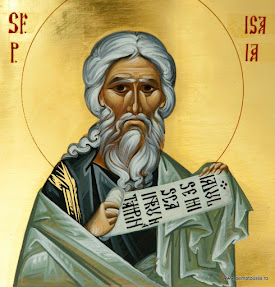
The prophet Isaiah speaks to a people living in exile, whose imaginations have shrunk to their captivity. Terrible things have happened to them, and they’ve made terrible choices. They’re stuck. Their life is small, their hope is dead. The end.
 
But if it’s not ok, then it’s not the end.  
 
Isaiah paints a poetic image of a new beginning, tender green shoot from the dead ground. Like a whisper, a stirring, a savior comes. Instead of division and striving, self-protection and fear, the savior ushers in a new reality: In the reign of God, all people, all creatures in all the world will live freely, fully, unafraid, connected in peace. Hope is the energy of peace, the anticipation of what is coming, the fuel of our faithful living now.  

May hope grow our eschatological imaginations. With holy imagination, ruthless honesty, and deep trust we wait, with and for each other and for the world, for the coming of Christ.  

We hope with the anticipation of the prophets.

Sunday, December 19, 2021

Recruited for Love in These Times


Matthew 1:18-2:15

This morning I sat in my living room watching chunks of my Christmas tree lights stutter and blink insistently, like Will sending a message from the Upside Down, and then, section by section, over the course of an hour or so, groups of lights held hands and silently screamed and died.  Now there are several gloomy, unlit spots on the tree, and I sat contemplating how the tree in my living room feels like a symbol for everything.  


This was a lovely tree in the field when I cut it down.  But the trunk wasn’t long enough for my tree stand, so when I secured it in, it swung around wildly, crashing to the floor at least twice.  So I cut off some bottom branches, and ended up taking out all the beautiful tree-shaped bulk and leaving it looking like an upright, green chicken drumstick with a huge bite out of it.  So I stuck a piece back into the stand on its own to fill the hole, a patch, if you will. 


The tree boasts a sparse smattering of ornaments because, after three days of looking at it empty and commenting plaintively to each other that we needed to decorate it, Maisy finally mustered the energy to hang a few on. But the Bing Crosby listening, egg nog drinking, ornament nostalgia memorabilia fest was not happening in our house this year.  


I keep coming back to something Mark Yaconelli recently said is helpful to remind young people, which my pastor friends keep telling each other and everyone else: It’s normal to feel tired in tiring times. It’s normal to feel anxious in anxious times. It’s normal to feel sad in sad times. 

These are tiring, anxious, sad times.  And our skins are thin, our patience for navigating all of this was spent months ago. Lots of us are edgy, and most of us are tired. I copied down a line from an Economist headline the other day, “Era of Unpredictability is Not Going Away Soon.” I keep looking back at it to help myself let it in.


So, into this comes the Christmas Story. And I don’t know what kind of unpredictable times they were living in, or anxious times, or sad or tiring times, but it’s safe to say human beings have been times like these all throughout history.  And God keeps recruiting us for love anyway, or maybe even recruiting us for love for these kinds of times.  In truth, there is no time God is not calling us into this life alongside each other to join Jesus there, and to be part of what God is already doing, despite the times, in the times, and through the particulars of the times. And this week I have been struck by how God reached out to each of the people in the Christmas story differently, specifically.


We have spent Advent peeking in on the Christmas story, preparing our hearts to receive it again.  We began where Luke begins the story of Jesus – with Old Zechariah, a priest from the hill country, and his long dead prayers for a child being suddenly answered even as his prayers on behalf of the people for salvation for Israel were being answered. God met Zechariah in the silence. He was a witness, a mystery bearer, one who does the holy act of observing what God is up to.  

God recruited Zechariah through an ego tussle with a smug angel, nine months of imposed silence, and the invitation to watch and marvel.


And Elizabeth, with her astonishing new role as a mother in her old age, keeping it all to herself until the summons to be a friend, sharing pregnancy with her very young niece Mary.   In her age and wisdom, she was bearing in her womb the great prophet who would announce the Messiah.  She recognized the mother of God who came to her.  And together they prepared for the world to change, with joy, and wonder, and trepidation, and learning, and hormones, and Zechariah at their beck and call, they bore in their bodies the God who comes in the flesh to bear this human life with us, and the one who will prepare the way, and ready the people’s hearts for his arrival. 

God recruited Elizabeth through resurrected hope, stirred vision and understanding and the gift of precious companionship.


And Mary, the one who said yes to being the bearer of God.  A life interrupted and rerouted, for a world reoriented and redeemed.   She was given Elizabeth and Zechariah, given courage and insight, given the Spirit to overshadow her and fill her very body with the life of the world.  Mary is shored up for the road ahead, and promised the guidance of God. 

God recruited Mary with an angelic visit of gentle reassurance and by being drawn into a small community of support to share with her this miracle, to surround her, uphold her and prepare her for what is to come.


Then we meet the shepherds, going about their business, not expecting or looking for anything outside the routine.  There was nothing to make them seem worthy of sharing in anything majestic or important, nothing to make them even wonder about such things.  They tend sheep, look after them, the way Jesus later says God does for all of us.  They become in Jesus’ teachings, a template of God’s consistent, relentless watching over us, God’s protection of us and God’s ceaseless, night and day care of us.  And they are invited to bear witness to what is unfolding. 

It was with an angelic choir breaking open the night sky, the most spectacular chorus of music and light and life, a heavenly celebration spilling over into earth, inviting these particular ordinary people to join in the joy, to peek at the promise that God recruited the shepherds.


Now this week we turn to Matthew’s story of the Christ.  And we meet Joseph, who wasn’t invited, wasn’t informed ahead of time, was simply told what was happening and left to adapt.  Joseph, who was called to walk a road he didn’t get to choose, chose to walk it with grace and generosity. Joseph chose to let go his own plans for life and accept the life he was handed, the role he was called to.  

God recruited Joseph through grief and loss and unacceptable circumstances, a dream and a relinquishment of power. And he accepted of a path of love and cooperation with God.


And we meet the Magi.  Scholars from far away, outside this story, not hoping, longing, looking for a Jewish Messiah, minding the signs of the cosmos, anticipating the movements of the universe. They are brought into the story and eager to follow where it leads, ready to discover what it holds. Persistent and dogged, traveling for years, arriving at the home of a toddler, shocking the neighbors and confounding his parents with their sureness and their foreignness. The magi embody the promise extending to the ends of the earth, celebrating a redemption that belongs also to them, and so to all of us too.  

God recruited the Magi through science and study, through their own intellect and diligent connecting of dots, through their determination and due diligence, and through their trust.


This story breaks all boundaries. Heaven and earth come together, kings are brought down and the marginalized and overlooked are drawn into the center. Strangers already belong.  Plans are thwarted and courage is kindled, the unknown is embraced and a community is formed of the most unusual collection of folk, recruited by God to be those to whom God comes, those in whose care God entrusts his baby human self, those who God trusts to share in this great mystery and promise for the whole world.  Not because they earn it or deserve it, just because God does it.  


And nobody gets the same invitation, nobody plays the same part; God takes pleasure in meeting each person specifically, uniquely, in a variety of unexpected approaches, particular to each life, which is to say, there is no end to the ways God comes into this world. There is no one outside God’s sights.   Each of us is called into the promise.  Each of us is invited to participate.  Each of us is recruited for love.  Every life is part of God’s great schemes.  


This week on Christmas Eve we will gather together to share the story of Jesus.  And we will tell this one little part of it. But the story of Jesus transcends all times.  It started way before this part – before time existed, when the word was with God and through whom all life into being.  And the story of Jesus outlasts you and me, and every nation and culture, and conflict and war, and advancement and civilization, and species and the very earth itself.  And you and I, right now, today, in these very times, are living the story of Jesus, the story of God coming in, the story of love greater than death interrupting ordinary life with promise.


May we be ready to receive this story. May we be open to being recruited too.


Amen.

Thursday, December 24, 2020

Right Into the Middle of It All


LNPC Christmas Eve 2012

Luke 2:1-20

I need to hear the Christmas story this year, to remember that God crept in beside us, that this world is shot through with love and hope. I’m craving the good news of great joy for all the people.

But there’s a line in the Christmas story that has always bothered me.  It’s when the choir of angels sing, “On earth peace among those whom he favors” – it’s also been said, “Peace on earth to men of good will,” or “peace on earth to those who please God.”  


Of course, we human beings are divisive and exclusionary, it’s sin’s hold on us, the way of fear that has us always competing and comparing, always striving to be good enough, and deciding who isn’t good enough. So translating it this way fits our distorted projection of who God is and what God must be up to.  


But it doesn’t fit what we know about the Kingdom of God, and who God really is and what God is really up to in the world, particularly at Christmas, when God comes into this life to save us.  And I’ve learned over the years that wherever we make the message of Jesus Christ narrow and obstructive we’ve taken a wrong turn somewhere along the way and it’s worth retracing our steps.  


So, I did some digging into the Greek this week. And it turns out that the word “favors” means pleased in, delighted by. It’s the same word God speaks over Jesus at his baptism; This is my beloved child, in whom I am deeply pleased.


So when those ecstatic angels who cannot contain themselves blast their joy into the faces of the terrified shepherds, they are singing, Glory to God in the highest heavens! And on earth, peace to the humans, in whom God is utterly delighted! Y’all humans are God’s favorite! Glory to God and bottomless connection between God’s very own beloved children!


God is so utterly committed to us that God came right in with us to share it all, so that we might never again be separated by death, so that the end of this story is decided once and for all.  Christ has come to free us all from the bondage, judgment and suffering we inflict on ourselves and others, and bring us into peace.  God’s peace is not just for a few, for those who earn it or deserve it or claim it.  God has come for whole earth, and every person here belongs to God and to the rest of us. There is no pain or suffering of a single one of God’s beloved human beings any place on this wide planet that God is not intimately bearing with and tending to. There is no human joy that God is not celebrating.  


Each of our lives get to be part of glory to God in the highest heaven, and on earth, our lives get to be for peace between all beloved human beings on this whole wide earth. God is doing this, it has begun and will continue until it is complete.  


Right now everything feels hard, we’re weary and strained, the future is unclear, the present is not simple, the world is aching, and life and death are close to the surface. So what better time is there to tell each other again about God coming in as a tiny, vulnerable human baby, born incognito, in the middle of unfortunately-timed road trip, to a teenage girl and the man who agreed to be the child's daddy? 

These two beloved, overwhelmed humans were living in the midst of great unknown and upheaval, making do with whatever they had, and welcoming God into the world, right into the middle of it all.  


Beloved human, God is utterly smitten with you, and with every person on this planet.  And God is here with us all. So we will tell each other the story again, and welcome God into the world, right into the middle of it all.  


May you go into your Christmas, whatever it looks like and whatever it holds, with your heart open to whatever cocktail of joy and grief, love and disappointment, hope and longing may be bubbling within you tonight. God comes in to be with you just as you are, and to bring us all peace. 


Christ has come; the world belongs to God.  Christ is here; we are not alone.  Christ is coming; the future is God’s.

Amen.


Sunday, January 5, 2020

The truth about Christmas


Luke 2:22-40
Anna & Simeon

A few days after Christmas I looked at my tree and was filled with disgust.  It no longer represented all the joy of the season; it just looked like clutter in my living room, a big depressing task waiting for me.  And while I had room for one more glass of egg nog, I couldn’t even muster another round of Bing Crosby tunes to accompany me in the chore.  

Add to that the fact that I had to take it down alone. Nobody wanted to help me, and I didn’t want to force or coerce them into it. For some reason, the absurdity of it all made me very emotional, and I ended up crying through the whole process. Resentfully wrapping the ornaments, wiping bitter tears off my face while I unwound the lights, I felt unhinged. 
I kept saying to Maisy, who was nearby and watching me with a worried look, “I am not trying to get you to help me with this! You get to have a real choice! This is not manipulation! I don’t know why I am crying! I’m just having some big feelings!”

Christmas is weird. 
Every year my mother-in-law’s husband gives us a big gift box from General Mills, where he used to work, filled with fruit roll-ups and pudding mix and cereal, and it’s a bunch of crap I don’t buy, and wont eat, in lots of packaging I will throw away. But I know it means a lot to him to give it, so in the moment, I actually genuinely enjoy receiving it. And then, after my kids rifle through and take what they want, I try to incorporate things like cheese-flavored soft taco bowls into our lives.

And my dad wouldn’t take his shoes off when he came over, because he has diabetes and his feet get cold, so the rest of us spent the evening walking through his melted shoe water in our socks on my freshly washed floors, and I stuffed down my frustration didn’t say more than one teeny little side comment right at the beginning, because I wanted things go well and for everyone to get along.

And I lost the gift I bought my mom, and at the last minute I ordered another one to be delivered, which got there after Christmas, and then I found her gift on Christmas eve, and now I am stuck with a beautifully wrapped gift card to a movie theater chain that doesn’t exist in the Midwest, and a CD of Christmas music I’d already bought myself for Advent. And I don’t know what to do with either of them.

And after mailing it out I discovered that our Christmas card had 5 typos.

And my grandma, who this year lost her house and her dog, spent Christmas helplessly watching her son die of cancer, and he spent it unwillingly dying.  My cousin’s baby is due in April, and my uncle most likely wont get to see his grandchild’s life begin.  And there is absolutely nothing I could do sitting across from him except cry along with him.

Some of us have kids that we can't talk to, not really, no matter how much we try. Or we spent Christmas day overwhelmed with the grief of missing someone who wasn't with us anymore. Plans changed, people got sick, and the dinner had fewer place-settings than it was supposed to have. Some of us said the wrong thing, or regret not speaking up. 
And some of us spent the season trying to ignore the gnawing loneliness, or the nagging worry, and just stay happy like we’re supposed to.

So I cried while I took down the tree. 

Because I love Christmas. But also, if I’m honest, what a great big let-down it always is. Along with all the shimmer and warmth, Christmas is awkward and exhausting, and it is never how we remember it was or hope it will be.  It’s just not big enough or deep enough to hold all the expectations and longings we pile onto it.  

So we put Christmas away. It’s all done. Forget the whole 12 days of Christmas thing – in an era of sound bites and viral tweets we have moved on.  You’ve had your little holiday break. Time to turn your attention back to the distractions of your busy lives, and the urgent struggles of the world. Life moves fast. The Valentine candy is on the shelves, people. 

But that’s not how Church time works.  Church time is slower, and deeper, and is not in a hurry, and doesn’t stop either. So it’s Epiphany now, the festival of Christmas spreading out and sinking in. It’s when we celebrate the light coming to all the world, for all the people. 

We don’t put away the story with the ornaments and stockings, or keep Christmas in its precious, nostalgia box that comes out once a year and otherwise doesn’t intersect with life. The story of Christmas continues.

And for Luke, it continues just after the Shepherds depart, with the scene we just read, that happens when Jesus is just a few days old. 
This is way before the Magi, who don’t actually arrive until Jesus is a toddler. On Epiphany, the Magi are usually the stars of the show. Because of them we remember that we Gentiles are in this story too. The Wise Men are a big deal; they get way more airtime in Matthew than the birth of Jesus does.  And that story has such exciting drama with its spices, and gold, and camels, and the star guiding them to Christ child, the crazy murder-hungry King and dream warnings and such, that we turn usually eagerly from Luke’s Shepherds to Matthew’s Magi and often overlook this little story.  But this is a pretty incredible Epiphany story too.

Joseph and Mary bring their firstborn baby boy to the temple, like every good Jewish couple, for the ritual of “the redemption of the firstborn son.” It’s a ritual of expectation and nostalgia, really.  It is a symbol of the deliverance of firstborn sons from the Angel of Death in Egypt when the Jews were freed from slavery; it is a symbol that this one, and everything that comes after this one, is a gift from God. And so the first fruits of labor, the first money made, the first grains and livestock are given to God, to whom they rightly belong, because God gives us all. The firstborn son, then, belongs to God; he is considered holy. 

But this ritual is, in effect, to buy the child back from God. Rather than the child being set aside to be holy, to live in the temple like Samuel did, or perhaps to become a priest when he grows up, the parents would pay God for the right to raise the child as their own, and let the child to grow up participating in ordinary life, rather than only holy things. This makes it sound heavy, but it wasn’t.  It was a celebration of God’s provision, a reminder of God’s care, and an act of joyful gratitude. You brought your baby to the temple, where a sacrifice was offered and a blessing was made, and you brought your child home, and he belonged to you.

Now, there is this man in Jerusalem, Simeon, a prophet, who spends his days searching the streets, wandering and watching the ordinary world, waiting to see a sign of the salvation of Israel. Simeon is a seeker of the light.  Every year, year after year, Simeon watches for a sign. He lives in expectation that God is going to do something to save the people. Year after year goes by, Simeon gets older and older, hanging onto the promise that he would not die before he saw the God’s salvation. And he waits, and he watches. Year after year, his expectations hang there, unfulfilled, and still Simeon waits.

But on this day, in the middle of the regular holy activity of the temple, Simeon suddenly sees this poor, plain family approach the priest, just getting ready to carry out the ritual.  He rushes past the rest of the world in its routine, and makes a beeline for the family.  Reaching out his hands he gently lifts the baby from his startled mother’s arms.  Holding up this unremarkable couple’s small, red-faced infant in the air, Simeon’s face breaks out in joy.  He raises his voice above the din of the temple, and astonishing Mom & Dad and everyone else, he shouts out his Epiphany, “You can let me die in peace now, God! I’ve seen your salvation with my own eyes! The light has come to the whole world and glory to your people Israel!” 

Then he lowers the child softly into his mother’s arms. And with tears running down his wrinkled face and into his beard, he embraces and blesses the little family.  And when he has finishes his blessing, he leans close to Mary; his hands grip her shoulders and he looks directly into her eyes.  His voice dropping and striking a chillingly serious note that causes her to shudder, he speaks, “This child will be the rise and fall of many in Israel. He’ll be misunderstood and opposed, and his being here will expose the hidden truth of people’s hearts. And it will wound you terribly.”

What did Mary think this was going to be like? Raising the God-child? Did she expect this? The recognition, the outburst, the prediction, the warning? The last people to tell Mary that this child was God-with-us were the shepherds. And Mary has been pondering their words in her heart ever since.  Now someone else has recognized who Jesus is. And he has seen her too, and what it will mean for her life to have Jesus in it.

Then comes Anna, another temple regular.  Once a young, sad widow, she has been in the temple over sixty years devoting her whole life to fasting, praying, and serving.  She gave up her common, ordinary life and took on the life set aside to service of God.  She too is a seeker of the light.
  
When the commotion begins, Anna feels a surge of awareness, a powerful déjà vu.  As though in a dream, she rises from her prayers and slowly walks over, staring at the baby, now awake and starting to fuss. When she reaches the small group, she looks up and locks eyes with Simeon. In deep recognition without words, her soul fills with joy that spills from her eyes.  She raises her head and begins to laugh, and cry, and shout to God, right then and there, Thank you! Thank you, Lord!

Then after placing one small leathery hand tenderly on the baby’s downy head, she whirls around and began telling people, spreading her Epiphany throughout the crowd, grabbing this one walking past, bending to that one kneeling there, her voice filled with wonder and delight, “See that child! Redemption has come!"

Then these two stand as witnesses and watch as the priest completes the ritual. And as light-seekers, Epiphany-bearers, they understand what nobody else sees: In this moment God-incarnate is being claimed by human beings to belong to the human family. The Holy One is called out of the holy to live as an ordinary and common human child. 

And then, his story becomes so ordinary, so commonplace, so representative, that the next dozen or so years of Jesus’ life are summarized in one line: “And the child grew and became strong; he was filled with wisdom, and the grace of God was upon him.”

Those years were full of absolutely ordinary things –cuts and bruises, and stomach flu, and temper tantrums, and baby sisters, and making friends, and being teased, and doing chores, and laughter, anger, gladness and tears. And like every human life those years were also full of tragedy and loss and fear and surprise. Politics and violence shaped the world Jesus lived in too. In his teen years many Galileans were killed in political uprisings; throughout his childhood Roman atrocities were still happening in the villages around his. 
And before Jesus turns 30 Mary buries Joseph. His dad doesn’t get to see his son’s ministry begin. And then she will have to helplessly watch her son die.  Because he lived an ordinary human life.

The light has come into the world. INTO the world – the very fabric of it. Inseparable from it. Tangled and tied and mixed up and stirred in, so that it cannot be extracted.  It’s not set apart for holy places or special people. The ordinary is infused with the holy, the holy has been claimed by the ordinary; God is irreversibly here. 

Christmas is not a brief episode, a happy but empty event; Christmas is a reorientation to the future. Christmas is the beginning of God’s joining us in this life. In every single ordinary, and unholy, and joy-filled, and disappointing part of it.
  
Simeon and Anna glimpsed the future right now. They recognized in a tiny baby given over to an ordinary life, the mighty movement of reconciliation and redemption coming into the world. It wasn’t a future either of them would get to see unfold in its fullness, all they would get is this one glimpse. But they proclaimed its coming nevertheless.  They recognized, and knew that the world would never be the same. 

Our traditions and rituals are not big enough or deep enough to hold all the expectations and longings we pile onto them. But Christ is in the world.  And we are asked to put our expectations and longings on him.  All the strained relationships and lost opportunities, all the people we hurt and those whose hurt we can’t release. All the love we have and don’t know how to show, and the places where we are just perpetually disappointed—confess them, in pain and sorrow, to this child, this God in here with us, who has lived it all alongside us.  

This One can bear the weight of all our expectations. This One can hold all our disappointment, and unfulfilled longing and grief, and work new life in us. Christ can set us free from resentment, free from being defined by anger, or loss, or worry, free from fear, and free from the power we give to the stories we tell ourselves. We are not trapped or stuck. That is the gift of Christmas.

Anna and Simeon recognized it, and so can we. We are the light-seekers and we are the Epiphany-bearers.  We are the ones who glimpse in the ordinary the future that is coming. We can live in the promise that these hard places within us and between us one day will be healed. We can trust that this brokenness in the world is being healed.  We can watch for it, and tell about it when we see it in front of us in subtle and wonderful ways. 

So maybe we sit by a candle, or by the window when the first light of dawn is breaking, and let the tears come. Or maybe it happens as we are taking down the tree, or by the light of the wildfires raging on the news, or in the car on the way home from the hard visit, or sitting across from the dying one’s own tears. 

To feel the brokenness, the incompleteness of it all, and pour it out to God is not some kind of failing; it’s brave faith.  Telling God the truth of our disappointment, anger, and unfulfilled longings and expectations is an act of trust. Trust in the one who knows the longing, who is bringing the healing, who can handle our sorrow, and who will make us whole.

The Kingdom of God is slower, and deeper, and is not in a hurry, and doesn’t stop either. God’s salvation comes. Darkness is all shot through with light. Christ is in the world.  Sometimes the wait is long, like Simeon’s. But the promise is real. Christmas is still spreading out and sinking in.  And one day, the love, freedom and joy of it will be all that remains. 

Amen.

This is part of a series, journeying with some of our Biblical ancestors: Hannah, Mary, Anna & Simeon, John, Samuel, David*, The Samaritan Woman, 


(*This is an older message about David, in this series, we had a wonderful performance of 'David" by Theater for the Thirsty)

Sunday, December 15, 2019

Don't be afraid


Mary

This is the famous scene, the angel’s pronouncement, which the church has called, “The Annunciation.” 
Denise Levertov’s poem, Annunciation, asks,

Aren’t there annunciations
of one sort or another
in most lives?
        Some unwillingly
undertake great destinies,
enact them in sullen pride,
uncomprehending.
More often
those moments,
      when roads of light and storm
      open from darkness in a man or woman,
are turned away from
in dread, in a wave of weakness, in despair
and with relief.
Ordinary lives continue.
                                 God does not smite them.
But the gates close, the pathway vanishes.

The suggestion that we all have moments of divine invitation to be part of something more feels like a stretch sometimes. In a week where I have spent more time than I care to admit being, as my kids call me, a “Karen,” (which apparently means someone who always asks to speak to a manager), in my case, trying to sort out delivery issues for a bed that has twice been in a truck on its way to my house but still has not arrived, between fighting a head cold, scraping my windshield and shoveling my driveway, juggling work, and parenting, and making dinner, and Christmas shopping, and ending most evenings watching the news in open-mouthed horror, this week it feels a bit farfetched for me to imagine being invited by the divine into something extraordinary.  
But imagine this is true. Imagine that we are. (Because it is. We are). 
Imagine for a moment how we might greet these annunciations.

Lots of people, this poem suggests, do great and valuable things in life without any awareness of or appreciation for it. They go through life unaffected, oblivious to the conspiracy of redemption unfolding around, and indeed even sometimes through, their own lives.
Others come to their annunciation moments with definite awareness, and so also fear and trembling at the terrible toll that risking will likely take on their equilibrium.  They back slowly away from the moment of change and choice, turn away and sit back down in their perpetual risklessness, preferring the delusion of safety, the illusion of inertia, to reckless trust.  And those people don’t get to be part of the marvelous things beckoning them to life.

But Mary.  She was open and ready when God’s Yes came. 
God said, I am about to do the unfathomable.  You, Mary, will be in this with me. And she met the moment with her heart open. She saw it for what it was, and she heard the Angel Gabriel when he told her, “Do not be afraid.” 

What is it to say Yes to God’s yes? 
To meet your annunciations when they come? 
To allow yourself to take them in - to be taken in - with bewilderment, curiosity, willingness, and courage?

How can this be? Mary asks, explaining to her celestial visitor the biological impossibility of the thing he is announcing.  It is impossible.
But impossibility is how God always chooses to come. 
So the angel tells her about Elizabeth. 
He could have told her about any of the barren wombs or stuttering spokespeople, dead seas or impenetrable walls, invincible armies or lions’ dens, enormous giants, weak-minded monarchs, messed up protagonists, or hopeless, impossible situations through which God had been bringing salvation and hope to the world since the world began. But he doesn’t look back for his stories.  Instead, he says, Right now, even while we are speaking, God is doing this impossible thing. 
And then the angel tells her about old Elizabeth, whose prayers had dried up, who is even now already bearing this great in-breaking of salvation.  
Nothing is impossible for God, Gabriel answers Mary.
And Mary says Yes. She says Yes to becoming the Mother of God.

There’s a saying in NVC – non-violent communication, that we’ve studied a bit around here – that every No is a Yes to something else. When someone tells you No, they are saying yes to another thing – whether they are needing space, or autonomy, or agency or have made other plans with someone else - there is always a Yes somewhere inside the No.  

I want to suggest the opposite is true as well, for us finite creatures.  There is always a No inside our Yeses. When we say Yes to something, we are saying No to other things – every other option, in fact.  Yes to chicken means we’re not having chili. Yes to marrying this person means No more living life completely on my own terms.  

When we say Yes, especially to God, we are called to renounce something. We must let something go. That’s how love works.  Something we’ve thought our life would be or already was, some illusions about control and invincibility, we must sacrifice something of ourselves, something must die. 

Most often what dies was not really giving us life to begin with, we only thought it was. But sometimes we are called to let go of good things. Things that are giving us a good life, making us happy and stable.  

Mary was engaged to a kind and decent man, about to start her life. A good life. A happy, ordinary, stable life. And when she says Yes to God, all that disappears. Like Elizabeth whose retirement will be invaded by a fiery prophet child, like Hannah long before them, who gave up her own child to God and Samuel became the prophet who lead God’s people, Mary is being pulled into God’s redemption of the world, and it means she is no longer going to be who she was. The Annunciation could very well be called The Renunciation. Gone is the life she had embraced for herself, the path so neatly laid out before her, she renounces it here.  

Jan Richardson’s poem, Gabriel’s Annunciation, begins with these words, 
For a moment,
I hesitated,
on the threshold,
For the space
of a breath
I paused
unwilling to disturb
her last ordinary moment,
knowing that the next step,
would cleave her life,
that this day,
would slice her story
in two
dividing all the days before
from all the ones
to come

How vulnerable it is to let go of all that gave your life meaning and purpose and order and jump into the unknown like this!  But she does, she lets all of it go in order to participate with God in something bigger. 

Hannah went in eyes wide open and offered her renunciation before even the gift arrived.  But Mary, perhaps she didn’t fully grasp all that she was letting go of, the predictable and most likely mostly pleasant life she would never live from then on out.  

She traded it away without knowing, because how can we know what our Yeses will mean until we’ve already been changed by them?  What she traded it for was a life fully alive, she traded it to see God, to be disciple of Jesus.  Mary and his brothers were there among the disciples and followers of Christ, listening to him tell about God’s salvation, watching people be healed, seeing the power of God at work in the world.  Mary watched her child die a terrible death, and she spoke to the angels sitting aside an empty tomb. She was in the room when the Holy Spirit came, and she was a leader in the early church.

Don’t be afraid, the angel says. Not because suddenly everything will be steady and safe. It’s decidedly not safe, and it’s most certainly not steady. It’s absolutely risky and will for sure change everything.  Don’t be afraid because the one who calls you is God.  You are held in God’s love, joined in God’s purposes. 

But Mary is not the only one vulnerable here.  Imagine also the vulnerability of God, not only to come into the human experience, weak and helpless, at the mercy and in the hands of those you’ve created, preparing to live, and die as they do.  But God also takes on the vulnerability inherent in love, the possibility of rejection. Mary could have said No. 

We’re at something of a deficit here, when it comes to our own annunciations. Before we even get to the question of renunciation and trust, we must first accept that God is real, that God is doing something greater, and that God might interrupt our lives and call us into it.

So perhaps the word for you this week is simply this, What would it be to go through your week assuming God is alive and active in the world?  
What if you lived this week like this is true?  

And certainly, this is enough for any of us, because most of us, most of the time, either deny, ignore, or forget that God is real. What if this week you sought to consciously remember?

But let’s go one step farther, if you’re willing, and say, not only is God alive and active in the world, God is inviting you – specifically you – to participate in God’s schemes.  You don’t know when or how the invitation will come, but your annunciation, that is, your belovedness and chosenness in God for a purpose, is as real for you as it was for Mary.  Greetings favored one; the Lord is with you!
You won’t be called to carry the actual Christ-child; that role has been taken. But to live a God-bearing life? That is a role you share with Mary.  There will be specific callings just for you within that role.  People who come across your path, a phone call, a question, an opportunity you will recognize, a vulnerability you’re invited to share.  

More than Mary, even, we are drawn into the very life of Christ – we are invited to life in Christ, a life, C.S. Lewis reminds us, that is “begotten, not made, that has always existed and always will exist.”  We will be drawn into life that doesn't end, life inside the love and connection between Jesus and the Father; and life with the Holy Spirit interfering and leading.  The God-bearing life is Jesus’ life lived through ours, our hands and feet and voice, our words and actions.

Will your moments be lived be grudgingly or unaware? Will you recognize the cost and back away from the invitation? Or will you open your heart and life and join in what God is wanting to do through you?  

Most likely, and most often, it will be to see another person in their humanity and minister to them, or to receive ministry from another person. This is who God is and how God comes, as a minister, and as one in need of ministry, and so it is how we experience God in our lives as well. We bear each other’s burdens and share each others joys, knowing that when we do so, we are joining in what God is already doing – we are where God is.
Immediately after the Angel’s annunciation to Mary, she goes to Elizabeth. When Mary hears that Elizabeth too is pregnant with an impossibility, she makes a beeline for the one person who will understand and can share this with her. And when Elizabeth sees Mary, little fetus John the Prophet in her womb does joyful summersaults, and Elizabeth just knows, without Mary saying a thing, what it means. So Elizabeth prophesies, saying, “Who am I that the Mother of God should come to me?” 
 And then Mary, having been seen, having had this whole crazy thing confirmed right to her face, breaks out in a prophesy of her own, that has come to be known as the Magnificat,which we sang earlier, about what God is doing to set the world right. 
It is not until they share this mystery with each other that they can live into it fully themselves, and I think that’s what it means to be Church.  

We do not say Yes to God alone – we are given each other, given to each other, and there we find God – in words and acts of healing and hope that pull us out of ourselves and the minutia of our self-absorbed worlds, or out of our fear about the general state of things, and into action, along with the God who is already always acting.

So, perhaps your call this week is to imagine God is alive and active. 
Or perhaps it is to anticipate annunciation and say Yes when it comes.  Or maybe, it is to step into your own renunciations and let go of what keeps you from Yes.  In any case, you are held in God’s love, joined in God’s purposes. 

Just a few months after the annunciation, when she delivers this baby and brings God into the world as a tiny, needy, human child – before priests from a far off land come to meet the baby, before she and Joseph flee to Egypt with the baby, before the potty-training, and the talkback, and the teen years – that night, lying in the hay with Joseph by her side, just after placing the sleeping child into the manger, the stable, already crowded with animals, is suddenly invaded by a group of shepherds from a nearby hillside. 

They tell Mary about their own annunciation.  They tell her about a sky full of music and light, about the Angel’s pronouncement that God has come into the human story; God’s Yes to the world is embodied, “Do not be afraid!” the angel had told them, “This is good news of great joy for all people!” 

They tell her this when they’ve said Yes to God themselves, and set out to find the baby wrapped in swaddling clothes and lying in a manger. And then, when they share their story and are received, together they all bear this mystery, they are Church.

And Mary, we are told, treasures their words, and ponders them in her heart.  Their words become for her another annunciation, just like Elizabeth’s before them.  Mary continues, her whole life long, to open her heart to God’s pronouncements of love and invitations to involvement.  And the rest of her life she keeps agreeing to be in this with God.  And for the rest of her life, she is.

The God who does impossible things is even now, right this moment, doing impossible things in the world.  This God wants to do impossible things through you.  It’s absolutely risky and will for sure change everything. You will be vulnerable, and you will have to let things go that you thought you needed.  

But, Don’t be afraid, because the one who calls you is God. And what you’re saying Yes to is to see God, to be disciple of Jesus, to live a life fully alive. And this mystery is lived by sharing it, so you wont be asked to do it alone. 

Amen.

This is part of a series, journeying with some of our Biblical ancestors: Hannah, Mary, Anna & Simeon, John, Samuel, David*, The Samaritan Woman, 


(*This is an older message about David, in this series, we had a wonderful performance of 'David" by Theater for the Thirsty)

My plan for Election Day

My plan for Election Day  (by Pastor Kara) 1- I will Vote. 2- I will see and value my fellow citizens, and especially our poll workers.  I...